

Blog
10 Best Fence Netting Types for Global Buyers?
Global buyers rarely purchase fence netting for one simple reason. They balance security, visibility, airflow, lifespan, installation, and landed cost. A mesh that performs well beside a dry warehouse may fail quickly on a windy coast. This guide introduces ten practical fence netting types for different projects, climates, and purchasing conditions.
The comparison considers polyethylene, welded wire, chain-link, shade, debris, bird, sports, safety, agricultural, and temporary netting. Each type has a distinct construction and purpose. Mesh opening, wire diameter, coating, tensile strength, UV treatment, edge finishing, and roll dimensions deserve careful review. A low price can hide weak seams, inconsistent sizing, or difficult installation. Ask for samples. Measure twice.
From sourcing experience, reliable decisions begin with the site rather than the product photograph. Check wind exposure, moisture, sunlight, animals, impact risks, post spacing, and expected service life. Request test reports, technical data, packing details, and clear inspection terms from suppliers. Local building and safety requirements should also be confirmed before ordering. Specifications matter more than confident sales language. Still, no guide replaces a field trial. Small assumptions can become expensive mistakes, especially when containers, labor, and replacement stock are involved. Use the ten options below as a disciplined starting point, not a final answer.
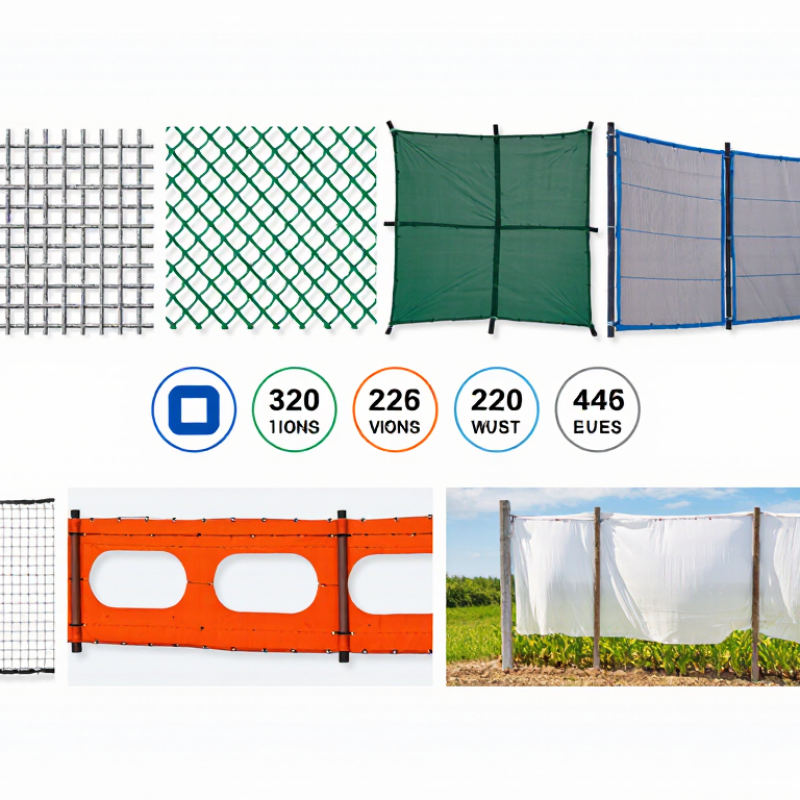
Fence Netting: Definition, Functions, and Main Applications
Fence netting is a flexible or rigid mesh material installed around a boundary. It may be made from galvanized wire, stainless steel, coated metal, or UV-stabilized plastic. Common types include chain-link, welded wire, hexagonal mesh, poultry netting, plastic mesh, shade netting, safety mesh, debris netting, sports netting, and anti-climb mesh.
Its main functions are separation, protection, visibility control, and traffic guidance. In farms, mesh can contain poultry, protect crops, and reduce animal movement. Gardens often use fine plastic or hexagonal netting against small pests. Construction sites may require safety or debris netting around elevated work areas. Sports facilities use impact-resistant netting behind goals and courts. Industrial sites may prefer welded wire for stronger, more stable boundaries.
Tips: Match the mesh opening to the smallest object you need to control. Check wire diameter, tensile strength, coating quality, UV resistance, and expected weather exposure. Coastal air can accelerate corrosion. Poorly fixed posts can fail even when the mesh is strong. Measure slopes before ordering; flat-site calculations often waste material. Local installation requirements should also be reviewed.
Selection is not always simple. A heavy mesh may improve security but increase transport and installation costs. Lightweight plastic netting is easier to handle, yet it may tear under wind or repeated contact. In my experience, buyers sometimes focus on price and overlook maintenance. That choice can become expensive. There is no universal best type. Performance depends on the site, climate, users, and installation quality.
| No. | Fence Netting Type | Typical Material | Common Mesh or Aperture | Typical Height Range | Main Functions | Best-Fit Applications | Key Advantages | Important Considerations |
|---|---|---|---|---|---|---|---|---|
| 1 | Chain-Link Fence Netting | Galvanized steel or PVC-coated steel wire | 25–75 mm diamond mesh | 0.6–4.0 m | Perimeter security, access control, boundary definition | Residential, commercial, industrial, sports, and utility sites | Strong, transparent, easy to install, and available in many heights | The open mesh provides limited privacy; corrosion resistance depends on the coating and environment. |
| 2 | Welded Wire Fence Netting | Welded galvanized steel or PVC-coated steel wire | Typically 12.5–100 mm rectangular or square mesh | 0.5–2.4 m | Containment, boundary protection, animal control, and partitioning | Gardens, farms, warehouses, schools, and light industrial areas | Rigid panels or rolls, neat appearance, consistent openings, and good dimensional stability | Rigid construction can require more accurate post spacing and may be less flexible on uneven terrain. |
| 3 | Hexagonal Poultry Netting | Galvanized steel, PVC-coated steel, or flexible plastic | 13–50 mm hexagonal mesh | 0.3–2.0 m | Small-animal containment, separation, and garden protection | Chicken runs, rabbit areas, aviaries, vegetable gardens, and craft projects | Lightweight, flexible, easy to cut, and economical for low-load applications | It is not intended as a high-security barrier or for resisting large animals and heavy impact. |
| 4 | Field Fence Netting | High-tensile galvanized steel wire | Variable graduated mesh, commonly 50–300 mm | 0.8–2.0 m | Livestock control, wildlife management, and large-area boundary fencing | Ranches, agricultural fields, pastureland, and rural properties | Efficient for long runs, adaptable to uneven ground, and suitable for multiple animal sizes | Mesh spacing should be selected according to the animal type; adequate corner and end-post reinforcement is required. |
| 5 | Plastic Deer and Wildlife Netting | UV-stabilized polyethylene or polypropylene | Approximately 15–50 mm square or diamond mesh | 1.2–3.0 m | Visual and physical exclusion of deer and selected wildlife | Orchards, nurseries, gardens, plantations, and conservation areas | Lightweight, rust-free, visually unobtrusive, and simple to handle | It is less resistant to cutting, chewing, and severe impact than steel netting; UV stabilization is important for outdoor life. |
| 6 | Windbreak and Shade Netting | Knitted polyethylene or polypropylene fabric | Open-area ratios commonly 30–90% | 1.0–4.0 m or custom panels | Wind reduction, privacy screening, solar control, and dust reduction | Construction sites, sports grounds, agricultural areas, balconies, and temporary boundaries | Reduces wind speed, offers graduated privacy, and can be installed on existing fences | Higher coverage generally increases wind load; secure fixing and suitable support posts are essential. |
| 7 | Construction Safety Netting | High-density polyethylene or polypropylene | Fine mesh, commonly 2–10 mm openings | 1.0–3.0 m rolls or scaffold-covering panels | Falling-object containment, dust control, edge protection, and visual screening | Scaffolding, building façades, demolition zones, and renovation projects | Lightweight, quick to deploy, and capable of containing small debris when properly installed | Safety netting must comply with applicable local regulations and should not be treated as a substitute for guardrails or certified fall-arrest systems. |
| 8 | Bird Netting | UV-stabilized polyethylene, polypropylene, or nylon | 10–50 mm mesh, selected by bird size | Usually supplied as wide rolls or custom panels | Exclusion of birds from crops, buildings, ponds, and food-handling areas | Fruit farms, greenhouses, warehouses, aquaculture ponds, and building openings | Non-lethal exclusion, low weight, and adaptable coverage for large or irregular areas | The mesh must be tensioned and sealed around edges to prevent gaps; regular inspection helps avoid entanglement hazards. |
| 9 | Gabion Mesh | Heavy galvanized or polymer-coated steel wire | Commonly 60 × 80 mm or 80 × 100 mm hexagonal mesh | Usually assembled into baskets 0.5–2.0 m high | Retaining, erosion control, drainage support, and landscape separation | Riverbanks, roadsides, slopes, retaining structures, and architectural landscaping | Works with locally available stone, allows drainage, and provides high structural mass | Design must account for soil, drainage, foundation conditions, basket lacing, and the required structural performance. |
| 10 | Plastic Garden and Barrier Netting | Extruded polyethylene or polypropylene | 10–50 mm square or diamond mesh | 0.3–2.0 m | Temporary demarcation, plant support, light animal control, and hazard marking | Gardens, landscaping, events, playgrounds, temporary works, and DIY projects | Rust-free, lightweight, easy to transport, and simple to cut and reuse | It is best for low-load applications and may require UV stabilization, reinforcement, or closer support spacing for long-term outdoor use. |
Related Posts
-
Transform Your Outdoor Spaces: Innovative Uses for Fence Netting You Haven't Considered
-
What is Fence Netting and How Can It Benefit Your Outdoor Space
-

7 Best Strategies to Choose the Right Fence Netting for Your Needs
-
The Future of Best Fence Netting A Comprehensive Analysis of Market Trends Towards 2025
-

The Ultimate Guide to Choosing the Best Cable Tray for Cable Management in 2025
-
Top 10 Welded Wire Fence Options for Global Buyers?