Why Is Nicotine Liquid Used in E Liquids?
Nicotine Liquid is used in e-liquids to provide nicotine in a measured formulation that can be vaporized by an electronic device. It is one component, not the whole product. A bottle may also contain carrier ingredients and flavorings, and formulations differ. That matters. The label, concentration, and packaging all shape how a product should be understood and handled.
Nicotine researcher Dr. Neal Benowitz has emphasized in his published work that nicotine can sustain dependence, while many severe harms from smoking come from combustion products. This distinction helps explain why nicotine is discussed separately from smoke. It does not make nicotine harmless, or make every vaping product safe. Nicotine can cause dependence, and accidental exposure to concentrated liquid can be dangerous. Keep products secured and follow their labeling.
Why include it at all? For adult users who choose nicotine-containing e-liquids, it supplies the nicotine they expect without burning tobacco. The visible vapor may look simple, but the liquid’s concentration and device conditions can affect what is delivered. There is no single formulation that fits everyone. A clear label is useful; it is not a guarantee of safety. Even this explanation has limits, because product quality and individual response vary. The practical point is modest: understand what the liquid contains, avoid assuming that “less smoke” means “no risk,” and seek qualified health advice when making decisions about nicotine.
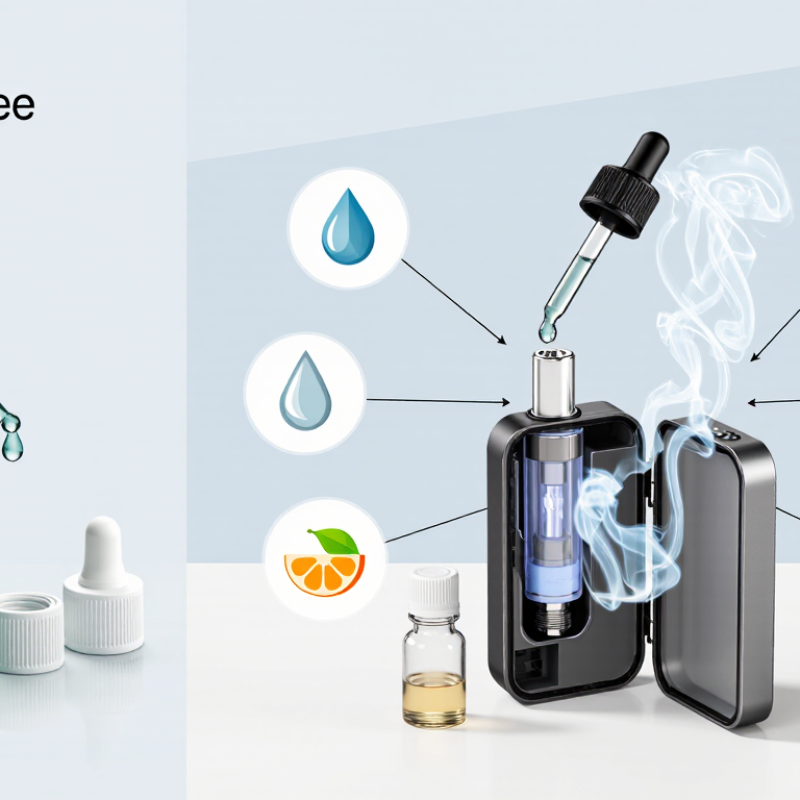
What Nicotine Liquid Is and How It Is Made
Nicotine liquid is a purified concentrate used to provide nicotine in e-liquids. It is blended with carrier liquids, commonly propylene glycol and vegetable glycerin, which help create the vapour when heated. Nicotine can also affect the throat sensation. That is the basic purpose. It is not a flavour ingredient.
Commercial production typically involves extracting nicotine from tobacco material, purifying it, then blending a measured amount into the carrier liquids. Manufacturers check concentration, consistency, and contaminants under controlled conditions. The National Academies’ 2018 report, Public Health Consequences of E-Cigarettes, reviewed more than 800 studies and found nicotine delivery varies with the liquid, device, and user behaviour. The number matters: a stated concentration alone cannot predict every user’s exposure.
Quality controls matter because concentrated nicotine can be hazardous if mishandled. The U.S. FDA’s premarket application guidance calls for detailed ingredient and manufacturing information when products are reviewed. Still, a label cannot tell the whole story. “Purified” does not mean harmless, and testing methods and product quality can differ. Formulation and handling belong in trained, controlled settings, not casual home mixing.
Why Is Nicotine Liquid Used in E-Liquids?
Nicotine liquid allows manufacturers to measure and blend nicotine into an e-liquid, usually alongside carrier liquids such as propylene glycol (PG) and vegetable glycerin (VG). The chart shows example labeled nicotine strengths, not market-share data. In the European Union, nicotine-containing e-liquids are subject to a maximum concentration of 20 mg/mL under the Tobacco Products Directive.
Strength is expressed in milligrams of nicotine per milliliter of e-liquid (mg/mL). Regulations and available strengths vary by location.
How Nicotine Works in E-Liquids
Nicotine is dissolved in the liquid base of an e-liquid. When a device heats it, the resulting aerosol can carry nicotine into the lungs, where it enters the bloodstream. It can reach the brain quickly. There, nicotine interacts with receptors involved in attention, mood, and reward. Some users feel a brief effect; others mainly notice reduced cravings. The response varies.
That effect does not make nicotine harmless. Repeated exposure can lead to dependence, and nicotine may temporarily raise heart rate and blood pressure. Developing brains are especially vulnerable, and nicotine is not considered safe during pregnancy. E-liquids also differ in nicotine concentration, so the amount delivered can be hard to predict. Labels help, but they cannot show exactly how much a person absorbs.
Tips: Check the stated nicotine concentration before handling an e-liquid. Keep it away from children and pets; accidental contact or swallowing can be dangerous. If you do not use nicotine, avoid starting. If stopping feels difficult, a qualified health professional can discuss support options.
Why Some E-Liquids Contain Nicotine
Why Is Nicotine Liquid Used in E Liquids?
Why Some E-Liquids Contain Nicotine
Some e-liquids contain nicotine because they are made for adults who already use nicotine and want a familiar amount in an inhaled product. When the liquid is heated, nicotine can be carried in the aerosol. The amount varies by product, so checking the label matters. Nicotine is addictive. It can also cause unpleasant effects, such as nausea, dizziness, or a faster heartbeat, especially when someone gets more than they are used to. No nicotine level makes vaping risk-free. For people who do not use nicotine, starting is not a harmless experiment.
Nicotine strength is only one part of the picture. How often someone uses a device, how deeply they inhale, and the product’s design can affect exposure. Labels may use different units, which can make comparisons confusing. It is worth pausing over that. The choice can seem simple, but dependence may develop, and stopping can be difficult. People who are pregnant, underage, or otherwise concerned about nicotine should avoid it and seek qualified health advice.
Tips: Read the nicotine amount and serving details carefully. Store liquids securely, away from children and pets. Avoid skin contact; if a spill occurs, wash the area promptly. If you feel unwell after exposure, contact a healthcare professional or poison-control service.
How Nicotine Strengths and Formulations Differ
Nicotine is added to some e-liquids to deliver nicotine when the liquid is heated into an aerosol. It is optional, and products differ in both concentration and formulation. Labels commonly show strength in milligrams per millilitre, though some use percentages. Check the units carefully; a larger number generally means more nicotine in the liquid, not a guarantee of a particular effect.
Formulation changes the sensation. Freebase nicotine can feel sharper in the throat, especially at higher concentrations. Nicotine salts are made with an acid, which can make the aerosol feel smoother at comparable strengths. Smooth does not mean mild. The amount absorbed also depends on the device, how often someone inhales, and individual factors. Small differences matter.
Strength labels can be confusing, and they do not tell the whole story. A concentration alone cannot predict how much nicotine a person will absorb. Nicotine is addictive and can cause unpleasant effects, including nausea, dizziness, or a racing heartbeat. Anyone comparing products should read the full label rather than relying on taste or throat sensation. I find that distinction easy to overlook: comfort is not a dependable measure of dose.
Why Is Nicotine Liquid Used in E Liquids? - How Nicotine Strengths and Formulations Differ
| Dimension | How It Differs | Key Facts |
| Purpose of nicotine | Nicotine may be added to e-liquid so the aerosol produced by a vaping device contains nicotine. | E-liquids can also be made without nicotine. Nicotine is addictive, and vaping is not risk-free. |
| Strength measurement | Nicotine concentration is commonly stated in milligrams per millilitre (mg/mL). | The figure describes concentration in the liquid, not the amount absorbed by a person; absorption varies with the device and use. |
| Strength options | Products may be sold at different concentrations, including 0 mg/mL and nicotine-containing strengths. | Available strengths and legal limits vary by jurisdiction. For example, the EU Tobacco Products Directive sets a maximum nicotine concentration of 20 mg/mL for covered e-liquids. |
| Freebase nicotine | A commonly used nicotine form in e-liquids. | At higher concentrations, some users report a more noticeable throat sensation. The experience depends on the liquid and device. |
| Nicotine salts | Nicotine combined with an acid to form a salt; formulations vary. | Salt formulations are often described as smoother at a given concentration, but sensation is subjective and does not indicate lower nicotine exposure or lower risk. |
| Other liquid ingredients | Many e-liquids use propylene glycol (PG), vegetable glycerin (VG), and, in some products, flavourings. | The ingredient mix affects properties such as thickness and aerosol production; it does not determine nicotine concentration by itself. |
| Handling and safety | Nicotine-containing liquid can be harmful if swallowed or absorbed through the skin. | Keep e-liquids in their original, closed containers and out of reach of children and pets; follow the product label and local safety guidance. |
Note: Product definitions, permitted concentrations, and labeling requirements vary by country or region.
Health Risks and Regulations for Nicotine E-Liquids
Nicotine is added to many e-liquids because it delivers the drug through inhaled aerosol. But a familiar flavor or smooth draw does not make the liquid harmless. Nicotine is addictive and can affect attention, learning, and mood, especially while the brain is still developing. The National Academies’ 2018 report, Public Health Consequences of E-Cigarettes, reviewed evidence of dependence risks. In the United States, the CDC and FDA’s 2023 youth survey recorded 2.13 million middle and high school students reporting current e-cigarette use. That figure signals a public-health concern, though it does not show what liquid each student used.
Rules differ by country and can cover nicotine limits, ingredient standards, package warnings, and child-resistant containers. A product’s legal status or compliant label does not mean it is risk-free. Regulation also changes, and the evidence is not perfectly tidy; that uncertainty deserves attention rather than dismissal. For health-specific advice, consult a qualified health professional.
Tips: Keep nicotine liquids in their original, clearly labeled containers, away from children and pets. Check current local requirements before buying or handling them. If liquid spills on skin, wash the area promptly with soap and water; seek urgent medical advice if someone swallows it or feels unwell.