
Why Choose Stainless Steel Welded Pipe?
Stainless Steel Welded Pipe is widely used where durability, hygiene, and consistent performance matter. It is formed by rolling stainless steel strip and joining the seam with controlled welding. The result is a practical pipe for water systems, food processing, chemical equipment, and architectural projects.
Its smooth inner surface can reduce deposits and simplify cleaning. Many grades also resist rust, moisture, and temperature changes better than ordinary carbon steel. In a food facility, this may mean fewer rough areas around tanks, pumps, and transfer lines. In construction, the bright surface can provide a clean appearance without heavy coating maintenance.
The weld seam deserves attention. Modern production can produce accurate dimensions and reliable joints, but quality depends on material grade, welding control, heat treatment, and inspection. Buyers should review test reports, surface condition, wall thickness, and applicable standards before placing an order. A polished pipe is not automatically a safe pipe.
No material fits every project. Stainless steel can cost more at the beginning, and unsuitable grades may suffer in chloride-rich or highly acidic environments. It is easy to praise stainless steel too quickly. Engineers still need to examine fluid chemistry, pressure, temperature, installation methods, and maintenance plans. Small details matter.
With informed selection and qualified manufacturing, Stainless Steel Welded Pipe can offer long service life and stable operating value. The best choice is not always the cheapest option. It is the one supported by clear specifications, traceable quality records, and practical engineering judgment.
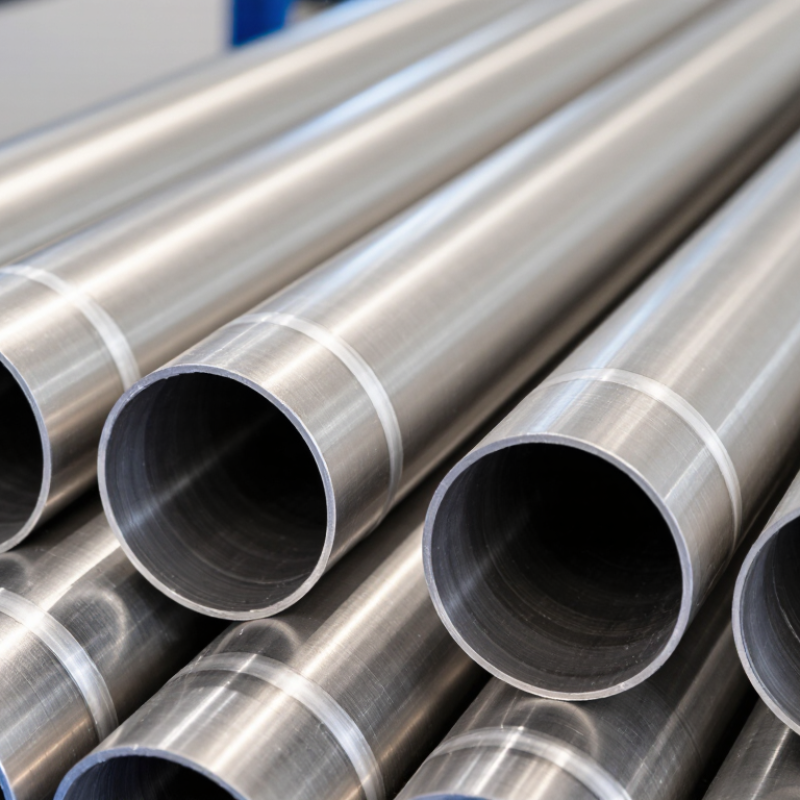
Stainless steel welded pipe is made by forming a flat strip or sheet into a round shape, then joining its edges along a continuous seam. The seam is commonly created with an electric welding process. After welding, the pipe may be sized, straightened, and finished to meet specified dimensions. That is the basic idea. The details matter.
The finished pipe is not defined by its seam alone. Its stainless steel grade, wall thickness, surface condition, and production checks all affect where it can be used. For example, a pipe carrying water in a clean indoor system faces different conditions from one exposed to salt spray or cleaning chemicals. Corrosion resistance depends on both the alloy and the environment. A shiny surface is not proof of suitability.
Welded pipe often offers consistent dimensions and efficient production for many industrial and architectural applications. Its longitudinal seam should be evaluated against the service requirements, especially where pressure, temperature, or hygiene is important. Specifications may call for weld inspection, dimensional checks, or surface treatment. It is worth checking these details. The word “stainless” can sound reassuring, but it does not mean maintenance-free or immune to corrosion.
Stainless steel welded pipe starts as flat strip or coil. The material is inspected, then slit to the width needed for the pipe size. Forming rolls gradually bend the strip into a tube, bringing its edges together along one seam. Welding methods vary with the steel grade, wall thickness, and production requirements. TIG, laser, or high-frequency welding may be used. The seam needs steady heat and alignment. Small variations matter.
After welding, the tube is sized to meet the required diameter and straightness. Some products receive heat treatment to reduce forming stresses or improve material properties. The surface may then be cleaned or pickled to remove scale and discoloration. Not every pipe follows the same finishing route; the intended service and applicable specifications guide the choices. Inspection can include dimensional checks and methods such as eddy-current testing or hydrostatic testing. A smooth surface alone does not prove a sound seam.
Tips: Ask for the material grade, wall-thickness tolerance, and inspection details. Check the seam and end finish. It is easy to focus on appearance and overlook the test records.
Minimum mechanical properties for selected austenitic stainless steel pipe grades, as specified in ASTM A312/A312M.
Stainless steel welded pipe combines useful strength with corrosion resistance and can be produced by forming stainless steel strip, welding the seam, and performing applicable finishing and inspection steps. Actual manufacturing and testing requirements depend on the specification and product.
Stainless steel welded pipe combines corrosion resistance with practical strength. Chromium forms a thin, protective oxide film on the surface. If scratched, the film can reform when oxygen is present. In everyday service, that matters around damp floors, washdown areas, and exposed pipe supports. But alloy choice matters. Grade 304 suits many mild environments; chloride-rich conditions may require a more resistant grade.
Mechanical performance is measurable, not just a sales claim. ASTM A312/A312M sets minimum tensile strength of 515 MPa and yield strength of 205 MPa for TP304 pipe. These values help engineers compare material requirements, but they do not guarantee performance in every installation. Weld geometry, heat input, and post-weld cleaning affect the finished pipe. Small details count. A rough weld root can trap residue and complicate cleaning.
Stainless steel also has a substantial industrial footprint. The World Stainless Association’s Stainless Steel in Figures 2024 reports global crude stainless steel production of about 58.4 million tonnes in 2023. That scale reflects broad use, not proof that every application is suitable. I would still check the fluid, temperature, chloride exposure, and inspection needs before specifying a pipe. Stainless is durable, not invincible.
Stainless steel welded pipe offers a practical middle ground between carbon steel and plastic piping. Its chromium-rich surface forms a passive layer that helps resist rust in many service environments. That matters in a damp plant room, where small leaks and recurring maintenance can become costly. Compared with carbon steel, stainless steel may need less protective coating. Compared with plastic, it can tolerate higher temperatures and resist many mechanical impacts. Check the grade and operating conditions, though. Stainless steel is not corrosion-proof in every environment.
Welded pipe is made by forming a steel strip into a tube and joining its edges. This process can provide consistent dimensions and a smooth internal bore, useful where flow and cleanability matter. Weld quality still matters. A poorly finished seam can create a weak point or collect residue, especially in demanding process lines. Ask for applicable inspection records, dimensional tolerances, and material documentation rather than assuming every pipe performs alike.
Cost deserves a closer look. Stainless steel can cost more upfront than carbon steel or some plastics, and installation may require compatible fittings and careful handling. It can also expand with heat, so supports and joints need suitable design. Not a perfect fit. For corrosive fluids, variable temperatures, or exposed installations, its durability may offset some replacement work. But the choice depends on the fluid, pressure, temperature, and maintenance plan—not just the material name.
Why Choose Stainless Steel Welded Pipe?
Stainless steel welded pipe serves demanding systems in food processing, water treatment, chemical handling, and construction. Its welded seam supports efficient production and consistent dimensions. World Stainless Association data reported global stainless crude steel production at about 58.4 million tonnes in 2023. That scale reflects broad industrial demand, not automatic suitability.
Application conditions should guide selection. For potable water or food lines, specify smooth internal surfaces and hygienic weld finishing. Chloride exposure requires careful grade selection, because pitting can begin near welds. Temperature, pressure, fluid chemistry, and cleaning methods also matter. ASTM A312 covers common austenitic stainless pipe requirements, including dimensions, testing, and material grades. However, a standard does not replace engineering judgment. Pipe schedules must match pressure calculations, and welded joints should follow qualified procedures. In my experience, poor support spacing often causes more trouble than the pipe material itself. That detail is easy to overlook.
Tips: Check the weld zone, not only the surface finish. Request mill certificates, weld inspection records, and corrosion data. Compare 304 and 316 only after reviewing chloride levels and operating temperature. A thicker wall is not always safer; it may increase cost and complicate fabrication. Selection can feel obvious, then fail under real cleaning cycles or outdoor moisture. Leave room for that uncertainty during design review.
| Application | Why Stainless Steel Welded Pipe Is Used | Common Material Considerations | Key Selection Checks |
|---|---|---|---|
| Food and beverage processing | Its cleanable surface, corrosion resistance, and compatibility with hygienic process equipment make it suitable for many product and washdown lines. | Type 304L is common for many food-contact environments; 316L may be preferred where chloride-containing cleaners or more aggressive process fluids are present. | Confirm required sanitary finish, internal surface quality, weld treatment, cleaning method, and applicable food-contact and piping requirements. |
| Water treatment and distribution | It can provide corrosion-resistant service for treatment systems, plant piping, and selected water-distribution uses. | Grade selection depends on chloride level, temperature, disinfectants, and other water chemistry. 316L may offer better resistance than 304L in some chloride-bearing environments. | Assess water chemistry and the risk of pitting or crevice corrosion; specify the design pressure, wall thickness, joining method, and relevant code. |
| Chemical and process plants | Stainless steel can handle many process fluids and support clean, durable piping installations. | 304L and 316L are used for different service conditions, but neither is universally resistant to all chemicals. More demanding environments may require duplex or other specialized alloys. | Check the exact chemical composition, concentration, temperature, pressure, contaminants, and corrosion data before selecting a grade. |
| Architectural and structural systems | It combines a durable metallic appearance with resistance to atmospheric corrosion in suitable environments. | 304 is often considered for general indoor or mild outdoor exposure; 316 is often considered for marine or chloride-exposed locations. | Account for coastal exposure, crevices, surface finish, cleaning access, structural loads, and the possibility of tea staining or localized corrosion. |
| HVAC and building services | It is used in selected heating, cooling, and utility systems where corrosion resistance and long service life are priorities. | 304L or 316L may be suitable depending on the circulating fluid, additives, temperature, and exposure to external chlorides. | Verify operating and surge pressures, design temperature, insulation-related moisture risks, support spacing, and compatibility with fittings and valves. |
| Heat exchangers and utility piping | Welded stainless tubing or pipe can be specified for fluid transport and heat-transfer equipment when the design and product form are appropriate. | Material choice depends on the fluid on each side, temperature, chloride content, and required resistance to scaling or corrosion. | Distinguish pipe from tube dimensions and tolerances; check the applicable product standard, weld quality requirements, inspection level, and pressure design. |
| General industrial and utility lines | Welded pipe is widely available in many sizes and can be a practical option for fabricated piping systems. | Choose the grade based on the service environment rather than appearance alone. Low-carbon grades such as 304L or 316L can help reduce sensitization concerns after welding. | Confirm the pipe specification, nominal size, schedule or wall thickness, dimensional tolerances, end preparation, traceability, and required testing. |
| Selection: welded versus seamless | Welded pipe is made from formed plate or strip with a welded longitudinal or helical seam; it can be suitable when its specification and quality match the design. | Welded and seamless products have different manufacturing routes and may have different product-standard requirements. Neither is automatically suitable for every duty. | Review the governing piping code, pressure and temperature rating, weld examination requirements, corrosion allowance, fabrication quality, and service criticality. |
Contact Us