
Blog

You are here:

What Is a Selezionatrice Ottica Fagioli?

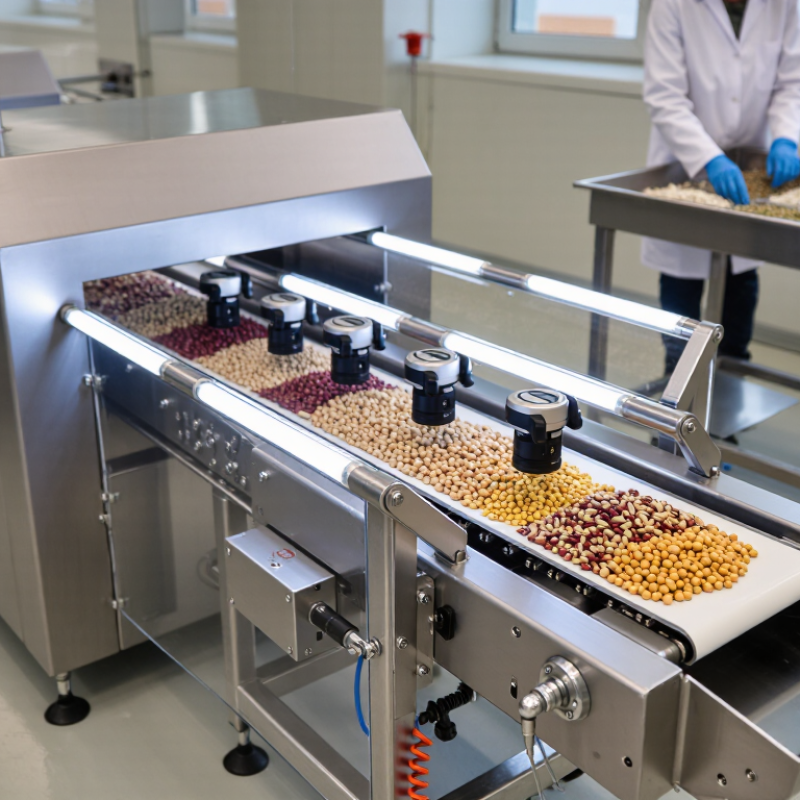
A Selezionatrice Ottica Fagioli is an optical sorting machine designed to inspect and separate beans by colour, shape, size, and visible defects. It uses cameras, controlled lighting, software, and air ejectors. Together, these systems examine beans moving quickly along a conveyor belt.

The process looks simple. It is not.

As Andreas Herzog, an optical-sorting specialist at Bühler, explains, “Sorting works best when accurate sensing meets disciplined process control.” This principle matters in bean processing. A camera may identify dark spots, broken skins, stones, or unwanted plant material. The machine then activates a precise air jet. Good beans continue forward. Defective material enters a separate reject stream.

A reliable Selezionatrice Ottica Fagioli requires more than advanced sensors. Operators must adjust lighting, belt speed, sensitivity, and rejection timing. Bean variety also matters. Pinto beans, kidney beans, and chickpeas may reflect light differently. Moisture, dust, and uneven surfaces can affect results.

The best systems support consistent quality and reduce unnecessary product loss. They can also provide useful production data. Yet no sorter is perfect. Poor calibration may remove acceptable beans. Heavy dust can reduce detection accuracy. Human inspection and routine maintenance still matter.

In practical facilities, operators often check sample trays beside the machine. They compare accepted beans with rejected material. Small adjustments can change final yield. This detail is easy to overlook.

Understanding the machine means understanding its limits. The following guide explains how a Selezionatrice Ottica Fagioli works, where it adds value, and what buyers should evaluate before installation.
What Is a Selezionatrice Ottica Fagioli?

Definition of a Fagioli Optical Sorter in Pulse Processing

What Is a Selezionatrice Ottica Fagioli?

A Selezionatrice Ottica Fagioli is an optical sorter designed for beans and other pulses. It inspects individual kernels as they pass through a controlled feeding system. Cameras and sensors examine color, shape, size, and surface defects. When a kernel differs from the programmed quality range, a rapid air jet removes it from the product flow.

In pulse processing, the machine works after cleaning and sizing equipment. A steady stream of beans travels across narrow lanes or a chute. Bright illumination helps sensors identify split, discolored, shriveled, insect-damaged, or foreign material pieces. Operators adjust sensitivity, ejection timing, and product settings according to the crop. Small changes matter. A dusty bean can confuse the camera, while uneven feeding may reduce sorting accuracy.

From practical processing experience, optical sorting improves consistency, but it does not replace good preparation. Poorly cleaned pulses can overload the sorter. Wet surfaces may also create unstable readings. No machine is perfect. Some borderline beans need human review or another sorting pass. Regular lens cleaning, air-pressure checks, and sample testing support dependable results. The operator should compare rejected material with accepted product throughout the shift. This reveals hidden losses. It also exposes settings that appear efficient but remove too many usable beans.

How RGB, NIR Cameras and Air Ejectors Detect Defective Beans

What Is a Selezionatrice Ottica Fagioli?

A selezionatrice ottica fagioli is an optical sorter for dry beans. It inspects each bean while it moves through a narrow product stream. RGB cameras read visible colors, such as pale yellow, dark brown, or unusual red marks. These images help identify mold stains, insect damage, stones, and broken beans. The system compares each bean with programmed quality standards. It works quickly, but it is not magic. Dust, uneven lighting, and overlapping beans can reduce accuracy.

NIR cameras add information beyond ordinary color. They detect differences in how beans reflect near-infrared light. This may reveal moisture variation, internal damage, or foreign material that looks acceptable to the human eye. When software confirms a defect, air ejectors release short, controlled bursts. The air stream pushes the unwanted item into a separate outlet. Clean beans continue forward. In real production, calibration requires experience. Bean variety, surface texture, and harvest conditions can change the results. A setting that works today may reject too many good beans tomorrow.

Tips: Keep camera lenses and air nozzles clean. Check rejected samples by hand during each shift. Review false rejects, not only missed defects. Test calibration after changing bean size or moisture. Small errors matter. Human inspection still deserves a place.

What Is a Selezionatrice Ottica Fagioli? - How RGB, NIR Cameras and Air Ejectors Detect Defective Beans
System Component or Process What It Measures or Does Typical Bean Defects or Conditions Detected Operating Principle Practical Considerations
Feed and singulation Separates beans into a controlled, visible flow before inspection. Not a defect-detection stage; it prevents overlapping beans from hiding defects. Vibratory feeders, chutes, or belts distribute individual beans across the inspection zone. Accurate singulation improves detection because cameras need a clear view of each bean.
RGB cameras Capture visible red, green, and blue color information together with surface shape and appearance. Dark beans, pale or discolored beans, mold-like surface marks, insect damage, stains, broken pieces, and foreign material with visible color contrast. Each bean is compared with programmed color, brightness, size, and shape thresholds or classification models. Performance depends on stable lighting, clean optics, and sufficient contrast between acceptable and defective material.
NIR cameras Measure reflected near-infrared energy, generally beyond the visible color range. Some moisture-related differences, internal or surface composition differences, organic contamination, and defects that have weak visible-color contrast. Materials reflect and absorb near-infrared wavelengths differently; the system classifies beans using their spectral response. NIR does not automatically identify every internal defect. Calibration must match bean variety, moisture, lighting, and product condition.
Combined RGB and NIR inspection Combines visible appearance data with spectral information. Mixed defects, subtle discoloration, visually similar foreign material, and quality differences that are difficult to separate with one sensor alone. Software fuses multiple image channels and applies rejection rules or trained classification models. Using multiple sensor types can reduce false accepts, but it requires more calibration and consistent operating conditions.
LED illumination Provides stable, controlled lighting for image capture. Supports detection of color variation, surface spots, cracks, and shape irregularities. Uniform light minimizes shadows and changes caused by ambient illumination. Light intensity, color temperature, reflections, and protective windows should be checked during routine cleaning and maintenance.
Image-processing software Analyzes color, spectral response, geometry, position, and defect severity. Classifies beans as acceptable, defective, or foreign material according to configured quality limits. Algorithms identify pixels or object features that fall outside the accepted product profile. Thresholds should be validated with representative good product and known defect samples to balance removal and product loss.
Air ejectors Remove selected beans or particles from the product stream. Defective beans, stones, glass fragments, plant debris, damaged pieces, and other classified rejects. Fast solenoid valves release short bursts of compressed air precisely when a target reaches the ejection point. Correct timing, air pressure, nozzle alignment, and clean compressed air are essential for accurate removal.
Reject collection Separates ejected material from accepted beans for inspection or disposal. Aggregated defective beans and foreign material removed during sorting. A separate reject chute or collection bin receives the air-ejected particles. Rejects should be reviewed periodically to verify that the sorter is removing the intended material without excessive good product.
Detection sensitivity Defines how readily the system responds to a suspected defect. Small color deviations, small foreign particles, or low-contrast defects. Higher sensitivity widens the rejection criteria; lower sensitivity accepts a broader range of appearance. Increasing sensitivity can improve defect removal but may also increase false rejects and usable-product loss.
False accept A defective bean or foreign particle passes into the accepted product stream. Subtle stains, partially hidden damage, low-contrast defects, or overlapped beans. Occurs when the defect is outside the camera view, below the detection threshold, or similar to acceptable product. Reduced by effective singulation, suitable sensor selection, representative calibration samples, and regular verification.
False reject An acceptable bean is incorrectly removed from the product stream. Natural color variation, harmless surface marks, or beans near the programmed quality limit. Occurs when an acceptable feature is interpreted as a defect. Controlled by refining product recipes, reviewing reject samples, and setting commercially appropriate quality limits.
Compressed-air requirements Provide the force needed to redirect selected material. Applies to every reject category handled by the air-ejection system. Clean, dry, filtered air supports repeatable valve and nozzle performance. Pressure and flow must be sufficient for the product speed and particle size; moisture or oil can damage equipment and affect reliability.
Routine verification Checks whether detection and ejection remain within the intended quality limits. All configured defect categories and foreign-material classes. Known test samples or controlled checks are passed through the machine and the results are recorded. Verification should be performed after cleaning, recipe changes, maintenance, or changes in bean variety and moisture.

Note: Actual detection performance depends on bean variety, size distribution, moisture, surface condition, feed presentation, camera resolution, lighting, calibration, and machine settings.

Key Performance Metrics: Throughput, Accuracy and Reject Rates

What Is a Selezionatrice Ottica Fagioli?

A selezionatrice ottica fagioli is an optical sorting machine designed to inspect and separate beans. It uses cameras, controlled lighting, and software to identify color differences, stains, cracks, foreign particles, and unusual shapes. On a working line, beans move across a fast conveyor or chute. Sensors examine each piece within milliseconds. Air jets then remove selected defects.

Throughput measures how much product the machine processes, usually in kilograms per hour. Higher throughput can improve production, but speed alone proves little. A crowded product stream may hide defects from the cameras. Operators should compare capacity at different moisture levels, bean sizes, and feed rates. Small changes matter. A stable flow often produces better results than maximum speed.

Accuracy describes how reliably the system identifies acceptable and defective beans. Reject rate shows how much material the machine removes. A high reject rate may indicate strong cleaning, but it can also signal excessive product loss. Test samples should separate true defects from good beans incorrectly rejected. This distinction is easy to overlook. In practice, lighting dust, worn ejectors, and inconsistent calibration can affect results. Even advanced systems need regular inspection and thoughtful adjustments. A performance report should record throughput, detection accuracy, false rejects, and operating conditions together. Otherwise, impressive figures may describe only ideal conditions.

Applications in Lentils, Chickpeas, Beans and Other Pulses

What Is a Selezionatrice Ottica Fagioli?

A selezionatrice ottica fagioli is an optical sorting machine for dry beans and other pulses. It uses cameras, lighting, and software to inspect each product at high speed. The system identifies differences in color, shape, size, and surface appearance. It can remove stones, discolored lentils, damaged chickpeas, and foreign plant material.

Demand for consistent pulse quality is growing. FAOSTAT’s Crops and Livestock Products database recorded roughly 96 million metric tons of global pulse production in 2022. That volume includes dry beans, chickpeas, lentils, peas, and related crops. Large processors need stable quality across harvests. Field conditions rarely provide it.

Optical sorting supports several practical applications. In lentils, it can separate green, pale, or heat-damaged seeds. In chickpeas, it can detect dark stains, cracks, and unusual shapes. In beans, it helps remove mold-like discoloration, broken pieces, and stones. The OECD-FAO Agricultural Outlook 2024–2033 also highlights pulses as important sources of plant protein and agricultural diversification.

Clean samples matter.

However, sorting is not magic. A camera may miss internal defects, early spoilage, or contaminants with similar colors. Operators still need sieves, magnets, moisture control, and laboratory checks. The Codex General Principles of Food Hygiene supports this layered approach. Better results require careful calibration, regular cleaning, and representative quality testing. Some settings work brilliantly during one harvest, then disappoint the next. That deserves honest review.

Food-Safety Framework: Codex Alimentarius, ISO 22000 and HACCP

What Is a Selezionatrice Ottica Fagioli?

Food-Safety Framework: Codex Alimentarius, ISO 22000 and HACCP

A Selezionatrice Ottica Fagioli is an optical sorting machine for dried beans. It uses cameras, lighting, and software to identify unwanted color, size, shape, or surface defects. On a processing line, it can remove stones, damaged beans, mold-like discoloration, and foreign plant material. The machine supports safety controls, but it does not replace them.

Codex Alimentarius provides internationally recognized principles for hygienic food production and hazard control. HACCP applies these principles by identifying hazards, setting critical limits, and defining corrective actions. For bean processing, the team may examine receiving, cleaning, optical sorting, storage, and packaging. Metal contamination, moisture, pests, and cross-contact deserve careful attention.

ISO 22000 connects HACCP with a broader food-safety management system. It requires communication, documented procedures, verification, and continual improvement. Operators should record rejected materials, test samples, inspect lenses, and verify sensor performance. Calibration matters.

Small errors matter.

A practical weakness is overconfidence in automation. A dirty camera lens can reduce detection accuracy. A poorly adjusted rejection valve can leave defective beans on the conveyor. Staff still need training, sanitation checks, and independent product inspections. Validation should use realistic defect samples, not only ideal test pieces. Results may vary with bean variety, dust, lighting, and line speed. That variability needs honest review.

Go to Top