What Are the Best Types of Plastic Wheels?
Choosing the best Plastic Wheel starts with the job it must do. A wheel under a warehouse cart faces different demands from one on a lightweight storage bin. Load, floor surface, moisture, noise, and temperature all affect performance. A wheel that rolls smoothly across sealed concrete may chatter on cracked tile or struggle over a floor seam. Small details matter.
Nylon wheels are often chosen for strength and wear resistance, though they can be noisy and hard on delicate floors. Polyurethane wheels usually offer quieter rolling and better floor protection, making them common on carts and material-handling equipment. Polypropylene wheels can suit lighter-duty applications where moisture resistance and affordability matter. These are useful starting points, not universal rules. Actual results depend on wheel design, bearing quality, load distribution, and the surface beneath it.
Check the manufacturer’s rated capacity before comparing options, and consider how the cart moves in real use. Does it turn in a tight aisle? Does it cross thresholds while carrying a full load? Those conditions can expose weaknesses that a product description may not mention. A cushioned tread may reduce noise, but it can also increase rolling resistance. Hard wheels may carry loads efficiently, yet leave marks or feel jarring. There is no perfect choice. Even careful selection can miss something; testing a sample on the actual floor is often worthwhile. The best type is the one that balances durability, smooth movement, floor care, and cost for your specific setting.
What Defines a Plastic Wheel and How Is It Made?
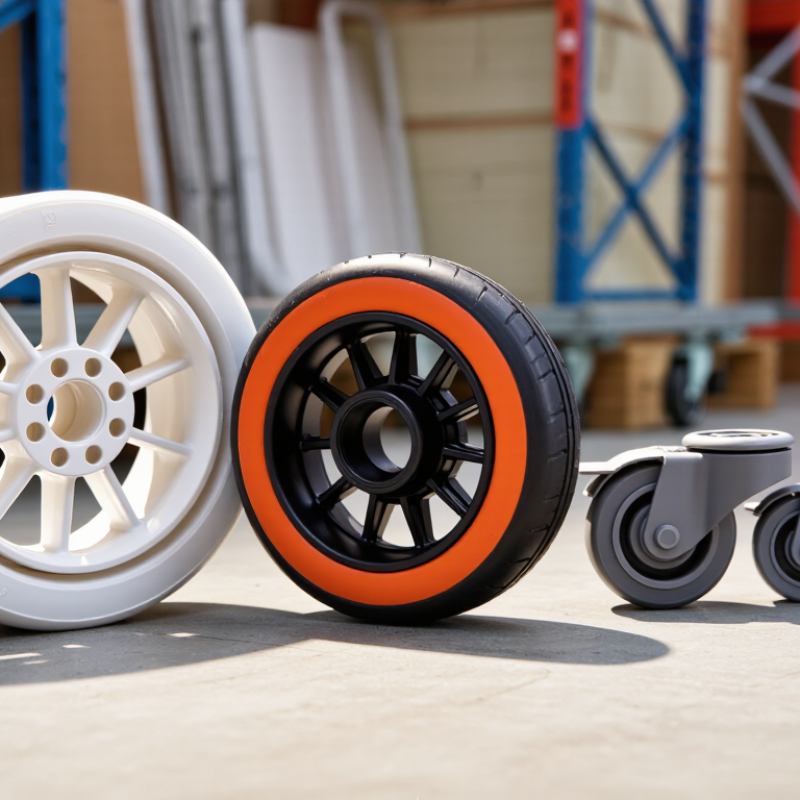
A plastic wheel is a wheel whose tread, body, or both are made from a polymer. Some designs combine a plastic tread with a metal hub, so “plastic wheel” does not always mean an all-plastic part. Common materials include nylon, polypropylene, and polyurethane; each responds differently to impact, moisture, heat, and floor texture. Not one recipe.
Manufacturing depends on the polymer and wheel design. Thermoplastics such as nylon are commonly heated and injection-molded into a wheel body. Polyurethane wheels are often cast in a mold, then cured and fitted with bearings. The finished wheel may be trimmed, inspected, and load-tested. Small details matter: a slightly loose bearing seat can cause wobble, while a hard tread may mark a delicate floor. OECD’s 2022 Global Plastics Outlook estimates that global plastic production reached 460 million tonnes in 2019; the figure describes plastics overall, not wheel materials specifically. The same report estimates only 9% of plastic waste was ultimately recycled after losses. That context makes recycled content worth checking, but it does not guarantee consistent strength or quality. Material choice still needs testing under the actual load, surface, and temperature. A specification sheet alone can miss real-world wear.
Which Plastics Are Commonly Used in Wheel Construction?
Nylon, polypropylene, polyethylene, acetal, and polyurethane are common choices in plastic wheel construction. Each behaves differently under load. Nylon handles repeated impact and rolling stress well, making it suitable for load-bearing wheel cores. It can absorb moisture, though, which may slightly change its dimensions. That detail matters in damp storage areas or applications requiring a close fit.
Polypropylene is light and resists many chemicals, but it can deform under sustained heat or heavy loads. High-density polyethylene offers low moisture absorption and quiet rolling on smooth floors; its softer surface may wear faster on rough concrete. Acetal, also called POM, provides low friction and dimensional stability for smaller precision wheels. Polyurethane is often used for the tread rather than the core. It can provide grip and abrasion resistance, but hardness and formulation affect performance.
Material supply is broad. PlasticsEurope’s Plastics – the Fast Facts 2024 report estimates global plastics production at 413.8 million tonnes in 2023. That figure describes the overall plastics industry, not wheel-grade resin demand. So it should not be read as a ranking of wheel materials. In practice, wheel selection depends on load, floor texture, temperature, noise limits, and exposure to oils or cleaners. A material that works well on polished tile may disappoint on gritty concrete. Test the actual wheel and surface combination when failure would be costly.
How Do Material Properties Affect Wheel Performance?
Plastic wheels perform differently because hardness, flexibility, and resistance to wear vary by material. Polyurethane wheels are resilient and grip smooth floors well, helping reduce vibration on carts and equipment. They can still develop flat spots when left under heavy loads for long periods. Nylon is harder and carries substantial loads, but it may sound loud on concrete and can mark delicate floors. The trade-off matters.
Polypropylene wheels resist moisture and many common cleaning chemicals, making them useful in damp settings. However, they may feel less forgiving over floor joints or rough patches. Softer thermoplastic rubber can roll quietly and cushion small bumps, though it generally wears faster under heavy, frequent use. Check the rated load, wheel diameter, and floor surface together; a material alone does not predict performance. A small wheel crossing a narrow threshold may need more force, even when its polymer is durable. Temperature matters, too, since some plastics become less flexible in cold conditions. I still find this easy to misjudge. A brief loaded test on the actual floor can reveal noise, steering effort, and vibration that a specification sheet cannot show.
Density affects wheel mass: for the same wheel volume, lower-density materials produce lighter wheels. These are approximate values for unfilled plastics; wheel compounds may differ. Load capacity, grip, and wear also depend on material formulation and wheel design.
Which Types of Plastic Wheels Suit Different Applications?
Plastic wheels suit different applications according to their material, load, floor, and operating conditions. Nylon wheels are hard and durable, making them useful for loaded carts on smooth concrete or warehouse floors. They roll efficiently, but can be noisy and may mark delicate surfaces. Polyurethane wheels provide more grip and cushioning. They work well on hospital, retail, and workshop floors where quieter movement matters. Their softer tread can wear faster under heavy loads or on rough ground. Polypropylene wheels are lightweight and resist moisture and many chemicals, so they suit light-duty equipment in damp areas. They are less suited to heavy loads or uneven surfaces.
Tips: Check the wheel’s rated load, temperature range, and floor compatibility before choosing. A small trolley carrying metal parts needs different wheels from a light bin on tile. Measure the wheel diameter and mounting size, too; a good material choice cannot fix a poor fit.
Consider the route as well as the load. A hard nylon wheel may perform well on a clean, level floor but feel harsh over door thresholds. Polyurethane can improve comfort, though its softer tread is not always the best choice near sharp debris. There is no universal winner, and specifications vary between products. When conditions are uncertain, test a sample under the actual load and inspect it for noise, wear, and floor marks.
What Are the Best Types of Plastic Wheels? Which Types Suit Different Applications? | Wheel Material | Key Characteristics | Suitable Applications | Considerations |
| Nylon (PA) | Strong, wear-resistant, and able to carry substantial loads; rolls efficiently on smooth floors. | Industrial carts, material-handling equipment, and warehouse use on hard, even surfaces. | Hard wheels can be noisy and may mark or damage delicate floors; performance can be affected by moisture absorption. |
| Polypropylene (PP) | Lightweight, resistant to many acids and alkalis, and generally economical. | Light-duty carts, storage equipment, and applications where chemical resistance and low cost matter. | Not ideal for heavy loads, rough floors, or applications requiring a quiet, cushioned ride. |
| Polyurethane (PU) | Combines resilience with abrasion resistance; typically quieter and more floor-friendly than hard nylon or PP wheels. | Trolleys, hand trucks, and equipment used on finished floors or where reduced noise and vibration are desirable. | Load capacity, rolling resistance, and resistance to chemicals or heat vary by formulation and wheel design. |
| Acetal (POM) | Low friction, good dimensional stability, and strong resistance to wear in many precision applications. | Small guide wheels, rollers, conveyor components, and mechanisms requiring smooth, accurate movement. | Often chosen for smaller engineered components rather than general-purpose, large load-bearing casters. |
| UHMWPE | Very low friction and high abrasion resistance; performs well in sliding and material-handling applications. | Conveyor and guide wheels, chutes, and equipment exposed to repeated contact or abrasive materials. | Its relatively soft surface can deform under sustained loads; check operating temperature and load limits. |
| Phenolic Resin | Rigid, hard-wearing, and commonly used where heat resistance and high load capacity are needed. | Industrial carts, bakery racks, and other demanding environments with suitable smooth flooring. | Hard wheels may be noisy and transmit shock; verify floor compatibility and the specific temperature rating. |
How Can You Choose the Right Plastic Wheel?
What Are the Best Types of Plastic Wheels?
How Can You Choose the Right Plastic Wheel?
Choosing a plastic wheel starts with the job, not the material name. Record the total load, including the cart or equipment, then allow for uneven weight distribution. Check the wheel’s rated capacity under conditions similar to your own; ratings may assume smooth floors and steady movement. Numbers can mislead. A wheel that works on concrete may feel harsh and noisy on tile.
Match the material to the floor and surroundings. Polyurethane often offers quieter rolling and good floor protection, while nylon can suit heavier loads on smooth, hard surfaces. Polypropylene may be a practical option for lighter-duty use, but performance varies by design. Consider moisture, cleaning chemicals, and temperature too. A cold storage room or rough outdoor path can change how a wheel performs. It is easy to focus on price and overlook these details.
Check the wheel diameter, tread width, bearing type, and mounting dimensions against the equipment. Larger wheels usually roll over small cracks more easily, but must fit the frame. Choose swivel wheels for tight turns and fixed wheels for straighter travel, or combine them when the layout allows. If possible, test one wheel under a typical load on the actual floor. Listen for noise and watch for wobble or floor marks. The first choice may still need adjustment.