What Is Viscose Filament Yarn Used For?
Viscose Filament is a continuous regenerated-cellulose yarn valued for its smooth surface, soft handle, and fluid drape. It can bring a subtle sheen to a blouse, a flowing scarf, or decorative curtain fabric. Its role depends on yarn thickness, twist, fabric construction, and finishing. The name alone does not tell the whole story.
Textile Exchange’s Materials Market Report 2024 estimated global fiber production at 124 million tonnes in 2023. Man-made cellulosic fibers accounted for approximately 7.9 million tonnes. This category includes more than viscose filament, so the figure is useful context, not a measure of filament-yarn demand. That distinction matters.
In practice, manufacturers use Viscose Filament in apparel fabrics, linings, scarves, embroidery, ribbons, and selected home textiles. Its color uptake can support rich, even shades, while its long, continuous structure creates a clean surface. Yet performance varies. Wet strength, abrasion resistance, and care requirements depend on the specific yarn and fabric, so product specifications should be checked rather than inferred from fiber content alone. There is a catch: a lustrous sample may look appealing, but the finished fabric still needs testing for its intended use. A useful overview should connect these properties with real applications, helping buyers and designers choose suitable constructions without treating every viscose yarn as interchangeable.
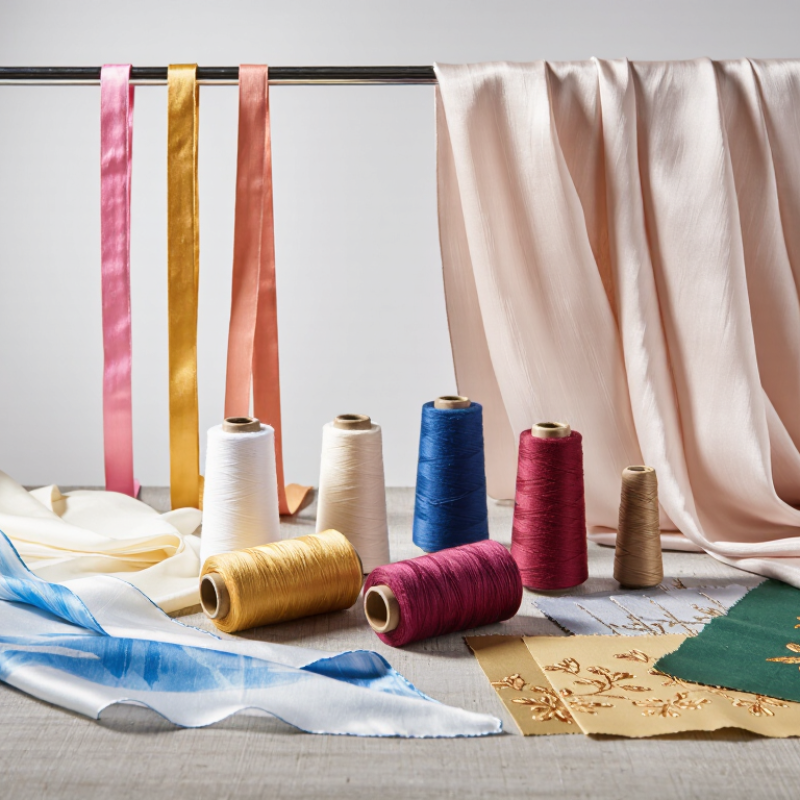
What Viscose Filament Yarn Is and How It Is Produced
Viscose filament yarn is a continuous thread made from regenerated cellulose, usually sourced from wood pulp or cotton linters. Unlike viscose staple fiber, which is cut into short lengths and spun, filament yarn remains long and smooth. That distinction matters. Its surface can feel soft and look subtly lustrous, though the final texture depends on the yarn’s construction and finishing.
Production begins by preparing and dissolving cellulose into a viscous solution. The solution is pushed through tiny openings in a spinneret into a bath that turns it back into solid filaments. The emerging strands are washed to remove residues, then stretched to improve strength and evenness. A finishing treatment may adjust their feel or reduce friction before the yarn is wound onto packages. Small changes in bath conditions or tension can affect the result. The process is controlled, but not perfectly uniform.
Because the filaments are continuous, they can form fine, flowing fabrics used in dresses, linings, scarves, and decorative textiles. They may also be blended with other fibers. Viscose can absorb moisture well, but wet yarn may be weaker than dry yarn, so handling and fabric care matter. Production practices differ, too; responsible sourcing and effective chemical recovery are important details, not automatic features of the fiber.
What Is Viscose Filament Yarn Used For?
Viscose filament yarn is made by dissolving cellulose, extruding the solution through spinneret holes into a coagulating bath, then washing and finishing the continuous filaments. Its moisture absorbency makes it useful in apparel such as dresses and linings, as well as scarves and home textiles. The chart compares typical moisture regain values for common textile fibers; actual values vary with fiber type and test conditions.
Typical moisture regain (% of dry fiber mass; approximate representative values). Higher regain generally indicates greater moisture absorption.
Key Properties That Shape Its Performance
Viscose filament yarn is made from regenerated cellulose and formed as continuous filaments. Its smooth surface and natural lustre give fabrics a fluid, silk-like appearance. It also absorbs moisture readily, which can help garments feel comfortable against the skin. A useful detail: the yarn drapes well. But it is not automatically durable; wet strength is generally lower than dry strength, so washing and finishing choices matter.
Textile Exchange’s Materials Market Report 2024 estimated global fiber production at 124 million tonnes in 2023, with manmade cellulosic fibers accounting for about 6%. That category includes viscose staple fibers and other fibers, not just filament yarn. The figure shows the material’s industry scale, but it does not predict how a specific fabric will perform. Filament size, twist, weave, and finishing can all change the result.
In practice, viscose filament suits linings, dresses, blouses, and decorative fabrics where sheen and fluid movement matter. A tightly woven construction may feel less airy than a loose one. That distinction is easy to miss. For product development, test the finished fabric for shrinkage, seam slippage, and strength after washing—not only the yarn’s hand feel. Real wear can be less forgiving than a swatch.
Its Applications in Home Textiles and Other Products
Viscose filament yarn is a continuous regenerated cellulose yarn with a smooth surface and a soft, flowing drape. These qualities make it useful when a textile needs to look graceful rather than bulky. It also takes dye well, so finished fabrics can show clear, rich colors. The exact feel depends on yarn construction, fabric weight, and finishing.
In home textiles, viscose filament yarn may be used in curtains, decorative cushion covers, bedspreads, and lightweight table linens. A curtain made with it can hang in soft folds and filter daylight without feeling stiff. In blends, it can add sheen and a fluid touch to fabrics used for upholstery accents or bedding. It is not ideal for every household use, though. Some viscose fabrics wrinkle easily, and their strength can decrease when wet, so care instructions and fabric construction matter.
Beyond the home, the yarn appears in clothing linings, scarves, dresses, ribbons, and decorative trims. Its smooth feel can help a lining slide comfortably over other garments, while its drape suits loose, flowing clothing. Still, it is not a perfect choice. Buyers should consider durability, cleaning needs, and the yarn’s blend before choosing a product. A glossy surface alone tells only part of the story.
What Is Viscose Filament Yarn Used For? Applications in Home Textiles and Other Products
| Product Category | Typical Applications | Why Viscose Filament Yarn Is Used | Practical Considerations |
| Window furnishings | Curtains, drapes, and decorative curtain panels | Its smooth surface, fluid drape, and lustrous appearance can create an elegant look. | Fabric weight, weave, lining, and exposure to sunlight affect performance and care needs. |
| Decorative home fabrics | Cushion covers, bedspreads, table runners, and other decorative woven fabrics | Filament yarns can produce a smooth hand and a refined, often silk-like visual effect. | Durability depends on yarn construction and fabric structure; blends may be chosen for added performance. |
| Upholstery and furnishing fabrics | Decorative fabric components for furniture and interior accents | Its sheen and ability to take color can contribute to rich-looking furnishing fabrics. | For heavy-use upholstery, suitability depends on the complete fabric construction and required abrasion performance. |
| Apparel fabrics | Dresses, blouses, scarves, and other garments | It can provide a soft feel, graceful movement, and a smooth finish. | Care instructions vary by fabric; viscose can lose strength when wet and may wrinkle or shrink if mishandled. |
| Garment linings | Linings for jackets, coats, skirts, and dresses | The smooth surface helps garments slide over other layers, while the drape supports a neat finish. | Selection should account for garment construction, care method, and the lining fabric’s stability. |
| Decorative and craft textiles | Embroidery threads, decorative trims, and woven embellishments | Its continuous-filament form can give a smooth, even appearance and noticeable luster. | Thread strength and suitability depend on yarn specification, processing, and the intended use. |
Note: Viscose filament yarn is a continuous regenerated-cellulose yarn. The final fabric’s appearance, strength, care requirements, and suitability depend on yarn characteristics, fabric construction, finishing, and any fibers blended with it.
Factors That Determine Where It Is Most Suitable
Viscose filament yarn is suitable for fabrics that need a smooth surface, gentle sheen, and flowing drape. A lightweight blouse can fall softly over the body, while a lining can feel cool and glide beneath a jacket. The yarn is made from regenerated cellulose, but its performance depends on the specific fiber and fabric construction. Details matter.
The intended use is the first practical test. For garments washed often, check the yarn’s wet strength and the finished fabric’s care requirements; conventional viscose can weaken when wet. High-wet-modulus types may perform differently. For scarves or decorative textiles, drape and color are often more important than frequent washing. Filament size, twist, and fabric density also shape the result: a tight weave may feel less fluid, while a very fine, smooth fabric can snag more easily. Finishes can change sheen and hand, but they cannot erase every weakness. I would test a small fabric sample first. A swatch reveals more than a specification sheet.