
Solar Home Systems range from compact lights to full household power packages. Their differences matter at the kitchen table, not just on a product sheet. A small DC kit may run lamps, a phone charger, or a radio. Larger systems can support televisions, fans, and other appliances. Some include batteries for evening use; grid-connected or hybrid designs can combine solar generation with another power source. The right choice depends on daily energy use, local sunlight, budget, and room to expand.
The need is substantial. The Tracking SDG 7: The Energy Progress Report 2024, prepared by international agencies including the World Bank and IEA, estimates that 685 million people lacked electricity access in 2022. That figure describes an access gap, not a promise that one product can close it. Still, appropriately sized off-grid systems can provide useful electricity where grid service is absent or unreliable. A practical comparison should look beyond panel wattage: check battery capacity, supported appliances, warranty, and whether replacement parts are available locally. Small details count.
The categories are useful, but real homes do not always fit them neatly. A household may need lights today and refrigeration later. This guide introduces the main Solar Home Systems types, explains their typical uses, and highlights the trade-offs buyers should examine before choosing. No single design suits everyone.
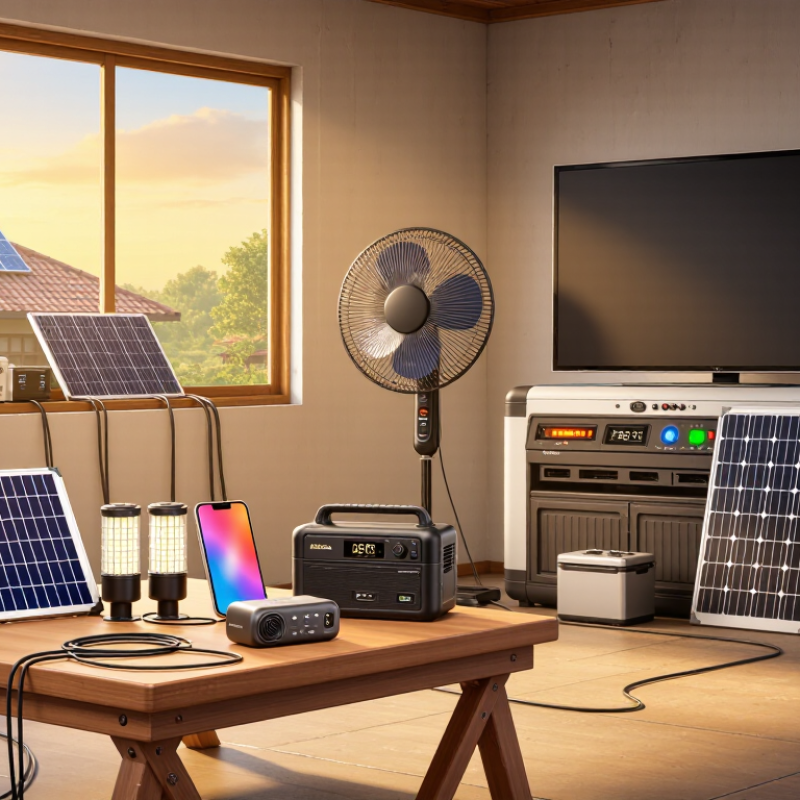
Small solar home systems are designed for basic daily needs, especially lighting and device charging. A typical setup includes a rooftop or portable solar panel, a charge controller, a battery, and efficient lights. Some systems also provide USB outlets for phones or small radios. They are useful in cabins, remote homes, or as backup power during outages. They are not usually suited to running heaters, kettles, or large kitchen appliances.
Match the system to what you actually use. A few LED lamps and phone charges need less energy than several lights running all evening. Check the battery capacity and the panel’s rated output, then consider cloudy days and seasonal sunlight. A common planning mistake is counting devices but forgetting how many hours they stay on. The battery may run low sooner than expected. Leave some margin, and keep the panel in an unshaded spot when possible. Even a simple setup has trade-offs.
Tips: Use LED bulbs and charge phones during daylight when practical. Keep the battery dry and follow its care instructions. If lights dim early, reduce use and check the connections before adding more equipment.
Off-grid solar home systems generate electricity independently of the utility grid and store surplus power in batteries. A basic setup connects a rooftop panel to a charge controller and battery, often powering LED lights, phone charging, and a small fan. Larger systems may include an inverter for household AC appliances. The right size depends on daily energy use, not just the number of rooms.
Battery storage makes power available after sunset and during cloudy spells, but capacity has limits. A family using lights and phones needs a different setup from one running a refrigerator or water pump. The 2024 Tracking SDG7 report estimated that 685 million people lacked electricity in 2022, underscoring the role distributed systems can play where grid connections are absent. Still, a system’s real usefulness depends on reliable components and adequate storage—not panel wattage alone.
In practice, list each appliance, its wattage, and hours of use before choosing a system. Allow for cloudy days and battery aging. It is easy to oversize. It is also easy to underestimate evening demand. A technician can check the load calculation, ventilation, wiring, and battery settings; these details affect safety and service life. The estimate is only a starting point. The household’s actual habits may differ.
Battery capacity varies with household energy use and system design. These illustrative configurations range from a compact 2 kWh system to a 20 kWh system for higher energy demand. Usable energy depends on battery chemistry, depth of discharge, inverter losses, and other system factors.
Grid-connected solar home systems link rooftop panels to household wiring and the public electricity network. Panels produce direct-current electricity; an inverter converts it for household use. When generation exceeds demand, surplus power can flow to the grid, subject to local utility rules and payment arrangements. At night or during cloudy weather, the home can draw electricity from the grid. No battery is required.
The scale is growing. The IEA’s Renewables 2024 report says global solar PV additions reached almost 420 GW in 2023, about 85% above 2022. That figure covers all solar PV, not homes alone, but it shows how quickly grid-connected generation is expanding. In practice, a household system’s value depends on roof orientation, shading, electricity rates, and export credits. A clear south-facing roof helps in many northern-hemisphere locations. Chimneys still cast long winter shadows.
One detail often surprises new owners: standard grid-tied inverters usually shut down during a grid outage, even in bright sunlight. This safety feature prevents electricity from flowing into lines being repaired. A battery and compatible backup equipment can keep selected circuits running, but add cost and design choices. Ask an installer to estimate annual production and explain outage behavior before comparing quotes. The estimate is useful, not a promise; weather and shade vary.
A hybrid solar home system combines rooftop panels, a battery, and an inverter that can work with the utility grid. Some systems can also accept generator input. In daylight, solar power runs household loads and charges the battery. During an outage, the inverter can switch to backup mode and supply selected circuits, such as a refrigerator, lights, and a router. Check that the system can isolate safely from the grid; backup should not energize utility lines.
Size it for real loads, not the whole roof. Battery capacity, measured in kilowatt-hours, affects how long appliances can run; inverter power, measured in kilowatts, limits what can run at once. A refrigerator may start with a brief surge, while a kettle draws substantial power continuously. That detail matters. The IEA’s Batteries and Secure Energy Transitions (2024) reports that about 42 GW of battery storage was added worldwide in 2023. This reflects rapid growth in storage, but it does not tell you how long a particular home can ride through an outage.
NREL’s 2024 Annual Technology Baseline also treats battery energy capacity and discharge power as distinct system characteristics—a useful distinction when comparing quotes. Ask installers to show expected backup runtime for your essential loads, including cloudy-day assumptions and battery reserve settings. A larger battery is not automatically better: it adds cost, and poor sizing can leave capacity unused. Real usage is messy. Review the loads and backup priorities with a qualified installer before choosing equipment.
It can run efficient lights and charge phones or small radios. It is not usually suitable for heaters, kettles, or large kitchen appliances.
Count each device and estimate its daily hours of use. A few lamps used briefly need less energy than several lamps running all evening. Leave some margin; evening use is easy to underestimate.
A typical setup has a solar panel, charge controller, battery, and efficient lights. Some systems also include USB outlets.
Use LED bulbs and charge phones during daylight when practical. Keep the battery dry and follow its care instructions. Clouds matter.
Reduce power use and check the connections. The battery may be running low. Adding equipment right away may not fix the problem.
Rooftop panels generate electricity, and an inverter converts it for household use. Surplus power may flow to the grid, depending on local arrangements. At night, the home can draw grid electricity.
Usually, a standard grid-tied inverter shuts down during an outage, even in sunlight. A battery and compatible backup equipment can keep selected circuits running, but add cost.
Roof direction, shade, weather, and seasonal sunlight all matter. A chimney can cast long winter shadows. Production estimates are useful, not guarantees.
Global solar photovoltaic additions reached almost 420 gigawatts in 2023, according to the cited report. That figure covers all solar installations, not homes alone.
Contact Us