
Choosing among the top Wind Grid Inverter manufacturers requires more than comparing rated power or catalog prices. Global buyers need evidence that products perform reliably under changing wind conditions, weak grids, and demanding project schedules. A serious evaluation examines conversion efficiency, voltage stability, fault ride-through capability, cooling design, protection functions, and communication interfaces. Small details matter. Cable access, enclosure sealing, and service documentation can affect years of operation.
This guide introduces manufacturers that serve utility-scale, commercial, and distributed wind projects across international markets. It considers engineering experience, manufacturing capacity, product testing, installation support, and after-sales responsiveness. Buyers should also review grid-code compatibility for each destination, because approval requirements differ between regions. Factory test reports are useful, but independent verification is stronger. A polished brochure is not enough.
No shortlist remains permanent. Technology changes quickly. Some public performance data may be incomplete, and advertised efficiency can depend on specific operating conditions. That limitation deserves attention. Readers should confirm certifications, reference projects, warranty terms, spare-parts availability, and local technical support before signing a contract. Speaking with operators can reveal practical issues, such as delayed firmware updates or difficult filter replacement. The best manufacturer is not always the largest one. It is the partner that combines stable hardware, transparent communication, documented testing, and realistic support throughout the inverter’s service life.
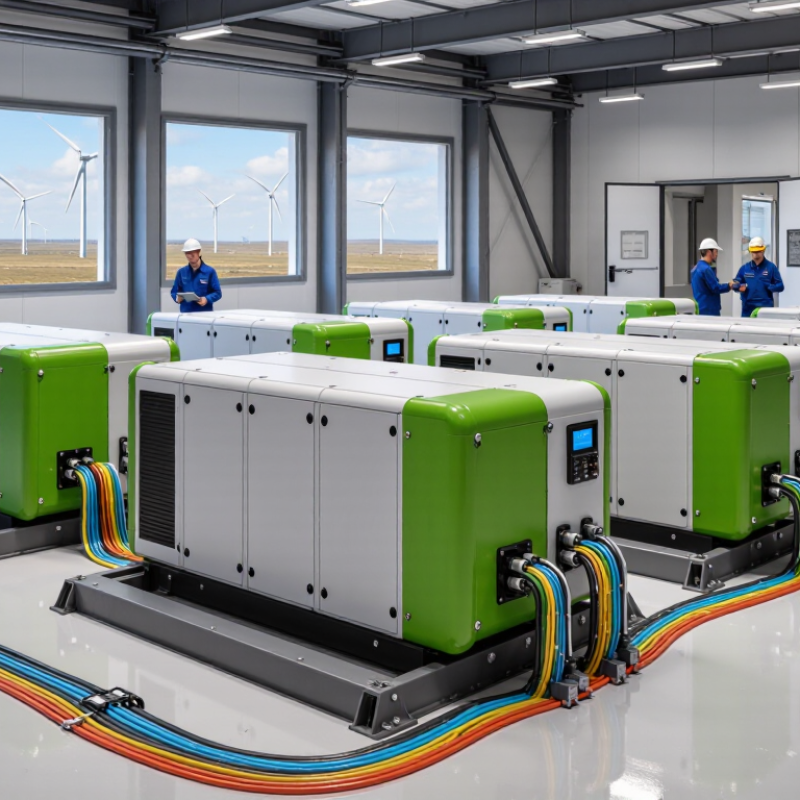
Understanding Wind Grid Inverters and Their Role in Renewable Energy
Wind grid inverters convert variable electricity from turbines into stable power for the utility network. Wind speed changes constantly, so turbine output rarely remains steady. The inverter manages voltage, frequency, and phase before electricity reaches the grid. It also supports maximum power extraction across changing operating conditions. In practical projects, this control affects both energy yield and equipment life.
Modern systems provide reactive power control, fault ride-through, and remote performance monitoring. These functions help wind farms respond when grid voltage suddenly drops. Protection settings must match local grid requirements and site conditions. A coastal installation may need stronger corrosion protection and sealed cooling channels. A mountain project may require careful derating because thin air reduces cooling efficiency.
Technical brochures do not tell the whole story. During commissioning, engineers should check waveform quality, communication stability, alarm accuracy, and recovery after grid disturbances. Small wiring mistakes can create repeated shutdowns. That part is easy to underestimate. Buyers should also examine service response times, spare-part availability, testing records, and factory quality procedures. A reliable manufacturer should provide clear efficiency curves, installation guidance, cybersecurity controls, and documented compliance evidence. No inverter performs perfectly in every climate. Site data still deserves more attention than attractive headline ratings.
Global buyers should compare more than rated power and purchase price. The GWEC Global Wind Report 2024 recorded 117 GW of new wind capacity in 2023, pushing worldwide installations beyond 1 TW. This rapid expansion increases pressure on grid inverters to deliver stable output under weak-grid conditions.
Check conversion efficiency across realistic wind profiles, not only laboratory peaks. A small efficiency loss can become significant over thousands of operating hours.
Compare reactive-power capability, harmonic distortion, and voltage ride-through performance. These features support compliance with changing grid codes.
Important details include LVRT, HVRT, fault-current response, and active-power ramp control.
Grid-forming capability deserves close attention. It can help stabilize systems with high renewable penetration, although project results depend on network design. Cooling method, enclosure rating, salt resistance, and dust protection matter in coastal or desert sites. So does service access.
Look beyond the brochure.
Request independent test records, IEC 61400-21-1 compliance evidence, and failure-rate data from comparable projects. Monitoring software should show thermal alarms, insulation status, harmonic trends, and event logs. Cybersecurity controls also require scrutiny. A polished interface does not guarantee dependable operation. In practice, maintenance teams may value clear diagnostics more than a slightly higher peak-efficiency figure. The comparison is not always comfortable, but it is necessary.
Top Wind Grid Inverter Manufacturers for Global Buyers
Regional priorities shape wind grid inverter manufacturing. According to GWEC’s Global Wind Report 2024, the industry added 117 GW of wind capacity in 2023. China contributed roughly two-thirds of that growth. Manufacturers there often target high-volume utility projects, compact enclosures, and aggressive delivery schedules. Their products commonly support large turbines and harsh inland conditions. Cost remains important.
European manufacturers usually focus on offshore wind, grid-forming functions, and strict network codes. The European Commission’s REPowerEU plan targets more than 500 GW of wind capacity by 2030. That goal increases demand for inverters with reactive power control, fault ride-through, and digital monitoring. North American suppliers give greater attention to certification, cybersecurity, and utility integration. Interconnection studies can delay projects, even when equipment is ready.
India and other fast-growing Asian markets favor flexible, climate-resistant systems. The IEA’s Renewables 2024 report identifies wind as a major source of new renewable capacity through 2030. Local manufacturers often compete through service networks, modular designs, and lower operating costs. Buyers should compare harmonic performance, ambient-temperature ratings, spare-part access, and firmware support. A low purchase price can hide expensive maintenance. Regional assumptions can also fail. Grid codes change quickly, and a proven inverter in one market may need substantial redesign elsewhere.
Regional market focus based on newly installed wind power capacity in 2023
Asia recorded the largest volume of new wind capacity in 2023, making it the strongest regional demand center for utility-scale grid integration equipment. Europe and North America represent mature markets with continued demand for grid-code compliance, reactive-power control, and system stability functions. Latin America, Africa, and the Middle East offer growth opportunities linked to expanding renewable-energy infrastructure. Data are rounded from the Global Wind Energy Council's Global Wind Report 2024 and are used as a market-demand proxy rather than manufacturer sales data.
Certification, Compatibility, and Technical Standards for International Buyers
International buyers should evaluate certification before comparing prices or efficiency figures. A wind grid inverter may require IEC 62109 safety certification and testing under IEC 61400-21-1. Market access can also depend on local grid codes, such as IEEE 1547 or EN 50549. These documents address voltage behavior, frequency response, anti-islanding protection, and fault ride-through performance. A certificate is not a universal passport.
Compatibility requires more than matching rated power. Buyers should verify grid voltage, frequency, phase configuration, grounding method, and short-circuit strength. The inverter should support required reactive power control and low-voltage ride-through settings. Communication options matter too. Modbus TCP, IEC 61850, or another approved protocol may be required by the utility. Ask for factory test records, protection settings, firmware controls, and independent laboratory reports.
Small details can delay commissioning. A connector mismatch, unclear grounding diagram, or untranslated manual may create expensive site work. Technical teams should review the complete datasheet with the project’s protection engineer. Some suppliers provide impressive certificates, but the tested model may differ from the offered model. That distinction deserves careful checking.
Even experienced buyers can overlook seasonal wind conditions and weak-grid behavior. A practical acceptance test should include abnormal voltage, frequency changes, communication loss, and controlled shutdowns. Certification builds confidence, but verified compatibility protects the project.
Top Wind Grid Inverter Manufacturers for Global Buyers
Selecting a wind grid inverter supplier requires more than comparing catalog prices. In field evaluations, I check efficiency curves, grid-code compliance, harmonic performance, and cooling design. Ask for test reports, factory quality records, and operating references from similar climates. A unit installed near a coastal site needs stronger corrosion protection than one used inland. Small details matter.
Tips: Request a complete cost sheet covering inverter price, freight, commissioning, software, spare parts, and warranty extensions. Compare response times, not only warranty length. A five-year warranty means little if replacement boards take twelve weeks. Confirm remote monitoring, firmware procedures, technician training, and local service coverage. Also ask whether the supplier can support grid studies and compliance documents for your target market.
Pricing should be judged through lifetime value. A cheaper inverter may consume more energy, require frequent fan replacement, or lose production during temperature derating. Reliable suppliers explain these limits clearly and provide measurable performance data. Review independent certifications, cybersecurity practices, protection settings, and thermal-cycle results. Speak with actual operators when possible. Their maintenance logs often reveal more than polished presentations. No supplier is flawless. I have seen strong products weakened by poor documentation and slow communication. Leave room for that uncomfortable possibility when scoring long-term reliability.
Practical supplier-evaluation benchmarks for utility-scale, commercial, and industrial wind power conversion projects. The figures below are general market reference ranges rather than quotations from any specific company or brand.
| Evaluation Category | Key Metric | Typical Market Reference | Evidence Global Buyers Should Request | Buyer Priority | Supply Risk |
|---|---|---|---|---|---|
| Product Fit | Rated power range | Wind grid inverters commonly cover low-voltage and medium-voltage applications from several hundred kilowatts to multiple megawatts per converter or power block. | Official datasheet, single-line diagram, generator compatibility list, and project references using the same power class. | Critical | Low |
| Electrical Performance | Peak and weighted efficiency | Modern high-power conversion systems generally target peak efficiencies above 98%; project-level performance depends on loading, transformer losses, and operating temperature. | Certified efficiency curve, test conditions, annual energy-loss model, and independent laboratory report where available. | Critical | Low |
| Grid Compliance | Grid-code capability | Export projects may require low-voltage ride-through, high-voltage ride-through, reactive-power control, frequency response, ramp-rate control, and active-power limitation. | Country-specific grid-code compliance matrix, power-system simulation models, type-test reports, and utility acceptance records. | Critical | Medium |
| Standards | Safety and EMC certification | Relevant certification commonly references IEC 62109, IEC 62477-1, IEC 61000 series, and local requirements such as UL 1741 or IEEE 1547 where applicable. | Valid certificates showing the exact model, revision, rated voltage, rated power, and certification scope. | Critical | Low |
| Operating Environment | Temperature, humidity, altitude, and enclosure rating | Outdoor systems are often specified for approximately -30°C to +50°C operation, with derating above the rated ambient temperature. IP54 or higher is commonly requested for outdoor enclosures. | Environmental specification, derating curve, corrosion class, salt-mist test, altitude limit, and enclosure test report. | High | Medium |
| Reliability | Availability and design life | Wind projects commonly set contractual availability targets of 97% to 99% or higher, while major equipment is typically evaluated against a 20-year project life with planned component replacement. | Fleet availability history, failure-rate data, mean time between failures, preventive-maintenance schedule, and spare-parts strategy. | Critical | Medium |
| Warranty | Standard and extended coverage | Base equipment warranties of two to five years are common; extended coverage may be available for longer operating periods subject to service-level conditions. | Warranty certificate, exclusions, response-time commitments, replacement policy, labor coverage, and terms for serial-number traceability. | Critical | Medium |
| Pricing | Budgetary equipment price | Indicative pricing for grid-conversion equipment varies widely by power rating, voltage class, cooling method, transformer scope, certifications, delivery terms, and service package. A comparable quotation should use a complete bill of materials rather than a per-kilowatt headline price. | Itemized quotation covering converter, transformer, switchgear, filter, cooling system, controls, software, packaging, commissioning, taxes, freight, and warranty extension. | High | Medium |
| Total Cost of Ownership | Energy loss, maintenance, and replacement cost | The lowest purchase price may not deliver the lowest lifetime cost. Buyers should compare conversion losses, cooling consumption, scheduled service, unplanned downtime, component replacement, and disposal costs. | 20-year life-cycle cost model using the project wind profile, electricity value, service rates, spare-parts prices, and downtime assumptions. | Critical | Medium |
| Delivery | Manufacturing and lead time | Lead time depends on power modules, semiconductor availability, transformers, switchgear, factory capacity, and project-specific testing. A staged delivery plan is preferable for multi-unit projects. | Manufacturing schedule, approved production slots, long-lead-item list, factory-acceptance-test plan, logistics route, and delay remedies. | High | High |
| Quality Control | Factory acceptance testing | A mature supplier should support documented inspection and testing before shipment, including functional checks, protection tests, communications, insulation, thermal behavior, and grid-simulation tests where required. | Inspection and test plan, FAT procedure, calibration records, nonconformance process, production traceability, and customer witness-test options. | Critical | Low |
| Service Network | Local technical support | For remote wind sites, regional field engineers, locally stocked critical spares, remote diagnostics, and multilingual documentation can materially reduce downtime. | Service-center locations, engineer coverage map, response-time SLA, escalation procedure, spare-parts inventory, and training plan. | Critical | High |
| Digital Monitoring | SCADA and communications | Common interfaces include Modbus TCP, IEC 60870-5-104, DNP3, and other utility-specific protocols. Cybersecurity requirements should be assessed alongside operational functionality. | Communication protocol list, point list, alarm matrix, historian compatibility, remote-access policy, patch-management process, and cybersecurity documentation. | High | Medium |
| Supply Chain | Critical-component transparency | Power semiconductors, capacitors, control boards, cooling assemblies, transformers, and protection devices can affect availability and replacement lead time. | Approved-vendor list, component end-of-life policy, second-source plan, last-time-buy process, and minimum spare-parts recommendation. | High | Medium |
| Supplier Stability | Financial and manufacturing capacity | Long-term projects benefit from suppliers with stable manufacturing operations, documented quality systems, repeatable production capacity, and the ability to support upgrades after commissioning. | Audited financial information, ISO 9001 certificate, factory audit report, installed-base data, ownership information, and references for comparable projects. | Critical | Medium |
| Commercial Terms | Payment, Incoterms, and liquidated damages | Commercial exposure is reduced when payments are linked to design approval, production milestones, FAT, shipment, commissioning, and performance acceptance. | Clear Incoterms 2020 quotation, milestone-payment schedule, performance guarantees, delay damages, retention terms, and insurance responsibilities. | High | Medium |
Note: Technical requirements, certification needs, grid-code obligations, pricing, and delivery conditions must be verified for the destination country and project voltage level. Buyers should compare suppliers using identical specifications, test conditions, warranty assumptions, and total-cost-of-ownership models.
Contact Us