Blog

You are here:

Top 10 Tips for Sourcing the Best Cable and Wire Solutions?

In the fast-evolving cable and wire industry, sourcing quality solutions is key to success. According to a report by MarketsandMarkets, the global wire and cable market is projected to reach $305 billion by 2025. This staggering growth underscores the need for businesses to prioritize reliable sourcing strategies. Industry expert Dr. John Harrison states, "Choosing the right cable and wire solutions can make or break a project." His insight highlights the importance of making informed decisions in this competitive landscape.

The cable and wire supply chain can be complex. Many factors impact quality and cost. Buyers often encounter challenges such as fluctuating prices and varying standards. Poor sourcing can lead to project delays and increased expenses. In a recent survey, 45% of companies reported issues with wire quality affecting their operations. This reflects a need to refine sourcing processes.

Prioritizing transparency and supplier reliability is crucial. Engaging multiple suppliers can diversify risk. Moreover, regular assessments can help identify and address sourcing weaknesses. Understanding the intricacies of the cable and wire market will ultimately lead to stronger project outcomes. As businesses aim to navigate this industry, careful sourcing becomes an essential strategic focus.

Top 10 Tips for Sourcing the Best Cable and Wire Solutions?

Understanding Cable and Wire Specifications for Optimal Sourcing

When sourcing the best cable and wire solutions, understanding specifications is crucial. Different applications require different materials, gauges, and insulation types. Knowing the right specifications ensures safety and efficiency.

Consider the conductor material. Copper is often preferred for its conductivity, but aluminum offers lightweight advantages. Evaluate the environment too. Will your cables face moisture, heat, or chemicals? This aspect might impact your choice significantly.

Tip: Always check the wire gauge. Thicker wires can handle more current but may be less flexible. Assess how often you need to bend or maneuver the wires you choose.

Tip: Look into insulation types. PVC, rubber, or silicone have unique properties. Choose the right one based on heat resistance and flexibility requirements.

Choosing cables isn’t just about performance; it also involves compatibility with existing systems. Each application can highlight different needs. Always reflect on past experiences with products. This practice can guide future sourcing decisions and minimize costly errors. Understanding specifications can lead to smarter choices, tailored for your specific wiring tasks.

Top 10 Tips for Sourcing the Best Cable and Wire Solutions

Tip Number Tip Description Key Specifications to Consider Potential Applications
1 Understand Your Needs Voltage Rating, Current Capacity Power Distribution, Electronics
2 Evaluate Material Types Copper, Aluminum, Insulation Type Electrical Wiring, Aerospace
3 Consider Environmental Factors Temperature, Moisture, UV Exposure Outdoor Installations, Industrial Use
4 Check Compliance Standards UL, IEC, ISO Ratings Safety Applications, Consumer Electronics
5 Review Manufacturer Reputation History, Reviews, Awards General Sourcing
6 Examine Certification Options RoHS, REACH, CE Marking Electronics Manufacturing
7 Assess Price and Availability Cost per Meter, Bulk Discounts Cost-sensitive Projects
8 Investigate Technical Support Availability, Response Time Complex Installations
9 Request Samples Demonstration of Quality Product Testing, Prototyping
10 Understand Lead Times Production Time, Shipping Duration Time-sensitive Projects

Evaluating Supplier Reliability and Industry Certifications

Top 10 Tips for Sourcing the Best Cable and Wire Solutions?

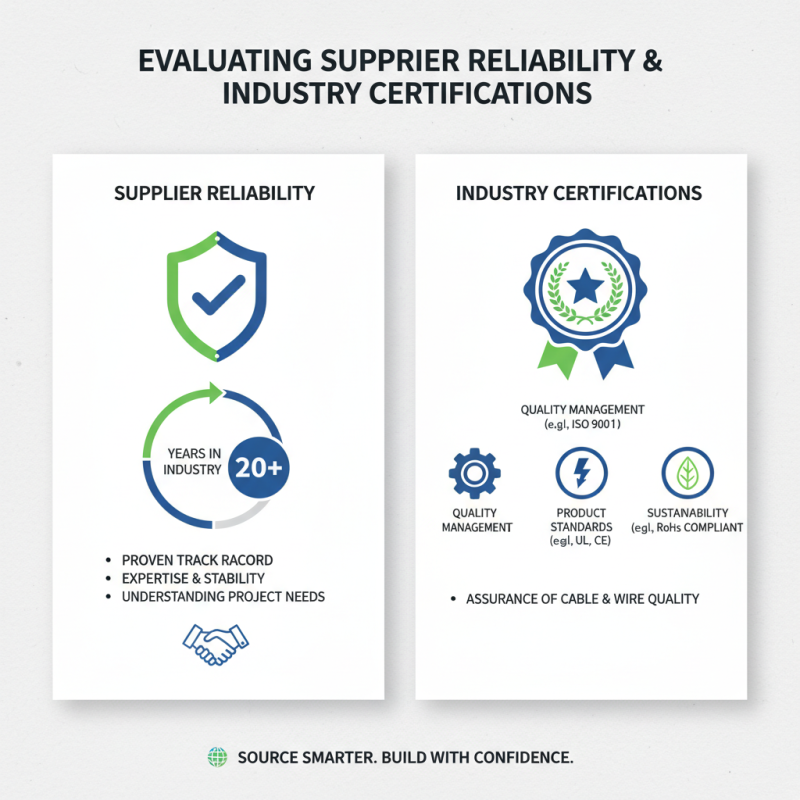
When sourcing cable and wire solutions, assessing supplier reliability feels crucial. A proven track record speaks volumes. Look for suppliers who have been in the industry for many years. They often demonstrate expertise and stability. Their long-standing presence usually suggests they understand the challenges and requirements of various projects.

Industry certifications can also provide insights into a supplier’s credibility. Certifications often indicate adherence to specific quality standards. It’s essential to check what certifications a supplier holds. This can reflect their commitment to quality and safety. However, be cautious. Some suppliers may claim certifications they do not possess. It’s wise to verify these claims through independent resources.

Trust but verify is a useful rule in this case. Asking for references can be beneficial. Reliable suppliers will willingly provide customer testimonials. Consider reaching out to these references for first-hand experiences. Remember, not all suppliers will meet your expectations. Some might fail to deliver on time or do not maintain consistent quality. Taking the time to evaluate suppliers carefully can lead to better outcomes for your projects.

Assessing Material Quality and Compliance Standards in Cable Products

Assessing the quality of materials in cable products is crucial. High-quality materials ensure safety and longevity. Factors like conductivity and insulation impact performance. Conductivity affects energy efficiency. Insulation quality determines resistance to heat and moisture, which are vital for durability.

Compliance with industry standards is another key consideration. It’s essential to verify that the products meet established safety regulations. This reduces the risk of failures in critical applications. Certifications from recognized organizations can offer peace of mind. Yet, many products on the market lack proper documentation, which can be concerning.

When selecting cable and wire solutions, consider the sourcing process. Sometimes, suppliers may prioritize cost over quality. This can lead to regrettable choices and increased long-term costs. Conducting thorough audits can reveal lapses in compliance. It’s necessary to ask questions and inspect materials rigorously. An informed decision-making process can significantly reduce risks associated with subpar products.

Analyzing Cost-Effectiveness vs. Performance in Wire Solutions

Top 10 Tips for Sourcing the Best Cable and Wire Solutions?

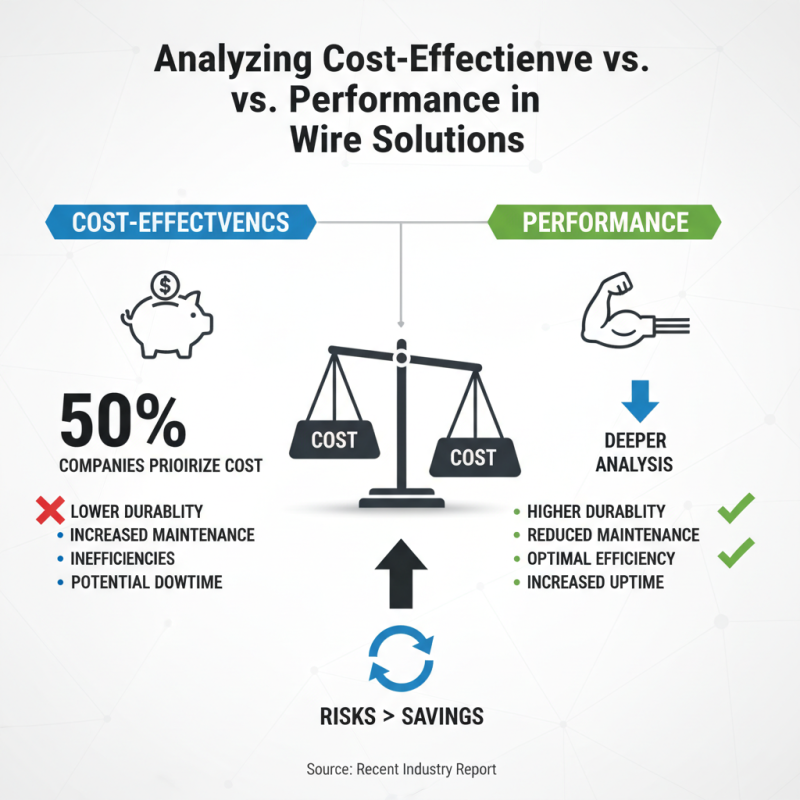
When sourcing cable and wire solutions, balancing cost-effectiveness and performance is critical. A recent industry report states that 50% of companies prioritize cost over performance. This approach can lead to challenges such as lower durability and increased maintenance costs. Inferior cables often result in inefficiencies and potential downtime. Such risks can outweigh initial savings, demonstrating the importance of a deeper analysis.

Performance metrics are essential in evaluating wire solutions. According to research, high-performance cables can reduce energy loss by up to 25%. These cables often feature advanced insulation and materials, improving conductivity and safety. While they may come with a higher upfront cost, their longevity and efficiency can justify the investment. Cost alone does not guarantee value. Choosing wires suited to specific applications enhances reliability.

In the industry, simply focusing on price can lead to regret. Some manufacturers may reduce costs by using subpar materials. This results in a product that may fail under pressure and increase overall operational costs. Understanding your specific needs will help navigate this complexity, ultimately leading to a better decision. A thoughtful assessment of both cost and performance fosters a more sustainable sourcing strategy in the long run.

Navigating Supply Chain Challenges and Lead Time Considerations

Navigating supply chain challenges is critical when sourcing cable and wire solutions. Many companies face uncertainties caused by fluctuating market demands and geopolitical factors. This situation complicates the procurement of quality materials. Lead time considerations also play a vital role in ensuring timely project completion. Sometimes, delays can occur due to unexpected disruptions.

Understanding potential bottlenecks in the supply chain can help mitigate risks. Establishing strong relationships with suppliers can provide valuable insight into their capabilities. Diversifying sources is another tactic to reduce dependency. While this approach adds layers of complexity, it can offer more options.

Monitoring inventory levels is essential. Companies should strive to maintain a buffer stock to handle sudden spikes in demand. However, overstocking can lead to excess costs, presenting its own challenges. Regularly reviewing these metrics can pinpoint areas for improvement. Flexibility is important. Adjusting to changes in production schedules is sometimes necessary to meet client needs.

Top 10 Tips for Sourcing the Best Cable and Wire Solutions

Go to Top