China Top 10 TFT LCD Display Manufacturers in 2026?
China’s TFT LCD Display industry enters 2026 with strong manufacturing depth and intense price competition. Omdia industry assessments indicate that Chinese panel makers control more than 70% of global LCD production capacity. TrendForce reports also show continuing investment in large-generation fabs, automotive panels, and high-resolution monitor products. These figures explain China’s influence, but capacity alone does not prove product quality.
Performance varies sharply.
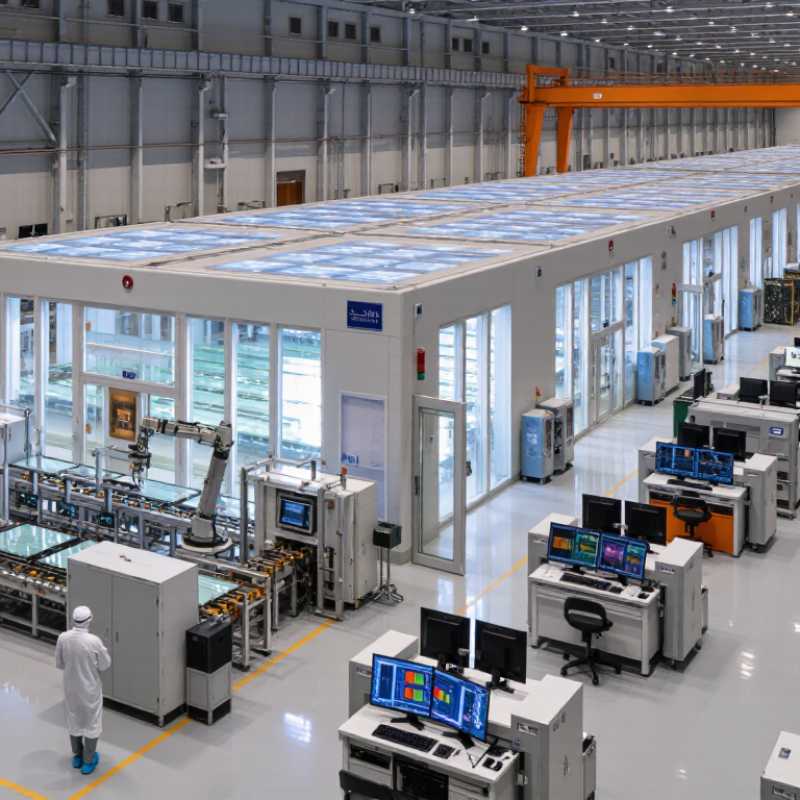
Leading manufacturers compete through glass-generation size, yield rates, response time, brightness, and long-term supply stability. BOE, China Star Optoelectronics Technology, Tianma, and others serve television, notebook, automotive, industrial, and medical display markets. Their factories can resemble small cities, with cleanrooms operating continuously and inspection systems checking microscopic defects.
David Hsieh, an Omdia display industry analyst, has described China as “the center of gravity for LCD panel production.” This observation remains useful for understanding the 2026 market. However, it should not become an excuse for a simplistic ranking. A supplier with enormous capacity may not suit a medical monitor or a sunlight-readable vehicle display. The best choice depends on application, certification, customization, delivery history, and after-sales engineering.
This guide evaluates China’s top 10 TFT LCD Display manufacturers using publicly available industry research, manufacturing capability, technology coverage, and market reputation. Some company data is difficult to compare. Disclosure standards are uneven. Therefore, the ranking is practical rather than absolute, and readers should verify current specifications before making procurement decisions.
What Defines a Leading TFT LCD Display Manufacturer in China
What defines a leading TFT LCD display manufacturer in China is more than production volume or a polished website. In 2026, buyers should examine engineering depth, process control, and long-term reliability. A capable manufacturer can explain pixel structure, viewing angles, brightness, contrast, and interface compatibility in clear technical language. It should also provide samples with consistent color, stable backlights, and clean glass edges.
Factory evidence matters. Buyers can review ISO-based quality procedures, incoming material records, aging-test data, and lot traceability. Automated optical inspection helps detect dead pixels, mura, scratches, and uneven illumination. Experienced teams also manage custom sizes, cover lenses, touch integration, and harsh operating temperatures. Small details count. A loose connector can damage an otherwise excellent design.
Supply reliability separates strong manufacturers from ordinary suppliers. A dependable partner communicates realistic lead times, maintains backup sources, and reports engineering changes before shipment. Packaging should protect panels from vibration, moisture, and pressure during transport. Yet no factory is perfect. Even a qualified supplier may show color variation between batches or underestimate tooling delays. That is why pilot orders, independent measurements, and written acceptance standards remain essential. The best evaluation is not based on promises alone. It combines factory observations, technical documents, sample testing, and honest discussion of limitations.
What Defines a Leading TFT LCD Display Manufacturer in China?
A leading manufacturer is evaluated not only by production scale, but also by yield stability, technology coverage, cost efficiency, quality systems, and supply-chain resilience. The chart presents a practical procurement-weighting framework for comparing manufacturers without using company or brand data.
The percentages represent a structured evaluation model: manufacturing scale and capacity are important, while yield, product capability, quality assurance, cost control, and supply continuity together determine long-term competitiveness.
China’s Top 10 TFT LCD Display Manufacturers in 2026
China’s Top 10 TFT LCD Display Manufacturers in 2026 reflect a highly competitive supply chain. These manufacturers serve automotive panels, industrial controls, medical equipment, retail terminals, and smart appliances. Their strengths usually include stable glass sourcing, automated assembly, precise driver integration, and flexible order volumes. However, “top” should not mean the largest factory alone. A reliable supplier must also provide consistent brightness, accurate color, strong viewing angles, and traceable quality records.
From practical sourcing experience, buyers should compare sample performance under real conditions. Test displays at low temperatures, direct sunlight, and continuous operation. Check touch response, backlight uniformity, dead-pixel control, and connector durability. Production capacity matters, but engineering support can matter more during customization. Ask for inspection reports, aging-test results, material declarations, and clear warranty terms. Some suppliers present impressive samples, yet mass production may show small color shifts. That difference deserves attention.
Tips: Request three samples from separate batches. Measure brightness with the same instrument. Confirm the exact panel, controller, cable, and firmware before approval. Also review communication speed after the sale. A perfect specification sheet is not enough. No ranking is permanent. Market performance, technology investment, and delivery reliability can change during 2026. My own assessment would remain cautious until long-term production data becomes available.
Core Technologies and Product Categories of Each Manufacturer
China’s ten leading TFT LCD manufacturers cover distinct production strengths rather than one identical technology path. A large-panel producer commonly uses Gen 10.5 or Gen 8.6 a-Si lines for televisions and desktop monitors. Another focuses on oxide-TFT panels, offering sharper images, lower leakage, and better power efficiency. A mobile-display specialist develops LTPS LCD panels for tablets, handheld terminals, and compact notebooks. Its higher pixel density supports crisp text.
An IPS or ADS manufacturer targets office monitors, medical screens, and professional workstations. Wide viewing angles matter here. A VA-focused producer emphasizes deep contrast for televisions and curved gaming displays. An automotive supplier builds TFT LCD modules with high brightness, wide temperature tolerance, and anti-glare coatings. These panels may operate behind thick dashboard glass. An industrial-display maker usually combines TN or IPS structures with rugged frames, long-life LEDs, and stable operation in dusty factories.
A small and medium-size manufacturer serves handheld devices, payment terminals, and human-machine interfaces. Its strengths often include flexible dimensions and quick customization.
Another integrates capacitive touch sensors directly into the display, reducing thickness and assembly steps. A premium monitor supplier adds Mini-LED backlighting, local dimming, and high refresh rates for gaming or design work. The tenth manufacturer may concentrate on low-cost standard TFT modules for appliances and control panels.
Specs require careful checking. Claimed brightness can change after aging tests. Color accuracy may also depend on the backlight and calibration process. A buyer should request measured data, temperature reports, sample testing, and production traceability. A perfect panel is still unlikely. Small compromises remain.
Manufacturing Capacity, Markets, and Competitive Advantages
China’s top ten TFT LCD manufacturers in 2026 will be judged by capacity, utilization, and market reach. TrendForce estimated that China held over 70% of global LCD production capacity in 2024. That scale supports stable supply for televisions, monitors, vehicles, and industrial equipment. The ranking is not perfectly clean. Some producers report installed capacity, while others emphasize monthly output or revenue.
Large-generation fabs remain a major advantage. They produce larger glass sheets, reducing waste in television and monitor panels. Smaller-generation lines still matter for automotive displays, tablets, and specialized equipment. Omdia’s Display long-term demand analysis shows continued LCD demand in large-area applications, despite rapid growth in OLED. This creates a practical market split. Cost leadership matters most in televisions. Reliability and customization matter more in vehicles.
Export networks also separate the leading ten from weaker competitors. According to UN Comtrade data, China remains a major exporter of flat-panel display products, serving Asia, Europe, North America, and emerging markets. Local supply chains shorten delivery times for glass, drivers, backlights, and module assembly. Energy use remains a concern, especially in large fabs. The International Energy Agency has repeatedly identified industrial electricity efficiency as a key competitiveness issue. Some capacity may look impressive on paper but perform poorly during weak demand. That point deserves more scrutiny in 2026. Availability, yield, after-sales engineering, and transparent reporting should carry more weight than factory size alone.
How to Select the Right Chinese TFT LCD Display Supplier
Selecting a Chinese TFT LCD supplier requires more than comparing quotations. TrendForce reported that China held over 70% of global large-size LCD production capacity in 2024. This scale creates choices, but also uneven process control. Ask for factory audit records, panel yield data, and three months of outgoing inspection results. A polished sample is not enough.
Match the supplier’s process to your product. Confirm active-area tolerance, brightness, viewing angle, interface type, and operating temperature before discussing price. For automotive applications, check IATF 16949 capability and PPAP experience. For industrial equipment, request lifetime estimates, firmware support, and traceability from glass input to final packing. Omdia’s 2024 display forecast showed LCD retaining a dominant position in large-area demand through 2030, so long-term capacity planning matters. Reserve capacity in writing, including tooling ownership and end-of-life notice periods.
I would test at least three samples from separate batches. Measure luminance at the center and four corners. Inspect dead pixels after thermal cycling, not only at room temperature. Review AQL rules carefully; “zero defect” may mean different things. The weak point is often communication. A supplier may answer quickly but avoid engineering details. Request drawings, change-control procedures, and escalation contacts. Pricing still matters, obviously. Yet a cheaper panel can become expensive after connector changes, unstable color, or repeated field failures. My own scorecard would weight quality and continuity above the first quotation.