
Blog

You are here:

2026 Top Foldable Golf Umbrella Suppliers for Global Buyers

A Foldable Golf Umbrella must do more than fit inside a golf bag. It should open smoothly, cover a player and their equipment, and stay manageable when the weather turns. For global buyers, choosing a supplier means looking beyond a product photo. Canopy size, fabric weight, frame materials, handle comfort, and folding length all affect everyday use. Small details matter.

This guide to 2026’s top foldable golf umbrella suppliers helps buyers compare manufacturers and sourcing options with practical questions in mind. Look for clear product specifications, consistent quality checks, responsive communication, and samples that match production expectations. Ask how suppliers test opening mechanisms and frame durability, and how they handle custom colors, logos, packaging, and order quantities. A confident sales pitch is useful, but it is not proof. Request evidence, then check whether the details hold up.

The right supplier depends on the buyer’s market, budget, and intended use. A lightweight umbrella for promotional programs may need different features from a sturdier model designed for regular golf rounds. There is no single perfect choice. Even an established supplier can miss a requirement if the brief is vague, and buyers can overlook practical issues while focusing on price. A careful comparison can reduce those risks. The following sections outline supplier selection criteria, product features, and sourcing considerations to help global buyers make a more informed decision.
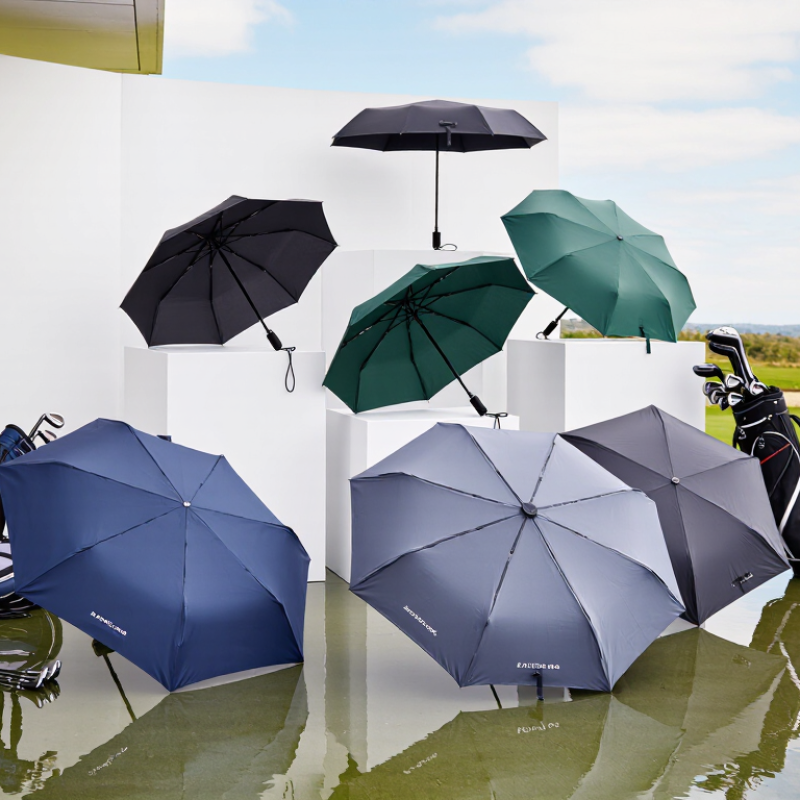
2026 Top Foldable Golf Umbrella Suppliers for Global Buyers

What Defines a Foldable Golf Umbrella in 2026?

What Defines a Foldable Golf Umbrella in 2026?

A foldable golf umbrella combines generous coverage with a frame that closes for easier carrying. Many models offer a canopy around 60 to 68 inches across, though suppliers may measure the arc rather than the diameter. Check the stated measurement carefully. A compact design should still shelter a golfer and part of a bag without feeling awkward in the hand. Fiberglass ribs can reduce weight and flex in gusts, while a vented canopy may let some wind pass through. Neither feature makes an umbrella storm-proof.

For buyers, practical details matter as much as canopy size. Compare folded length, packed weight, grip comfort, and opening mechanism using a physical sample. Ask suppliers how they test repeated opening and closing, water shedding, and frame alignment. A quick spray test can reveal pooling or slow drainage, but it cannot replace longer wear testing. Fabric claims also need context: ask for the coating type and any documented water-resistance results.

Tips: Test the umbrella beside a golf bag, not only indoors. Check whether wet fabric folds inward cleanly, and whether the strap keeps the bundle secure. One detail is easy to miss: a very large canopy can catch wind and feel tiring over several holes. Balance coverage against handling, then confirm the production sample matches the approved specification.

2026 Top Foldable Golf Umbrella Suppliers for Global Buyers – What Defines a Foldable Golf Umbrella in 2026?

Supplier evaluation benchmarks for buyers. Product measurements and features vary by design; confirm final specifications and test documentation with each supplier.

Evaluation dimension Practical buyer benchmark What to verify with the supplier
Foldable golf format A multi-section shaft and frame that fold into a shorter package than a conventional full-length golf umbrella. Open and folded dimensions, folding mechanism, and a physical sample for handling checks.
Canopy coverage Golf umbrellas are commonly marketed with a canopy arc around 60–68 in (approximately 152–173 cm); coverage depends on the canopy shape and measurement method. Whether the stated size is an arc, diameter, or another measurement; request the open-canopy dimensions.
Frame and shaft materials Common constructions use metal or fiberglass components. Fiberglass ribs are often selected for flexibility, but performance depends on the complete frame design. Material specification for ribs, stretchers, shaft, joints, and handle; request construction details rather than relying on a general “windproof” label.
Wind performance Vent panels and flexible frame elements may help manage gusts, but no umbrella is immune to damage in severe wind. Ask for the test method, conditions, results, and any warranty exclusions behind wind-resistance claims.
Canopy fabric and water resistance Polyester is a common umbrella-canopy fabric. Water repellency depends on the fabric, coating or finish, seams, and construction. Fabric composition, fabric weight, finish details, and documented water-resistance test results where required.
Opening and closing Manual and automatic opening mechanisms are both available; automatic opening does not necessarily mean automatic closing. Confirm the exact operating sequence, button placement, closing force, and cycle-test method or results.
UV-protection claims UV protection varies with fabric, color, construction, and testing; a claim such as UPF 50+ should be supported by relevant test documentation. Request the report, test standard, tested fabric or finished product, and claim scope for the supplied model.
Customization and sampling Common options can include canopy colors, printed artwork, handles, sleeves, and packaging; availability depends on the supplier and order requirements. Obtain a written specification, artwork proof, sample approval process, tooling or setup charges, and change-control terms.
Quality control and traceability A documented inspection plan can help buyers check dimensions, operation, appearance, and workmanship against an approved sample. Ask for inspection criteria, defect classification, production-lot identification, and pre-shipment inspection options.
Export and packaging readiness Carton dimensions, packing quantity, and shipping terms affect freight planning; requirements differ by destination and sales channel. Confirm carton measurements and gross weight, packaging configuration, destination-specific documentation, lead time, and agreed shipping terms.

Key Materials, Designs, and Performance Features

Foldable golf umbrellas must balance canopy coverage with a shaft and frame compact enough for travel. Polyester remains a practical canopy choice because it dries quickly and resists stretching when wet. Textile Exchange’s Materials Market Report 2024 estimates that recycled polyester reached 12.5 million tonnes in 2023, about 12% of global polyester production. Recycled fabric can support material goals, but a recycled-content claim alone says little about coating quality or service life. Ask suppliers for composition records and inspect stitching around the canopy seams.

Frame design matters in gusty, exposed golf courses. Fiberglass ribs flex differently from steel ribs, while aluminum shafts can reduce carry weight. Neither material guarantees wind resistance. Check rib count, joint construction, opening mechanism, and whether the frame was tested repeatedly after folding. Small details count. A loose runner can make a large canopy awkward to close. For water resistance, request test results rather than relying on terms like “waterproof.” ISO 811:2018 describes a hydrostatic-pressure test for assessing water penetration through textile fabrics; it does not certify an entire umbrella. Compare test conditions and results across samples. That extra check may feel fussy, but supplier specifications are sometimes incomplete.

2026 Top Foldable Golf Umbrella Suppliers for Global Buyers — Key Materials, Designs, and Performance Features

Textile UPF ratings indicate how much ultraviolet radiation a fabric blocks. The values below are calculated from each rating’s maximum UV transmission; they are a fabric-performance reference, not a supplier ranking.

A higher UPF rating means less UV radiation passes through the tested fabric. Actual umbrella protection can also depend on canopy coverage, fabric construction, and use conditions.

How to Evaluate Foldable Golf Umbrella Suppliers

Assess a foldable golf umbrella supplier with a physical sample, not a polished catalog. Open and close it repeatedly, then inspect the hinge, runner, ribs, and handle for looseness or sharp edges. Spray the canopy and check seams, panels, and the point where fabric meets the frame. Ask for test reports that state the method, sample size, pass criteria, and test date. Small details matter. A wind test without a stated wind speed is hard to compare. I would also request production samples, not just a hand-finished prototype; the difference can be significant.

Review practical capacity alongside product quality: monthly output, peak-season lead times, defect tracking, carton dimensions, and replacement-part availability. UNCTAD’s Review of Maritime Transport 2024 reports that over 80% of global trade volume moves by sea, so shipping readiness deserves close scrutiny. Ask suppliers how they protect packed umbrellas from crushing and moisture, and request recent shipment records with customer details removed. Compare the same specifications across suppliers, including canopy size, folded length, frame material, and packaging. One caution: a low quoted price may exclude testing or sturdier cartons. I would not judge reliability from a single sample or one successful order.

Comparing Manufacturing Capacity and Quality Standards

Global buyers should compare verified output, not factory promises. The R&A’s Global Golf Participation Report 2023 estimated 108 million golf participants across 146 countries, including on-course and off-course play. That broad market calls for stable production across sizes, colors, and seasonal orders. Ask suppliers for monthly output, peak-season capacity, lead times, and records of recent deliveries. A large factory can still miss deadlines when fabric or frame components arrive late.

Quality checks should be specific. Request fabric water-repellency results, frame corrosion checks, and documented opening-and-closing cycle tests. AATCC TM22 can assess water repellency, while ISO 2859-1 provides sampling plans for inspecting production lots. These checks do not guarantee a durable umbrella, but they make comparisons clearer. The ISO Survey 2023 reported about 1.46 million valid ISO 9001 certificates worldwide; certification supports process control, not proof that every umbrella passes inspection.

Review a recent batch report, not just a polished sample. Check canopy seams, shaft alignment, handle bonding, and whether the umbrella opens smoothly after repeated use. No factory is perfect. Ask how it records defects, replaces failed parts, and prevents the same issue from recurring. Third-party inspection before shipment can help, especially when first orders involve custom specifications.

Global Sourcing, Pricing, and Logistics Considerations

Global buyers sourcing foldable golf umbrellas in 2026 should compare suppliers against a shared specification, not just a catalogue photo. Record canopy diameter, folded length, frame material, fabric weight, handle style, and opening mechanism. Ask for a physical sample. A smooth opening in a showroom does not guarantee reliable performance after repeated use or exposure to wind and rain.

Request itemized quotations that separate unit price, sample charges, packaging, tooling, and freight. Confirm the order quantity behind each price tier and the currency and delivery terms used. A low factory price can become less attractive when cartons are bulky or protective packaging is inadequate. Costs vary by specification and route, so check current freight estimates before approving a budget. It is easy to overlook small charges.

For logistics, confirm production lead time, carton dimensions, gross weight, and the planned port or shipping method. Ask the supplier how finished goods are inspected and how defects are documented before dispatch. Build time for sample approval and production checks into the schedule; holiday closures and port congestion can shift arrival dates. Even a careful plan can miss something. I would still verify carton measurements independently, because estimates sometimes differ from the packed shipment. Keep written records of specifications and approved changes, so both parties can resolve discrepancies without relying on memory.

Go to Top