
China is a major source of concrete production equipment, but choosing a supplier takes more than comparing machine prices. An Electric Block Machine must suit the blocks you plan to make, your available floor space, and your daily production target. Small details matter: mold-change time, vibration consistency, hydraulic performance, and how easily operators can reach service points. A polished catalog helps, but it cannot show every factory condition.
This guide to the Top Electric Block Machine Manufacturers in China gives buyers a practical starting point. It looks at product range, manufacturing capability, customization, technical support, and the clarity of published specifications. Manufacturing quality expert W. Edwards Deming wrote, “Quality comes not from inspection, but from improvement of the production process.” That principle applies to block machinery, where stable processes influence block dimensions and surface finish. Ask suppliers for operating videos, detailed specifications, and references from comparable projects. Check what is included in installation and after-sales support.
There are trade-offs. A high output claim may depend on an ideal mix, skilled operators, and uninterrupted material supply. A lower-priced machine may also require extra work to integrate with existing equipment. Some product pages leave these points unclear. That deserves a second look. Compare evidence, not promises, and confirm that the offered configuration matches your actual production needs.
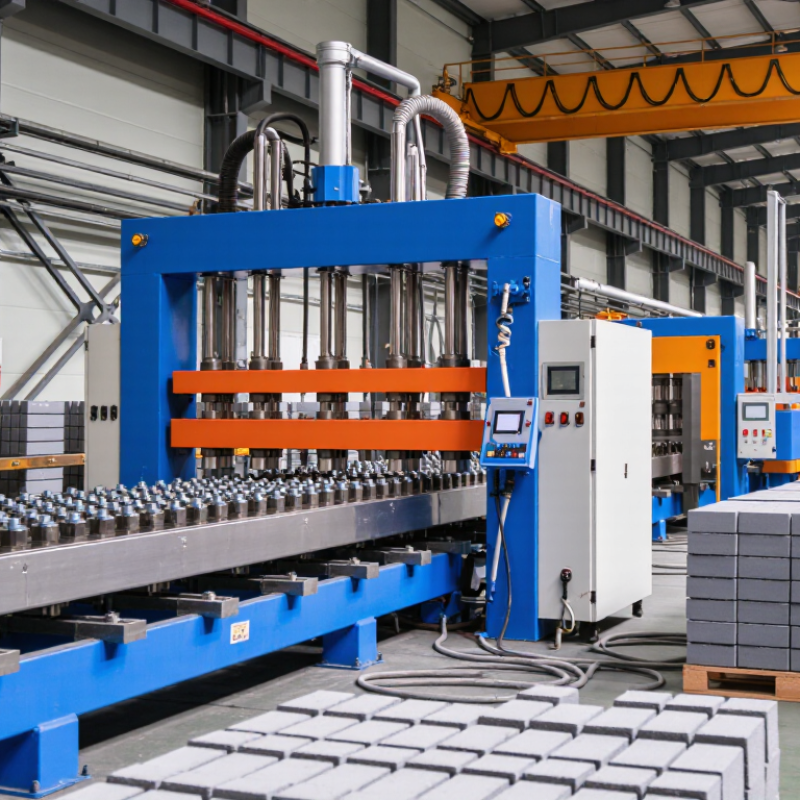
An electric block machine forms concrete masonry units using a mould, vibration, and compaction. Electric motors typically power the mixer, conveyor, hydraulic pump, or vibration system; the exact setup varies by machine. A measured mix enters the mould, where pressure and vibration help pack it around the mould’s edges. The fresh block is then released onto a pallet for curing. The process looks simple. Consistent blocks are not.
The Global Cement and Concrete Association’s Concrete Future roadmap describes global concrete production at roughly 14 billion cubic metres annually. That figure covers concrete broadly, not block-machine output, but it shows the scale of the material supply chain. For buyers, machine capacity alone is a weak comparison: mix consistency, mould accuracy, vibration control, and curing conditions also affect finished-block quality. A detail that is easy to overlook is power demand during repeated vibration cycles. Actual consumption depends on the machine design and operating conditions, so ask for measured data rather than relying only on a catalogue estimate.
Top Electric Block Machine Manufacturers in China
China’s Electric Block Machine Manufacturing Industry
China’s electric block machine industry supplies equipment for producing concrete blocks, pavers, and related building materials. Manufacturers compete on mold accuracy, vibration control, production consistency, and after-sales support. On a factory floor, small differences matter: uneven vibration can leave rough edges, while poorly aligned molds create rejects. Buyers should assess actual output using the block size and mix they plan to produce.
Demand is shaped by construction activity and pressure to control operating costs. The National Bureau of Statistics of China reported cement production of about 1.83 billion tonnes in 2024, down 9.5% year on year, in its industrial output data. This is useful context, not a direct measure of block-machine sales. A shrinking cement market can make efficient production more important, but it does not guarantee that every plant will invest in new equipment. That shift is not automatic.
Tips: Request a live production test. Check cycle time, block dimensions, power consumption, and spare-part availability. Ask how performance changes with different raw-material moisture levels. Real conditions can be less tidy than a brochure.
Common concrete product dimensions manufactured using electric block machines
The chart compares representative nominal dimensions for concrete masonry units and paving blocks. Actual product sizes vary by market and applicable standards; these dimensions describe products, not machine production capacity.
Assessing leading electric block machine manufacturers takes more than comparing quoted cycle speeds. The International Energy Agency’s Cement report notes that cement production causes about 7% of global carbon dioxide emissions. Efficient, consistent production therefore matters. Ask manufacturers to demonstrate output using your mix, mold, and curing conditions—not just a showroom sample.
Measure saleable blocks per hour, dimensional variation, rejected units, and electricity use per 1,000 blocks. Request a witnessed production test and record the results. Numbers need context. Check whether the manufacturer’s quality system is certified to ISO 9001, and confirm the certificate’s scope and validity. Certification supports process control; it does not prove that a machine will meet your targets.
Inspect the actual control cabinet, vibration system, guarding, and maintenance access. Ask for service logs, operator training details, and realistic spare-part lead times. A polished factory tour can still leave gaps. Even a careful test has a blind spot: local aggregate, power quality, and operator skill may change results. Request references from plants with comparable products, then verify their experience directly.
Profiles of notable electric block machine manufacturers in China are best judged by their engineering and service capabilities, not by broad production claims. Some focus on compact machines for small workshops, while others build automated lines with mixers, conveyors, and curing systems. A useful profile should explain machine capacity, mold options, control systems, and the support available after installation. Details matter. Ask how output figures were measured and what block size they represent.
Manufacturers with in-house machining and assembly may offer closer control over fit and finish. Look for clear specifications, wiring diagrams, and practical maintenance instructions. A factory visit, when possible, can reveal how components are stored and whether finished machines undergo testing. Request references for installations with similar materials and production targets. Not every claim is easy to verify. That is worth admitting. Compare response times, spare-part availability, and operator training alongside price. A machine may look capable in a brochure, yet routine cleaning or mold changes can take longer than expected. Those small details shape daily production.
Electric block machine manufacturers in China offer equipment ranging from compact, semi-automatic presses to automated production lines. Product comparisons should look beyond hourly output. Check block dimensions, mold-change time, vibration settings, and the power supply required. A machine rated for high output may not suit a small yard with limited space. Details matter.
Applications shape the right choice. Contractors making standard hollow blocks may prioritize steady production and simple mold changes. Paving-stone producers often need tighter control over surface finish and dimensions. Ask how the machine handles your actual mix, including its moisture level and aggregate size. A sample run is more useful than a brochure. Still, test conditions may differ from daily production.
Service can separate similar machines. Compare installation guidance, operator training, spare-parts availability, and remote troubleshooting. Ask for clear maintenance intervals and a parts list before ordering. Response times deserve attention, especially when production depends on one machine. Some suppliers provide broad support, while others leave more setup work to the buyer. That trade-off is easy to overlook. A careful comparison should include the curing area, pallet handling, and the skill level of local operators—not just the press itself.
Contact Us