Top Chromium Carbide Wear Plate Manufacturers Worldwide?
Choosing among the top chromium carbide wear plate manufacturers worldwide requires more than comparing hardness numbers. A reliable review must examine alloy chemistry, deposition methods, welding controls, plate flatness, and field performance. These details decide whether a liner survives abrasive ore, crushed stone, coal, or cement dust.
Tribology expert Dr. Ernest Rabinowicz defined wear as “the progressive loss of substance from the operating surface of a body.” His observation remains highly relevant to chromium carbide wear plate selection. A plate may show impressive laboratory hardness, yet fail early beside a vibrating transfer chute. Poor fit-up, uneven overlays, thermal cracking, or incorrect welding can shorten service life. Sometimes, the overlooked detail matters most.
This guide introduces manufacturers with attention to production experience, technical documentation, quality testing, and customer support. It considers overlay uniformity, carbide distribution, substrate strength, cut-edge practices, and delivery consistency. It also recognizes an uncomfortable truth: no single manufacturer is best for every application. Material flow, impact energy, operating temperature, and maintenance access change the decision.
Some claims deserve caution. Marketing pages often highlight hardness without explaining test methods or wear conditions. That gap can mislead buyers. Therefore, the comparison focuses on evidence rather than reputation alone. Factory certifications, sample reports, dimensional records, and verifiable project references provide stronger signals. The ranking may still require judgment, because real operating data is not always publicly available. For engineers and procurement teams, that limitation is worth remembering. A durable plate is not merely hard. It must suit the complete working environment.
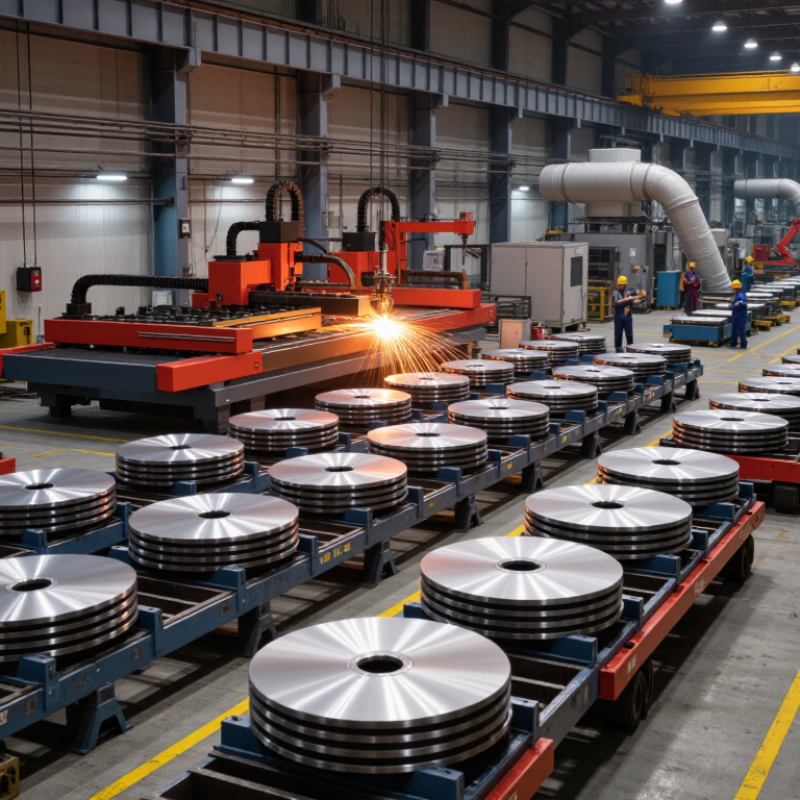
Chromium Carbide Wear Plates: 20–35% Chromium and 55–65 HRC Hardness
Chromium carbide wear plates are widely used in mining, cement, steel, recycling, and power plants. Their overlay commonly contains 20–35% chromium, forming hard chromium carbides inside a tougher steel matrix. The overlay often reaches 55–65 HRC. That hardness resists sliding abrasion from ore, clinker, coal, and sharp mineral particles. It does not make the plate immune to impact.
When comparing manufacturers worldwide, examine more than catalog figures. Reliable producers should provide chemical analysis, hardness test results, overlay thickness, and base-metal specifications. Ask how they control dilution during welding. Excessive dilution can reduce carbide content near the fusion line. Experienced suppliers also explain cutting, forming, and repair limits. A plate may show 62 HRC in testing yet fail early under heavy impact. This is where application experience matters. Laboratory data alone is not enough.
Tips: Match hardness with the actual wear pattern. Use higher chromium content for severe sliding abrasion, but consider tougher grades for repeated impact. Check whether measurements apply to the surface or the full overlay. Inspect samples for cracks, uneven beads, and exposed soft areas. Small relief cracks can be normal in some overlays, but wide cracks deserve investigation. Installation quality also matters. Poor support, excessive heat, or incorrect welding can shorten service life. I would also request recent production records, not only older certificates. Manufacturers should explain their testing methods clearly, because marketing language can hide important differences.
Top Chromium Carbide Wear Plate Manufacturers Worldwide? - Chromium Carbide Wear Plates: 20–35% Chromium and 55–65 HRC Hardness
| Manufacturer Profile | Primary Manufacturing Region | Typical Chromium Content
(wt.%) | Typical Overlay Hardness
(HRC) | Common Plate Thickness
(mm) | Typical Base Plate | Common Applications | Common Quality Documentation |
| Large-scale plate producers | East Asia | 20–35 | 55–65 | 6–30 | Mild steel or low-alloy structural steel | Mining chutes, screens, hoppers, crushers, conveyors | Chemical composition report, hardness report, dimensional inspection, visual inspection |
| Specialized overlay welding manufacturers | Europe | 22–35 | 58–65 | 8–40 | Carbon steel, quenched-and-tempered steel, or boiler-grade steel | Cement plants, steel mills, power plants, recycling equipment | Welding procedure records, material certificates, hardness mapping, ultrasonic testing when specified |
| Custom fabrication and repair specialists | North America | 20–30 | 55–62 | 6–25 | Abrasion-resistant structural steel or carbon steel | Aggregate processing, asphalt plants, material handling, agricultural equipment | Traceability records, weld inspection, dimensional report, repair documentation |
| Heavy-industry wear component manufacturers | India and South Asia | 20–35 | 55–65 | 6–32 | Mild steel or low-carbon steel | Iron ore handling, coal plants, cement production, mineral processing | Mill test certificate, chemical analysis, hardness readings, weld quality inspection |
| Regional wear-liner fabricators | Australia and Oceania | 20–32 | 58–65 | 8–30 | Structural steel or abrasion-resistant steel | Mining trucks, transfer chutes, bucket liners, screening systems | Inspection and test plan, hardness survey, dimensional report, batch traceability |
| Industrial wear-plate converters | Southeast Asia | 20–30 | 55–60 | 6–25 | Carbon steel and low-alloy steel | Palm-oil mills, quarry equipment, conveyors, waste-processing systems | Incoming material certificates, weld inspection, hardness test, cutting and dimensional records |
Technical note: Chromium carbide overlay plates generally use a carbon-steel or low-alloy-steel backing plate with a chromium-rich iron-based weld overlay. Actual chemistry, hardness, crack pattern, thickness tolerance, and test requirements vary by welding process, plate size, substrate, and application.
Global Ranking Criteria: Abrasion Resistance, Capacity, Certifications, and Delivery
Top Chromium Carbide Wear Plate Manufacturers Worldwide?
Global ranking should begin with abrasion resistance, not advertising claims. ASTM G65 testing measures rubber-wheel wear, where lower mass loss usually indicates better performance. However, field results can differ. A quarry chute handling sharp granite may wear faster than a conveyor carrying softer limestone. Serious manufacturers should provide batch-level test reports, chemical analysis, hardness readings, and welding guidance. A single impressive laboratory number is not enough.
Capacity also requires careful checking. The World Steel Association reported approximately 1.89 billion tonnes of crude steel production worldwide in 2023. This scale shows why production depth matters, but steelmaking volume does not prove wear-plate expertise. Buyers should verify annual chromium carbide overlay output, available widths, thickness tolerances, and heat-treatment controls. Certifications such as ISO 9001 and EN 10204 3.1 documentation strengthen traceability. Delivery deserves equal weight. The World Bank’s 2023 Logistics Performance Index highlights customs, infrastructure, tracking, and timeliness as practical supply-chain factors. A technically excellent plate is still a poor choice if it arrives after a crusher shutdown.
Tips: Request recent test certificates, not generic brochures. Compare lead times for standard and customized sizes. Check whether the supplier stocks plates near major ports. Ask for welding procedures and repair advice. My own caution is simple: capacity figures can be difficult to audit, and “fast delivery” may exclude cutting, packing, or export clearance. Rank suppliers using verified evidence, then review the score annually.
Top Chromium Carbide Wear Plate Manufacturers Worldwide
This chart presents a transparent global screening framework rather than company-specific rankings. The evaluation weights reflect the practical importance of abrasion testing, manufacturing capacity, quality certifications, and delivery performance when comparing chromium carbide overlay wear plate suppliers.
Top Chromium Carbide Wear Plate Manufacturers by Region and Production Scale
Top Chromium Carbide Wear Plate Manufacturers Worldwide?
Chromium carbide wear plate production varies sharply by region and scale. Large Asian manufacturers often operate continuous overlay lines, serving mining, cement, steel, and power projects. Their advantage is volume, consistent plate sizes, and competitive lead times. However, buyers should verify batch records, not rely on capacity claims alone.
European producers commonly focus on engineered solutions and controlled metallurgy. They may offer tighter dimensional tolerances, detailed welding guidance, and application-specific overlays. North American manufacturers often combine medium-scale production with custom fabrication, including formed liners and replacement panels. In India, regional capacity is expanding, while Australian and South American suppliers may emphasize local cutting, fitting, and technical support rather than primary plate production.
Production scale matters, but it is not the only measure of reliability. I have found that practical inspections reveal more than polished brochures. Request hardness maps, chemical analysis, thickness readings, and recent test certificates. Check whether the reported hardness applies across the plate or only near the surface. Ask how cracks are controlled; stress-relief cracks can be normal, yet excessive cracking may affect installation. Small workshops sometimes respond faster, but their inspection systems can be uneven. Large plants can provide stronger documentation, although communication may feel slower. A site audit, sample weld test, and reference project often expose gaps between advertised performance and field behavior. Real wear conditions remain difficult to reproduce. That uncertainty deserves honest discussion.
Supplier Comparison: Chemistry, Plate Life, Warranty, Lead Time, and Cost per Ton
Top Chromium Carbide Wear Plate Manufacturers Worldwide?
Comparing wear plate suppliers requires more than chromium percentage. A reliable review checks carbon content, chromium range, weld overlay structure, and base plate chemistry. These details affect cracking, impact resistance, and service stability. Ask for heat numbers, mill certificates, and independent test reports. In abrasive chutes, a harder surface may last longer, but excessive brittleness can cause edge failure. Plate life should be estimated from abrasion type, material size, impact energy, and operating temperature. Supplier claims need field evidence, not attractive laboratory figures.
Warranty terms deserve close reading. Some cover manufacturing defects only, while others include minimum service hours under defined conditions. Lead time also changes project risk. A quoted 20-day delivery may exclude cutting, inspection, export packing, or inland transport. Cost per ton should include freight, machining, installation, replacement labor, and production downtime. I once underestimated fitting costs; the cheaper plate became more expensive after installation. That mistake is easy to repeat.
Tips: Request a sample wear test using your actual feed material. Compare thickness loss after a fixed operating period. Confirm tolerances before cutting begins. Check whether warranty coverage excludes welding distortion or unsuitable support design. Also, ask for replacement availability. A supplier with slightly higher pricing may reduce downtime, but this is not always true. Record every assumption in the purchase agreement, especially chemistry limits, hardness range, delivery date, and inspection responsibility.