Top 10 AC Wallbox Chargers for Global Buyers?
Choosing an Ac Wallbox Charger is not simply a matter of comparing charging speed. Global buyers must examine connector standards, voltage compatibility, safety certification, software support, and installation conditions. A charger that works perfectly in a European garage may require different wiring in North America or Asia. Small details matter, including cable length, weather protection, screen visibility, and load balancing.
CharIN chair Claas Bracklo has stated, “Interoperability is the key to making electric mobility work.” This principle guides our selection of the Top 10 AC Wallbox Chargers for Global Buyers. Each model should be judged through practical evidence, not attractive specifications alone. Real-world questions matter: Can the unit manage a crowded household circuit? Does the mobile app remain stable after updates? Can local electricians access replacement parts and technical support?
Performance is only one part of trust.
This guide compares charging power, connectivity, installation flexibility, safety features, warranty coverage, and overall value. It also considers apartment parking, outdoor driveways, fleet depots, and homes with solar systems. Some products appear impressive on paper but feel less convincing during daily use. That is worth admitting. Pricing and availability can also change by region, so no single charger fits every buyer. Our recommendations therefore balance published technical data with practical ownership concerns, helping readers identify an Ac Wallbox Charger that suits their vehicle, property, climate, and local electrical environment.
What an AC Wallbox Charger Is and How It Works
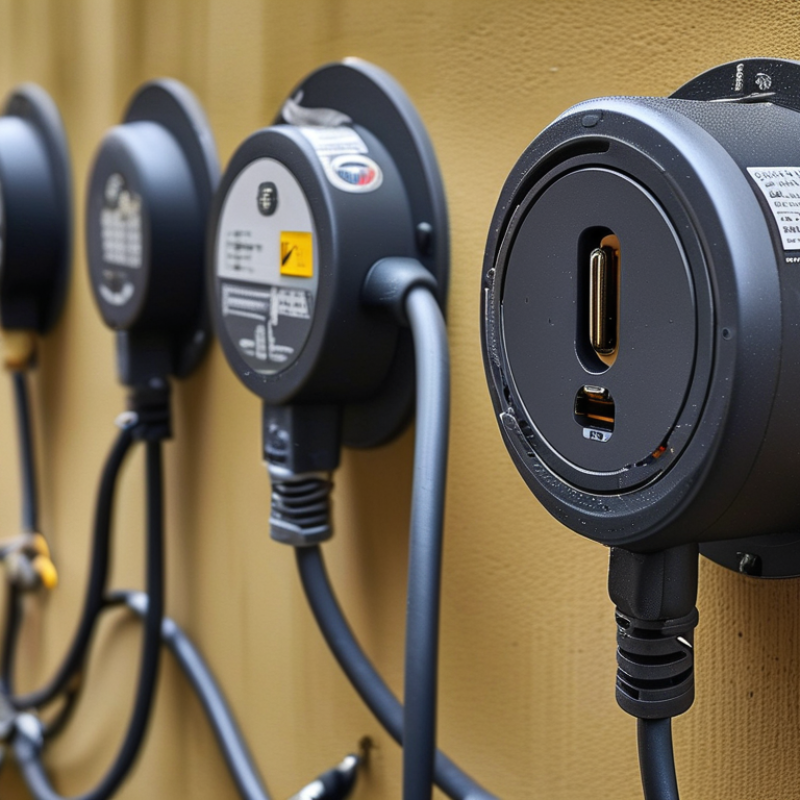
An AC wallbox is a dedicated electric-vehicle charger fixed to a building wall. It sends alternating current through a protected cable to the vehicle’s onboard charger. The car then converts AC into direct current for the battery. The box negotiates safely. It controls current, checks connection status, and stops power during faults.
Typical home units deliver 3.7, 7.4, 11, or 22 kilowatts. Actual speed depends on phase supply, cable size, vehicle limits, and local installation quality. A 7.4-kilowatt unit can add roughly 35–50 kilometres of range per hour for many vehicles. That estimate varies with efficiency and weather.
The International Energy Agency reported more than 14 million new electric-car sales in 2023, increasing demand for dependable private charging infrastructure. Its Global EV Outlook 2024 also highlights the continuing expansion of charging networks worldwide.
For global buyers comparing the top 10 AC wallbox chargers, electrical protection deserves equal attention. Look for residual-current protection, temperature monitoring, secure cable management, and clear energy readings. Smart load balancing can reduce household overload when ovens or heat pumps operate simultaneously. The IEC 61851 charging framework provides an important technical reference, but certification remains country-specific.
The installation is often more important than the screen or mobile application. Small detail, big consequence. Buyers should verify grid compatibility and installer competence before choosing maximum power. Some product claims sound precise, yet field performance can disappoint when wiring, voltage, or software settings are overlooked.
Top 10 AC Wallbox Chargers for Different Buyer Needs
Top 10 AC Wallbox Chargers for Different Buyer Needs
The right AC wallbox depends on the buyer, not only charging speed. The International Energy Agency reported over 14 million electric car sales in 2023. It also recorded more than four million public charging points worldwide. Home charging remains practical because vehicles usually sit overnight. Choose a compact unit for apartment parking, a weatherproof model for outdoor driveways, or a three-phase charger for faster daily recovery. Single-phase homes need different hardware from commercial buildings. Check the electrical supply first.
The ten strongest choices serve distinct needs: budget buyers, apartment residents, family households, fleet operators, solar users, cold-climate drivers, high-mileage commuters, accessibility-focused users, small businesses, and shared parking facilities. Dynamic load balancing helps homes avoid tripping the main breaker. Solar integration can shift charging toward midday generation. OCPP compatibility supports future software changes, but compatibility claims deserve careful testing. Marketing language is often vague.
Safety matters more than decorative screens. Look for IEC 61851 compliance, residual-current protection, temperature monitoring, and suitable ingress protection. A tethered cable saves time, while a socketed design offers flexibility. The IEA expects charging demand to expand sharply through 2035, so repairability and firmware support should influence the purchase. My earlier shortlists overvalued maximum power. A 7.4 kW wallbox may serve many drivers better than an 11 kW model. Installation quality still decides real-world reliability.
Regional Standards, Compatibility, and Installation Requirements
Top 10 AC Wallbox Chargers for Global Buyers?
Regional standards matter more than attractive charging speeds. The IEA’s Global EV Outlook 2025 reports over 17 million electric cars sold worldwide in 2024. That growth increases demand for dependable home charging, but one wallbox cannot suit every grid. European installations commonly use Type 2 connectors and IEC 61851 communication. North American systems follow different connector and voltage practices. China mainly uses GB/T requirements. Australia and several Asian markets often combine Type 2 with local electrical rules.
Check compatibility before comparing the top ten. A 7.4 kW unit may require a 32-amp single-phase circuit. An 11 kW unit usually needs three-phase power and suitable building wiring. Small apartments may need dynamic load management. They may not support simultaneous appliances safely. Residual-current protection, earthing, surge protection, and cable temperature limits also require professional inspection. Outdoor units should provide suitable ingress protection, especially near rain, dust, or coastal air.
Installation evidence is essential. The International Energy Agency reports that global public charging points reached almost four million by the end of 2023, yet private charging remains central for daily use. Look for documented testing against IEC, UL, GB, or equivalent regional standards. Confirm firmware support, authentication options, and utility approval. Specifications can be confusing. I would not trust a universal compatibility claim without checking the vehicle inlet, phase supply, connector, and local installer requirements.