China Top 10 Power Substation Manufacturers in 2026
China’s power infrastructure is entering a demanding decade. Electricity demand is rising, renewable projects are expanding, and grid flexibility is becoming essential. The International Energy Agency’s Electricity 2024 report forecasts average global electricity-demand growth of 3.4% annually from 2024 to 2026. That growth will place new pressure on transformers, protection systems, switchgear, and digital controls.
The challenge is not limited to generation capacity. The IEA’s Electricity Grids and Secure Energy Transitions report estimates that more than 80 million kilometres of power grids must be added or refurbished by 2040. Annual grid investment may need to exceed USD 600 billion by 2030. A modern Power Substation therefore acts as more than a connection point. It balances voltage, isolates faults, supports renewable integration, and protects critical loads during disturbances.
Liu Zhenya, former chairman of State Grid Corporation of China, described ultra-high-voltage transmission as “the backbone of the strong smart grid.” His observation remains highly relevant. China’s manufacturers now compete across ultra-high-voltage equipment, compact GIS solutions, intelligent substations, and low-carbon technologies. Yet no ranking is perfect. Product quality can vary between projects, regions, and service teams. Factory capacity alone proves little.
This guide reviews China’s top 10 Power Substation manufacturers in 2026. It considers engineering capability, certification, project experience, after-sales support, delivery reliability, and digital-substation expertise. The analysis also reflects practical details, such as monitoring accuracy, enclosure durability, maintenance access, and response time after installation. These factors often decide whether equipment performs reliably in a real control room.
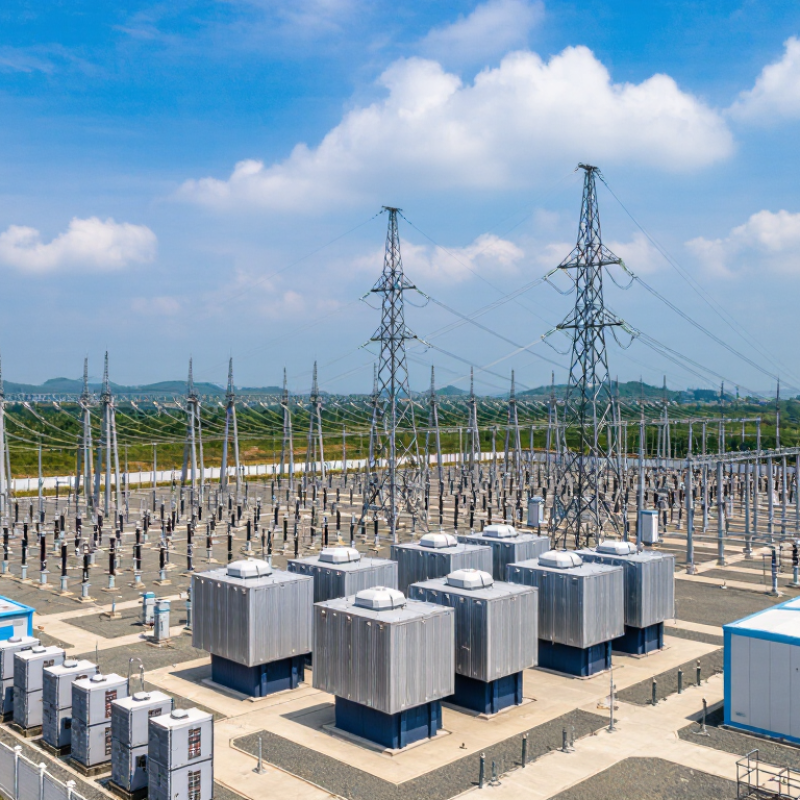
China’s 2026 Substation Market: NEA Capacity Data and UHV Expansion
China’s power substation market is entering 2026 with capacity expansion still tied to national grid planning. NEA data shows continued investment in transmission, renewable integration, and regional power balancing. New substations must handle volatile wind and solar output. They also need stronger voltage control and faster fault isolation.
UHV expansion remains a major market driver. UHV AC and DC corridors move electricity across long distances, from western generation bases to eastern load centers. This demand supports suppliers with proven experience in transformers, GIS equipment, protection systems, and digital monitoring. A practical evaluation should examine tested capacity, maintenance response, delivery records, and compliance documentation. Factory scale alone is not enough.
The top 10 manufacturer discussion should therefore focus on measurable capability, not publicity. NEA releases offer useful direction, but market rankings remain imperfect. Public order data can be incomplete. Some manufacturers disclose projects selectively. That matters.
At a substation site, reliability becomes visible in small details: sealed cabinets, clear cable labeling, stable cooling, and accessible inspection points. Digital substations also require secure data architecture and trained operators. UHV projects increase technical demands, yet local distribution upgrades still need attention. This uneven development may reshape supplier performance in 2026.
Ranking Method: Revenue, Production Capacity, IEC 60076 and Export Metrics
China Top 10 Power Substation Manufacturers in 2026
This ranking uses four measurable indicators: revenue, production capacity, IEC 60076 compliance, and export performance. Revenue receives 35% of the score, based on audited statements and transformer-related sales. Production capacity receives 25%, using annual MVA output, factory lines, and verified delivery records. The China Electricity Council reported national electricity consumption of about 9.85 trillion kWh in 2024, a 6.8% year-on-year increase. That demand supports a practical capacity test.
IEC 60076 evidence contributes 20%. Reviewers examine routine tests, type tests, temperature-rise results, short-circuit capability, and independent laboratory records. Certificates alone are not enough.
The remaining 20% measures export value, destination coverage, repeat orders, and delivery consistency. Customs data under HS 8504 provides useful guidance, although this category includes several transformer types. The comparison therefore requires careful filtering.
Public reports from the International Energy Agency indicate continuing grid investment as electricity demand expands across Asia. Export strength matters. So does engineering discipline. A factory may report large capacity, yet equipment, skilled testing staff, or copper supply can limit real output.
This is where the method remains imperfect. Some private manufacturers disclose limited financial information, while public figures may combine distribution and power-transformer sales. The final top ten should therefore be treated as a transparent industry benchmark, not an absolute verdict.
Top 10 Manufacturers: Products from 110 kV Distribution to 1,000 kV UHV
China’s 2026 substation manufacturing landscape covers equipment from 110 kV distribution networks to 1,000 kV ultra-high-voltage systems. That range is not cosmetic. At 110 kV, manufacturers must prioritize compact layouts, safe switching, and reliable urban power delivery. At 1,000 kV, insulation coordination, thermal stability, and electromagnetic performance become far more demanding.
The International Energy Agency’s Electricity 2024 report estimates that annual global grid investment must exceed USD 600 billion by 2030, up from roughly USD 400 billion in 2023. This expansion strengthens demand for transformers, gas-insulated switchgear, protection systems, and digital monitoring platforms. For a credible top-ten assessment, buyers should compare rated capacity, short-circuit withstand, partial-discharge results, cooling performance, and field-service records. Product brochures are not enough.
The China Electricity Council reported that China’s installed power-generation capacity surpassed 3.3 billion kW in 2024.
Such scale requires substations that operate steadily under heavy loading and extreme weather. IEC 60076 testing, factory acceptance records, and independently verified efficiency data provide stronger evidence than marketing language.
One weakness remains. Public rankings often favor output volume over long-term reliability. A better review also checks maintenance response, spare-parts availability, and failure statistics. Some published figures are difficult to verify. That gap deserves scrutiny.
Technology Comparison: Digital Substations, Low-Loss Transformers and Grid Automation
China’s top 10 power substation manufacturers in 2026 are competing through smarter, cleaner, and more responsive grid technology. Digital substations now replace many copper connections with fiber communication, reducing wiring complexity and improving operating visibility. Engineers can monitor breaker timing, insulation status, and temperature from a control platform. Faster diagnosis matters during storms and heavy industrial demand.
Low-loss transformers are another major comparison point. Improved core materials and better winding design can reduce no-load and load losses throughout the equipment’s service life. This benefit appears quietly on energy bills. Grid automation adds further value through remote switching, fault location, and automatic service restoration. However, software quality depends on accurate sensors, secure networks, and disciplined maintenance. Hardware alone cannot create a reliable substation.
Tips: Compare measured loss data, not brochure claims. Request factory test records, field references, protection response times, and communication standards. Check whether technicians can update systems without long outages. A practical site visit often reveals more than a polished presentation. I would also question oversized automation packages; they may increase training costs and create unused functions. Perfect integration is still difficult. Older equipment, mixed protocols, and weak data management can slow progress. Buyers should score lifecycle reliability, cybersecurity controls, spare-parts access, and local service capability beside the purchase price.
China Power Substation Technology Comparison, 2026
The chart presents technology-level engineering benchmarks rather than company or brand data. Digital substations can reduce copper control wiring and improve signal transmission speed; low-loss transformers reduce no-load energy losses; grid automation improves fault isolation and service restoration performance. Actual results vary by voltage level, project design and operating conditions.
2026 Outlook: Renewable Integration, State Grid Investment and Global Demand
China’s top ten power substation manufacturers in 2026 face a more demanding market. Renewable integration is changing substation design, financing, and maintenance. Large solar and wind bases often sit far from industrial loads. Their electricity must travel through high-voltage corridors with strict stability requirements. Manufacturers are upgrading transformers, protection systems, digital monitoring, and reactive-power support. Field experience shows that reliable equipment begins with accurate site data, not brochures. Dust, altitude, salt spray, and temperature changes can shorten service life. Small design assumptions become expensive during commissioning.
State Grid investment remains a major demand driver for transmission and distribution upgrades. Public tenders increasingly examine lifecycle cost, testing records, cybersecurity, and delivery capacity. A low purchase price is not enough. Factory acceptance tests and spare-parts planning influence actual performance. Independent inspections can strengthen buyer confidence. Global demand is also rising for compact substations in industrial parks, transport systems, and renewable projects. Export work requires careful attention to grid codes, documentation, language, and after-sales response. This remains uneven. Some manufacturers offer strong engineering, but overseas communication can still disappoint. That weakness deserves honest review.