China Top 10 Fuel Pump And Commutator Suppliers?
China’s fuel pump industry serves automotive, agricultural, motorcycle, and industrial equipment markets worldwide. Within this supply chain, the commutator remains a small but critical component. Its copper segments, insulation, and balancing quality can influence motor noise, brush wear, and service life. This guide introduces China’s top 10 Fuel Pump And Commutator suppliers through a practical sourcing lens.
The selection considers manufacturing experience, product range, material control, testing capacity, export history, and customer support. Factory visits, technical datasheets, sample evaluations, and production feedback offer stronger evidence than attractive website claims. Important details include commutator runout, hook strength, copper purity, dielectric performance, and dimensional consistency. These points matter when a pump operates inside a hot engine compartment for thousands of hours. They also help buyers compare suppliers beyond simple unit pricing.
No ranking can capture every factory’s daily reality. That limitation matters. A supplier may perform well on prototypes but struggle during large-volume production. Another may offer excellent commutators while lacking complete fuel pump assembly capability. Buyers should confirm tooling ownership, inspection records, traceability, packaging standards, and after-sales response before signing agreements. Independent samples and repeated testing remain sensible safeguards. Some information may change as factories expand, replace equipment, or develop new materials. Therefore, this overview should support further verification, not replace it. The strongest supplier is not always the largest one. It is the partner that consistently meets drawings, tolerances, delivery expectations, and documented quality requirements.
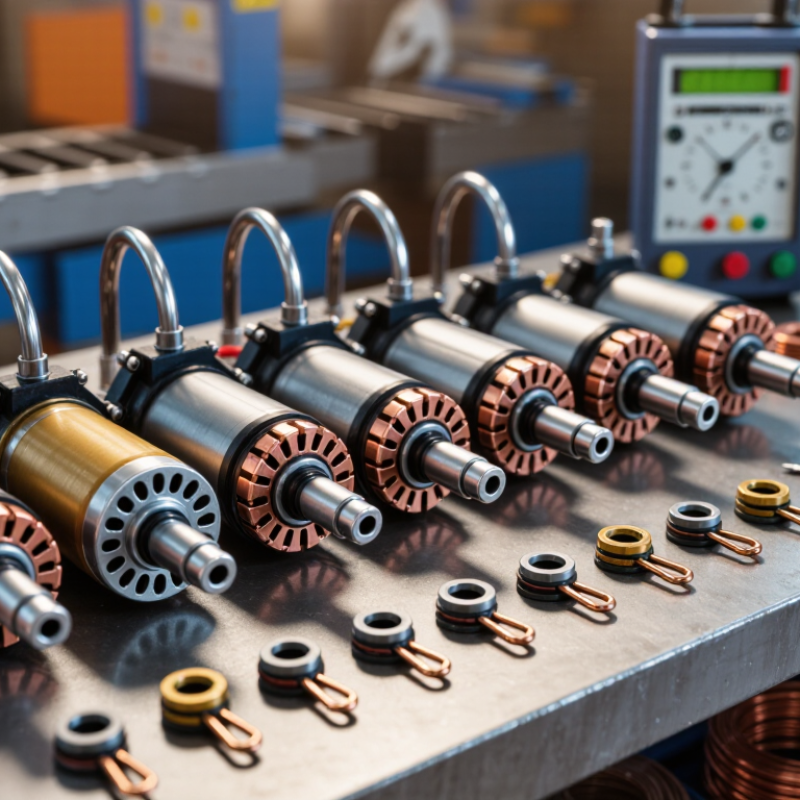
How Fuel Pumps and Commutators Work in Automotive Systems
An electric fuel pump moves fuel from the tank to the engine at controlled pressure. In many vehicles, a small DC motor drives the pump impeller or turbine. Fuel passes around the motor, helping remove heat and reduce friction. The commutator is central to this process. It switches current between armature coils as the rotor turns. Carbon brushes contact its segmented copper surface, keeping torque continuous.
This design is compact and responsive. It can also wear. Brush dust, surface arcing, and uneven commutator wear may increase electrical noise or reduce pump speed. Fuel quality and tank temperature matter more than many maintenance guides suggest.
The U.S. Department of Energy notes that fuel-system controls increasingly adjust pump output to reduce unnecessary electrical load. OICA reported 93.5 million motor vehicles produced globally in 2023, showing the scale of this component’s duty cycle. SAE technical literature also links motor temperature, brush contact, and commutator geometry with service life.
Exact results vary by vehicle. That is the uncomfortable part. A pump that sounds normal may still deliver unstable pressure under load.
Technicians should check current draw, pressure, ripple, and voltage at the module, not rely on noise alone. Suppliers therefore need tight commutator balancing, clean brush seating, and consistent winding resistance. Small deviations matter.
Key Criteria for Evaluating Chinese Fuel Pump Suppliers
China Top 10 Fuel Pump And Commutator Suppliers?
Choosing Chinese fuel pump suppliers requires more than comparing online prices. Examine their manufacturing experience, engineering staff, and documented quality procedures. A reliable supplier should explain pump flow, pressure, noise, temperature resistance, and expected service life with clear test records.
Ask for traceability from copper wire and insulation to finished commutators. Inspect dimensional controls, balancing equipment, welding quality, and surface treatment. For fuel pumps, request sample testing under cold starts, continuous operation, voltage variation, and vibration. Independent laboratory reports can add confidence, but they should match the actual production model.
Visit the factory when possible. Check whether inspection stations are active, clean, and properly calibrated. Review production capacity, defect records, corrective actions, and delivery history. A capable supplier should also provide stable technical communication after sampling, not only before receiving an order.
Small details matter.
One practical weakness is relying too heavily on certificates. Documents may be current, yet process discipline can change between audits. I have found pilot orders and repeated sample tests more revealing than polished presentations. Discuss tooling ownership, warranty handling, packaging protection, and replacement procedures before approval. The best evaluation combines evidence, factory observation, and cautious testing rather than optimistic promises.
Overview of China’s Top Ten Fuel Pump Manufacturers
China’s top ten fuel pump manufacturers represent a broad industrial network, from large automotive suppliers to specialized motor-component producers. Their products commonly support passenger vehicles, commercial fleets, and replacement markets. A credible review should examine more than production volume. It should compare pump pressure, flow stability, electrical efficiency, noise control, and service life.
Manufacturers with strong engineering teams usually validate pumps through temperature cycling, vibration testing, endurance runs, and contamination checks. They also inspect commutators, carbon brushes, armatures, seals, and housings during production.
Experienced suppliers provide test records, material certificates, and traceable batch numbers. These details help buyers identify consistent quality rather than attractive catalog claims. Factory audits still matter.
Not every supplier publishes complete performance data. That is a weakness. Some profiles show impressive equipment but limited field evidence. Buyers should request samples, technical drawings, failure-analysis reports, and production-capacity information before selecting a partner. Certification can support confidence, but it cannot replace independent testing. The best candidates normally offer flexible voltage ranges, stable export packaging, responsive engineering support, and clear warranty procedures. Market rankings may also change as factories upgrade equipment, develop quieter motors, or improve fuel-resistance materials. Any “top ten” list should therefore remain a practical reference, not a permanent verdict.
Overview of China’s Leading Fuel Pump Commutator Suppliers
China’s leading fuel pump commutator suppliers serve automotive, motorcycle, and industrial pump manufacturers. Their products commonly use copper segments, insulating layers, and molded support bodies. Experienced suppliers control dimensional accuracy within tight ranges. This matters when a pump operates under heat, vibration, and continuous electrical load.
Many factories combine stamping, molding, machining, balancing, and electrical testing in one production system. Engineers often inspect segment spacing, shaft fit, surface finish, and insulation resistance. Samples may undergo thermal cycling and extended rotation tests. Good suppliers also provide material traceability and batch inspection records. Ask for those records.
Production capacity varies widely. Some suppliers focus on high-volume standard parts, while others develop custom commutators for compact fuel modules. Design discussions should cover brush material, operating voltage, rotation speed, and expected service life. Small differences can affect noise and current stability. That detail is easy to miss.
Supplier evaluation should include factory experience, process consistency, equipment maintenance, and communication quality. A polished sample is not enough. I would review several production batches before approving a long-term order. Even reliable factories may show variation after tooling changes or material substitutions. Clear drawings, incoming inspection, and periodic audits reduce that risk. Cost matters, but unstable performance creates greater expense.
How to Select the Right Supplier for Your Application
Selecting among China’s leading fuel pump and commutator suppliers requires more than comparing unit prices. Start with application data: fuel type, operating voltage, flow rate, pressure, temperature, and expected service life. A pump for a compact passenger car may not suit a heavy-duty vehicle or hybrid platform. OICA reported 93.5 million motor vehicles were produced globally in 2023, showing the scale of automotive demand and the pressure on suppliers to deliver stable, repeatable quality.
Ask for measurable evidence. Review IATF 16949 certification, process-control plans, endurance-test results, and traceability records for magnets, copper wire, brushes, and commutator materials. The supplier should explain how it controls runout, resistance, noise, vibration, and electrical wear. Request samples from normal production, not specially prepared units. That detail matters. The IEA reported electric car sales exceeded 14 million in 2023, yet internal-combustion and hybrid vehicles still require reliable fuel-system components across many markets.
Evaluate the factory, not only the sales team. Check automated assembly, balancing equipment, leak testing, change-control procedures, and laboratory capability. Confirm whether the supplier can support PPAP documents, engineering changes, packaging tests, and after-sales failure analysis. Ask for a realistic production lead time and a clear response plan for rejected lots. A low quotation can hide weak validation or unstable material sourcing. I have seen technically attractive samples fail after production scaling; one overlooked commutator tolerance can create noise, heat, and premature brush wear. Supplier selection should therefore combine audit findings, test data, communication quality, and total cost over the product life.