
Blog

You are here:

Top 10 100% ePTFE Membrane Manufacturers Worldwide

The worldwide market for advanced membrane materials is expanding across filtration, medical protection, electronics, and outdoor equipment. Industry reports from Grand View Research and MarketsandMarkets identify filtration and clean manufacturing as important demand centers. Their findings also show that performance requirements increasingly influence purchasing decisions, not price alone.

This article examines the Top 10 100% Eptfe Membrane Manufacturers Worldwide. Here, “100% Eptfe Membrane” refers to a membrane made from expanded polytetrafluoroethylene, rather than a blended polymer film. That distinction matters. A microscope reveals a fine, interconnected pore structure. The structure supports airflow while resisting liquid water under controlled conditions. Actual results still depend on thickness, lamination, pore size, and testing methods.

Standards provide a useful reality check. ASTM F1671 evaluates resistance to blood-borne pathogen penetration, while ISO 811 measures hydrostatic pressure for textile materials. ASTM D737 can assess air permeability. These tests do not guarantee identical field performance. Installation, seam design, contamination, and aging can change the outcome.

Research and Markets reports on PTFE and membrane filtration also emphasize industrial demand for chemical resistance and stable operation. Yet market figures vary between reports because analysts define “membrane” differently. That inconsistency deserves attention. A supplier may advertise high performance, but buyers should verify test reports, production traceability, and batch consistency. Factory experience matters here. A small coating defect can become a visible failure in a finished filter or garment.

The manufacturers selected in this guide are considered through technical capability, product consistency, application experience, and documented quality practices. No ranking should replace independent validation. That is the uncomfortable part. Supplier claims need testing.
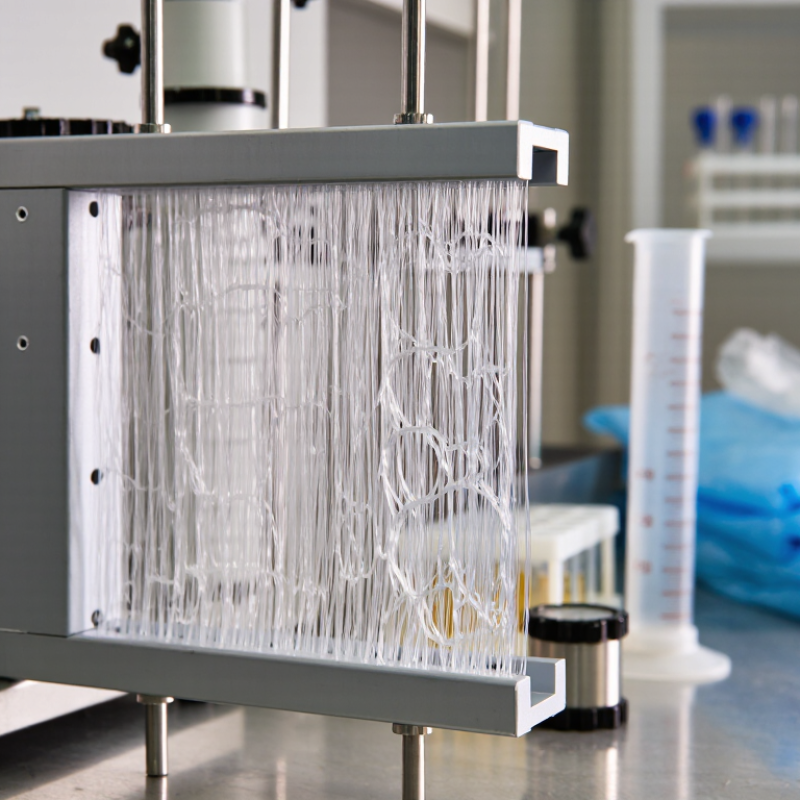
Top 10 100% ePTFE Membrane Manufacturers Worldwide

Definition and Key Properties of 100% ePTFE Membranes

A 100% ePTFE membrane is formed from expanded polytetrafluoroethylene, creating a microporous structure without blended polymer additives.

Its pores are far smaller than liquid water droplets, yet large enough for water vapor and air to pass. This balance supports waterproof, breathable performance in demanding filtration and protection systems.

The material offers strong chemical resistance, low surface energy, and stable performance across broad temperature ranges. It also resists moisture absorption and many corrosive substances.

However, “100% ePTFE” does not guarantee identical results between products. Pore size, thickness, tensile strength, air permeability, and processing quality can vary. The supporting fabric, sealing method, and installation environment also influence real performance.

Small pores matter. A membrane may perform well in laboratory testing but lose efficiency after repeated bending, contamination, or poor sealing. That practical gap deserves attention.

Tips:

Check the complete technical data sheet before comparing global manufacturers. Confirm pore size, water entry pressure, airflow, temperature limits, and chemical compatibility.

Request application-based test results when possible. Inspect seams and edges, not only the membrane surface.

A qualified supplier should explain test methods, tolerances, and expected service conditions clearly.

Avoid selecting only by price. Field experience shows that the cheapest option can create higher replacement and maintenance costs.

Manufacturing Process and Quality Standards for ePTFE Membranes

Top 10 100% ePTFE Membrane Manufacturers Worldwide

Manufacturing 100% ePTFE membranes starts with high-purity PTFE resin. The resin is blended with a controlled lubricant before paste extrusion. This creates a uniform, flexible tape. The tape then undergoes controlled stretching, forming a network of microscopic pores. Heat setting stabilizes the structure without melting the expanded material.

Temperature, stretching speed, and tension require close monitoring. Small variations can change pore size, air permeability, and tensile strength. Experienced production teams inspect the membrane across its full width, not only at selected points. That practice helps identify thin areas, wrinkles, and edge defects.

It is not perfect, though. Even advanced lines may produce occasional variation.

Quality Testing and Verification

Quality testing should follow documented procedures and calibrated equipment. Common checks include thickness, pore size, water entry pressure, airflow, tensile strength, and hydrostatic resistance. For industrial applications, manufacturers often align their systems with ISO 9001 principles and relevant ASTM or ISO test methods. Buyers should confirm the exact standard and test conditions.

“100% ePTFE” can describe the membrane material, but it may not describe the entire finished assembly. A support layer, adhesive, or coating can change performance.

Traceable batch records, retained samples, and independent verification provide stronger evidence than a specification sheet alone. Suppliers ranked among leading global manufacturers should show consistent results across production lots, not just impressive laboratory data.

Selection Criteria for Evaluating Global ePTFE Membrane Manufacturers

Selecting a 100% ePTFE membrane manufacturer requires more than comparing pore size or price. The term “100% ePTFE” should refer to the membrane material, not necessarily the complete laminate. Buyers should request resin declarations, cross-sectional data, and production records. This distinction is often missed.

Independent reports support careful capacity checks. MarketsandMarkets estimated the global PTFE market at about USD 3.1 billion in 2023, with continued growth toward 2028. Rising demand does not guarantee stable quality. Evaluate pore size distribution, air permeability, water entry pressure, thickness, tensile strength, and chemical resistance. Ask for test methods, not only performance numbers. ASTM and ISO-based testing improves comparison across suppliers. Small differences matter.

Manufacturing experience should be visible on the factory floor. Look for controlled stretching, clean handling, automated inspection, and batch-level traceability. Production capacity must include realistic lead times, not just annual output. Request three recent batch reports. Check whether results remain consistent across roll widths and thicknesses. A supplier should also explain temperature limits, sterilization compatibility, and storage conditions. Grand View Research has identified filtration and industrial applications as important growth areas for PTFE materials, increasing the need for dependable technical support. Environmental reporting deserves scrutiny too. Claims about recyclability or reduced emissions need measurable boundaries. Some evaluation methods remain imperfect, and buyers should document those uncertainties rather than hide them.

Top 10 100% ePTFE Membrane Manufacturers Worldwide

Top 10 100% ePTFE Membrane Manufacturers Worldwide

The top 10 100% ePTFE membrane manufacturers worldwide are best compared through measurable production capabilities, not advertising language. A true 100% ePTFE structure should be clearly defined, especially when support fabrics, coatings, or laminates are included. This detail can change performance results.

Experienced manufacturers control pore size, thickness, tensile strength, and air permeability during continuous production. They also test water entry pressure and chemical resistance for demanding filtration environments. Reliable facilities maintain clean processing areas, calibrated instruments, and batch-level traceability. These practices help buyers investigate defects instead of guessing.

Consistency matters most.

The strongest suppliers usually provide technical data, sample testing, and application guidance before large orders. Their membranes may serve industrial filtration, medical equipment, electronics protection, or outdoor systems. However, laboratory results do not always predict field performance. Temperature changes, folding, pressure cycling, and installation errors can affect service life.

A ranking is never perfect. Some manufacturers publish limited data, making direct comparison difficult. Buyers should request recent certificates, test methods, and production tolerances. They should also confirm whether “100% ePTFE” describes the membrane itself or the complete finished assembly. That distinction is easy to miss.

Applications, Market Reach, and Future Trends in ePTFE Membranes

The global ePTFE membrane market is shaped by demanding applications, not factory count alone. A credible top-ten review should examine pore structure, thickness control, tensile strength, and batch consistency. Field experience shows that small variations can affect airflow, waterproofing, and service life.

In protective clothing, 100% ePTFE membranes block liquid water while allowing vapor to escape. Medical filtration uses them where stable pores and clean processing matter. Industrial vents protect sensors, battery enclosures, and outdoor electronics from rain, dust, and pressure changes. Some facilities measure performance after bending, washing, thermal cycling, and chemical exposure. Laboratory data helps, but real installations often reveal more.

Market reach depends on converting membranes into reliable assemblies. Suppliers with regional converting partners can shorten lead times and adapt designs for local standards. Demand is growing in electric vehicles, renewable-energy equipment, advanced filtration, and lightweight outdoor products. Future development will likely focus on thinner structures, lower manufacturing waste, and improved recycling pathways. That part remains difficult. PTFE’s durability is valuable, yet its end-of-life handling needs more practical solutions. I would also question rankings based only on revenue or website claims. Independent test reports, traceable production records, and customer feedback provide stronger evidence. Still, even those sources may omit long-term field failures.

Go to Top