
Blog

You are here:

How to Choose the Best Laser Thermometer?

Choosing the right Laser Thermometer is not simply a matter of selecting the highest temperature range. A device may appear impressive online, yet perform poorly on a small, shiny metal connector. Real conditions matter more than attractive specifications. Steam, dust, sunlight, and uneven surfaces can all influence a reading.

A reliable choice begins with the measurement task. Check the required temperature range, accuracy, response time, and distance-to-spot ratio. If you inspect a circuit terminal from 30 centimeters away, the sensing area should remain smaller than that terminal. Otherwise, the thermometer may average the terminal with the surrounding panel. Emissivity is equally important. Dark rubber, painted steel, and polished aluminum may produce different readings under identical conditions. Adjustable emissivity can improve consistency, but it cannot correct every reflective surface.

Look for clear calibration information and practical guidance from the manufacturer. Reputable brands should explain testing methods, operating limits, battery performance, and environmental restrictions. A model designed for kitchen checks may not suit an industrial motor housing. It is also wise to compare the infrared reading with a contact probe during early use. Differences can reveal reflection problems, poor positioning, or a damaged sensor.

Do not trust a single number.

The best Laser Thermometer is the one that fits your surfaces, distance, and working environment. Price still matters, but the cheapest option can become costly when readings are inconsistent. My own evaluation would include repeated tests, not one convenient result. Even then, uncertainty remains. A careful buyer should record conditions and question unexpected measurements. That habit supports safer decisions and more dependable temperature monitoring.
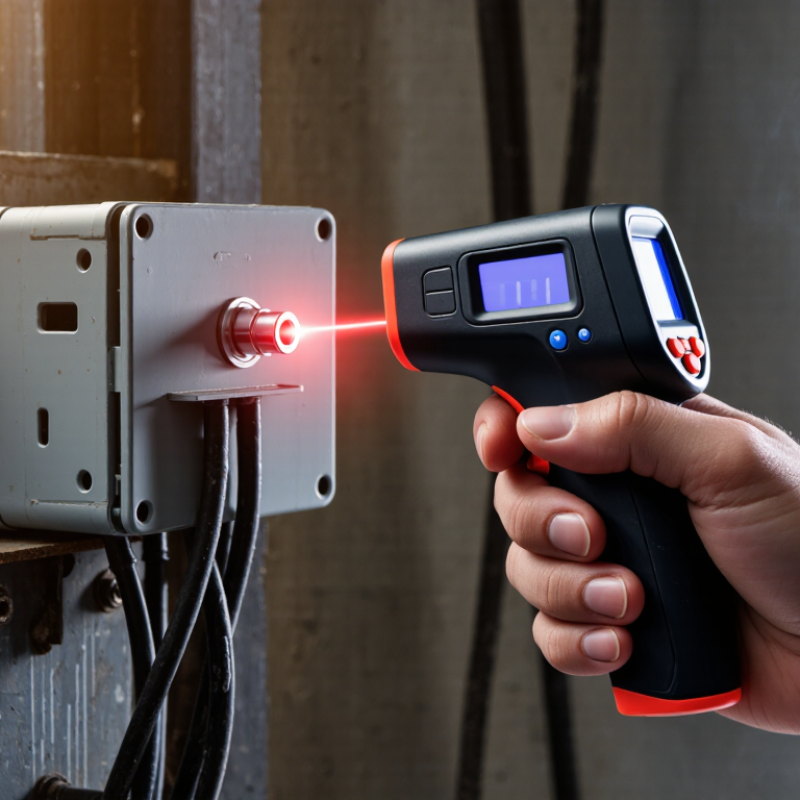
How to Choose the Best Laser Thermometer?

What Is a Laser Thermometer and How Does It Work?

A laser thermometer, often called an infrared thermometer, measures surface temperature without touching the object. Its infrared sensor detects heat energy radiating from the surface. The laser does not measure temperature. It only marks the approximate center of the measuring area. Inside, an optical system focuses infrared energy onto a detector. Electronics then convert that signal into a temperature reading. Distance matters. Every instrument has a distance-to-spot ratio, such as 12:1. At 12 inches, it may read a 1-inch spot. Exact ratios vary, so check specifications before trusting a small target.

Choosing one requires more than comparing the highest temperature range. Emissivity is critical. Matte metal, painted walls, food, and shiny foil reflect infrared energy differently. A fixed emissivity setting can produce misleading results on polished surfaces. I once checked a bright metal pipe and received a suspiciously low reading. Covering a small area with matte tape, then measuring the tape, gave a more useful comparison. Steam, glass, dust, and changing airflow can also distort readings. Professional models may offer adjustable emissivity, calibration information, repeatability data, and alarms.

Tips: Hold the thermometer perpendicular to the target and keep the lens clean. Measure a surface larger than the stated spot size. Let the device reach room temperature before demanding precision. Compare readings with a contact probe when safety permits. Avoid aiming through glass. Do not confuse the laser dot with the sensing area. My readings are not perfectly consistent, especially on reflective metal. That limitation deserves attention, not concealment. Record distance, surface condition, and emissivity settings beside important measurements.

Which Measurement Specifications Matter Most?

A laser thermometer is only as useful as its measurement specifications. In practice, accuracy should be checked before extra features. A reading of ±1°C may sound strong, but it often applies within a narrow temperature range. NIST Technical Note 1297 recommends reporting expanded uncertainty with a coverage factor of k=2, representing roughly 95% confidence. Ask whether the stated accuracy includes ambient temperature changes, surface emissivity, and instrument drift.

Emissivity is often overlooked. Painted metal, dull rubber, and human skin emit infrared energy differently. A fixed emissivity setting can create a misleading reading. That changes everything. ASTM E1965-98(2023) provides performance guidance for infrared thermometers, including accuracy testing under defined conditions. Check whether the thermometer supports adjustable emissivity, especially when inspecting shiny pipes or polished machinery. A piece of matte tape can improve consistency, but it is not a perfect solution.

Distance-to-spot ratio matters just as much. A 12:1 ratio means a 12-centimeter target area at 1.44 meters, not a single pinpoint. The target must fill that area. Response time also matters around moving equipment; a slow sensor may miss a brief temperature spike. Environmental specifications deserve attention too. ISO 18434-1 stresses controlling measurement conditions during infrared-based condition monitoring. I still find it easy to trust a clean digital display too quickly. Record the surface, distance, emissivity, ambient temperature, and repeat readings before making a maintenance decision.

How Do You Match a Thermometer to Your Application?

How to Choose the Best Laser Thermometer?

How Do You Match a Thermometer to Your Application?

Match the thermometer to the surface, distance, and working environment. The laser only shows where you are aiming. It does not measure temperature by itself. For a dark, matte metal housing, many infrared thermometers can provide stable readings. Shiny stainless steel is more difficult because it reflects nearby heat. A fixed-emissivity model may produce misleading results on that surface.

Check the distance-to-spot ratio before buying. If the target is a small bearing, the measured area must stay smaller than the bearing itself. At two meters, a wide measurement spot may include the shaft or surrounding air. I once trusted a distant reading that looked reasonable, but a closer measurement showed a meaningful difference. That mistake changed how I inspect equipment.

Consider the temperature range, response time, and display readability. A fast response helps when checking moving parts or electrical connections. For ovens and hot pipes, a wider range may matter more. Steam, dust, and glass can also affect accuracy. Clean the lens and avoid measuring through ordinary windows. Compare the reading with a calibrated contact instrument when the result affects maintenance decisions. The most convenient thermometer is not always the most suitable one. Application details matter more than impressive specifications.

What Features Improve Accuracy, Safety, and Usability?

Choosing the best laser thermometer means examining features that support accurate, safe, and practical measurements. A reliable model should offer adjustable emissivity, because polished metal and dark rubber release infrared energy differently. This setting matters.

During equipment checks, I compare readings on a matte surface and a reflective surface. The results can differ noticeably. A laser only marks the target; it does not improve measurement accuracy. Remember this limitation. The instrument reads surface temperature, not the temperature inside a pipe, container, or machine. For critical work, I verify the reading with a contact sensor when possible.

Safety features deserve equal attention. A clear laser indicator helps prevent accidental aiming at people or sensitive areas. An automatic shutoff preserves battery life. A lockable trigger can reduce unintended measurements in busy workshops. For hot machinery, a backlit display makes readings easier to see from a safer distance. I once measured a shiny pipe and received a confident but misleading result. A second reading from nearby insulated material exposed the problem.

Usability affects reliability over time. Choose large buttons, a responsive trigger, and a readable display that works with gloves. A temperature alarm can draw attention when conditions exceed a chosen limit. Data logging is useful for maintenance records, but complicated menus may slow inspections. Look for clear calibration information, stated accuracy limits, and traceable laboratory documentation. Dust and splash resistance also help in practical environments. Still, extra features are not automatically better. I prefer a simpler tool I can check, understand, and use consistently.

How Can You Compare Models and Confirm Your Choice?

Comparing laser thermometer models requires more than reading the largest temperature range. The U.S. Department of Energy’s 2022 Industrial Decarbonization Roadmap reports that industry creates about 24% of direct U.S. greenhouse-gas emissions. Small measurement errors can therefore hide costly heating or cooling problems.

Compare stated accuracy, repeatability, emissivity settings, and distance-to-spot ratio.

A 12:1 ratio measures a 10-centimeter target from 1.2 meters. That sounds practical, but reflections from polished metal can still mislead the reading.

Check the test conditions carefully. ASTM E1965 specifies accuracy requirements of about ±0.3°C for clinical infrared thermometers within the relevant body-temperature range, but general industrial models may use different standards. Do not transfer that figure blindly.

Look for calibration certificates, traceability to national standards, response time, and operating limits.

ISO 18434-1 also emphasizes correct surface conditions and measurement technique in infrared thermography.

Useful details include a matte reference patch, a stable target, and repeated readings from the same distance. Compare three readings, not one.

Field experience exposes weaknesses quickly. A narrow beam can miss a small pipe. A slow sensor can blur a moving process.

I once trusted a wide temperature range too much; the surface emissivity was the real problem.

Sometimes the operator matters more than the specification sheet. Choose the model that documents uncertainty clearly, supports routine verification, and matches your target size, surface, distance, and working environment. Wider range is not automatically better.

Go to Top