10 Tips for Buying Long Distance Radios?
Buying Long Distance Radios is not simply a matter of choosing the highest advertised range. Real performance changes with terrain, antenna height, battery condition, weather, and local regulations. A radio promising 30 miles may reach only a few miles between concrete buildings or forested hills. That gap deserves attention.
Grand View Research reports continued growth in the global two-way radio market, driven by public safety, transport, construction, and industrial communication. MarketsandMarkets also identifies digital radio migration, stronger coverage demands, and improved battery efficiency as important market trends. These reports show growing demand, but they do not guarantee performance from any individual model. Specifications need testing.
The Federal Communications Commission provides guidance on radio frequency use, licensing, and equipment compliance. Rules differ across countries and operating services. Check them before purchase. FCC Chair Jessica Rosenworcel has described spectrum as “the invisible infrastructure that makes wireless communications possible.” It is an invisible detail with very visible consequences.
This guide examines ten practical buying considerations, including frequency bands, output power, antenna design, repeater compatibility, weather resistance, encryption limits, battery endurance, accessories, and warranty support. Start with your environment. A warehouse, mountain trail, and coastal worksite demand different solutions.
A careful buyer should measure distance, not imagine it. That sounds obvious. It is often missed. Field testing remains more trustworthy than packaging claims, especially when walls, slopes, and interference enter the picture. The best Long Distance Radios choice is usually the model that delivers dependable coverage, clear audio, and lawful operation under your actual conditions.
Understanding Long-Distance Radio Types and Communication Ranges
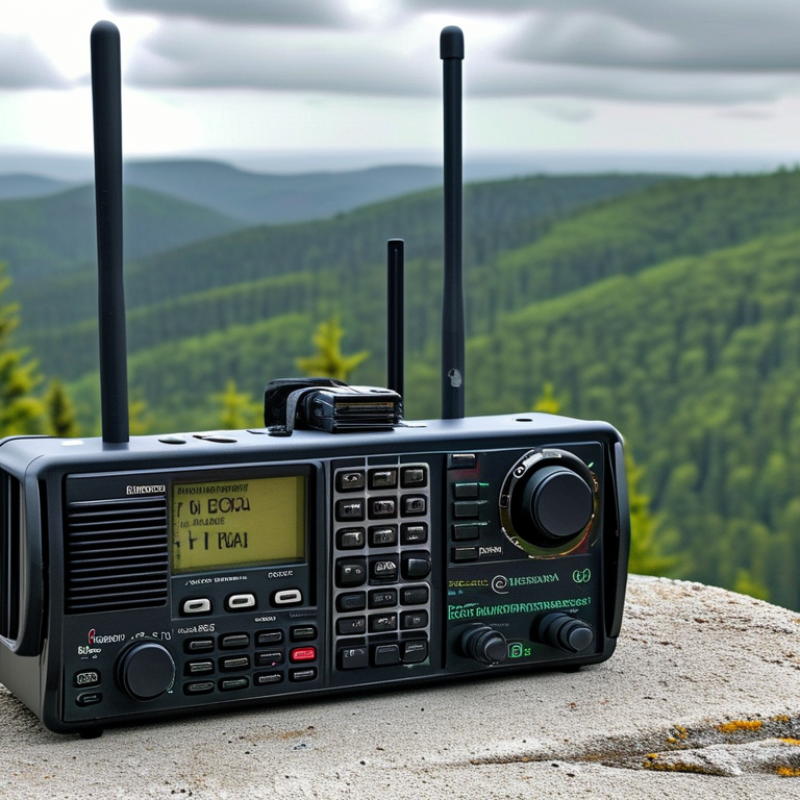
Long-distance radio buying starts with propagation, not advertised miles. Handheld VHF and UHF radios usually depend on line of sight. VHF may bend slightly better around terrain, while UHF often performs better inside buildings. Neither is magic.
The ITU-R P.1546-6 propagation model shows how frequency, antenna height, terrain, and clutter affect predicted field strength. A valley, wet forest, or concrete warehouse can reduce a clear-air estimate sharply.
Radio type matters more than many buyers expect. Personal low-power radios suit nearby teams, while licensed higher-power systems can improve coverage through better antennas and elevation.
In the United States, FCC Part 95 rules allow certain personal-radio channels up to 2 watts effective radiated power, while other channels are limited to 0.5 watt.
These figures describe legal output, not guaranteed distance. Local rules differ, so check the regulator before purchasing or operating equipment.
HF radios can cover hundreds or thousands of kilometers through skywave propagation, but solar conditions and antenna quality remain critical. Satellite radios can reach beyond terrestrial limits, yet they require open sky and an active service plan.
A practical test should include trees, slopes, vehicles, and indoor walls. Ask for measured range at your intended terrain, not an open-field claim. Compare receiver sensitivity, battery endurance, antenna options, emergency features, and weather sealing.
The best range estimate is still imperfect. I would rather plan for half the advertised distance than discover the gap during a storm.
Checking Frequency Bands, Licensing Rules, and Regional Regulations
10 Tips for Buying Long Distance Radios?
A long-range radio is only useful when its frequency band matches local rules. Check the official communications regulator before comparing advertised distance. Frequency allocations vary between countries, and sometimes between regions. A channel allowed in one area may require a license elsewhere. Check the paperwork. Do not rely on a seller’s simplified chart.
Read the transmitter specifications carefully. Confirm operating frequencies, output power, bandwidth, antenna limits, and channel spacing. Some license-free services restrict power or require approved equipment. Professional and amateur bands may require individual or organizational licenses. Licensing can also involve examinations, call signs, registration, or renewal fees. Keep copies of permits during field use. Rules may change.
Regional conditions matter beyond legal access. Dense buildings, wet forests, hills, and electrical equipment can reduce range dramatically. Test the radio in the actual work area, not only in an open field. I once trusted a distance claim and ignored a concrete warehouse wall. That was a poor assumption. Ask whether the radio can be programmed only by authorized personnel, and verify that programming follows local allocations. For travel across borders, check every destination separately. The same device may need different channels, power settings, or documentation. When uncertain, contact the regulator or a qualified radio technician before transmitting.
Comparing Power, Antenna Design, Battery Life, and Signal Reliability
10 Tips for Buying Long Distance Radios
Power matters, but higher wattage does not guarantee a clear conversation. Hills, concrete walls, and dense trees can weaken any signal. Check the radio’s legal power rating for your region before comparing advertised distances. During field tests, I have seen a lower-powered unit outperform a stronger one in open farmland. That result was inconvenient, but useful.
A removable antenna can improve flexibility, especially when a longer, properly tuned antenna is permitted. Look for a firm connector and a protected antenna base. Battery life should match your routine, not an optimistic laboratory claim. A radio lasting twelve hours in standby may last much less during frequent transmission. Test it during a full day outdoors, with cold weather and repeated calls. Small details count.
Signal reliability depends on more than power. Clear audio, stable reception, and quick channel scanning reduce missed messages. Choose equipment with a visible battery indicator and simple controls for low-light use. Water resistance is valuable near wet trails, but check its certified rating carefully. I once trusted a vague “weatherproof” label and regretted it after light rain. Read independent testing, examine the manual, and compare performance under similar conditions. No radio works equally well everywhere.
10 Tips for Buying Long Distance Radios: Power, Antenna Design, Battery Life, and Signal Reliability
This comparison uses representative, non-brand specifications for handheld radios. The chart presents a normalized performance index, where 100 indicates the strongest result within the comparison. Open-terrain range assumes clear line-of-sight conditions, while reliability reflects expected connection consistency under the same conditions.
Higher transmit power can improve range, but antenna efficiency, terrain, obstructions, and battery capacity also have a major effect. A well-designed antenna and dependable battery may provide better real-world results than power alone.
Testing Radio Performance and Choosing the Best Overall Value
Buying long distance radios requires more than a dramatic range claim. Real performance depends on terrain, antenna position, weather, and surrounding buildings. I test radios in three locations: an open field, a wooded trail, and a built-up street. At each point, I record voice clarity, connection stability, and the distance before voices become broken. A clear voice matters more than a faint signal. Keep notes. My first test was flawed because I held one radio against my body. That blocked part of the antenna and made the result look worse. Repeatable testing is essential.
Use the same route, battery level, and speaking volume for every comparison. Test both directions, since one unit may receive better than it transmits. Walk behind walls and down slopes to expose weak coverage. Then check battery endurance during ordinary use, not only standby claims. A radio that lasts two busy days may offer better value than a stronger model needing daily charging. Audio controls should work with cold or wet hands. Buttons matter. A bright screen helps, but it can also drain power quickly.
Calculate the full cost, including spare batteries, charging equipment, protective cases, and warranty support. Choose equipment with clear instructions and accessible replacement parts. Independent test data is useful, but treat perfect figures with caution. Manufacturers often measure range under ideal conditions. Check local radio requirements before operating. I would rather accept shorter range and reliable audio than chase an impressive number. Still, my priorities may not match yours. A hiking group, work crew, and emergency kit need different balances of weight, durability, and battery life.