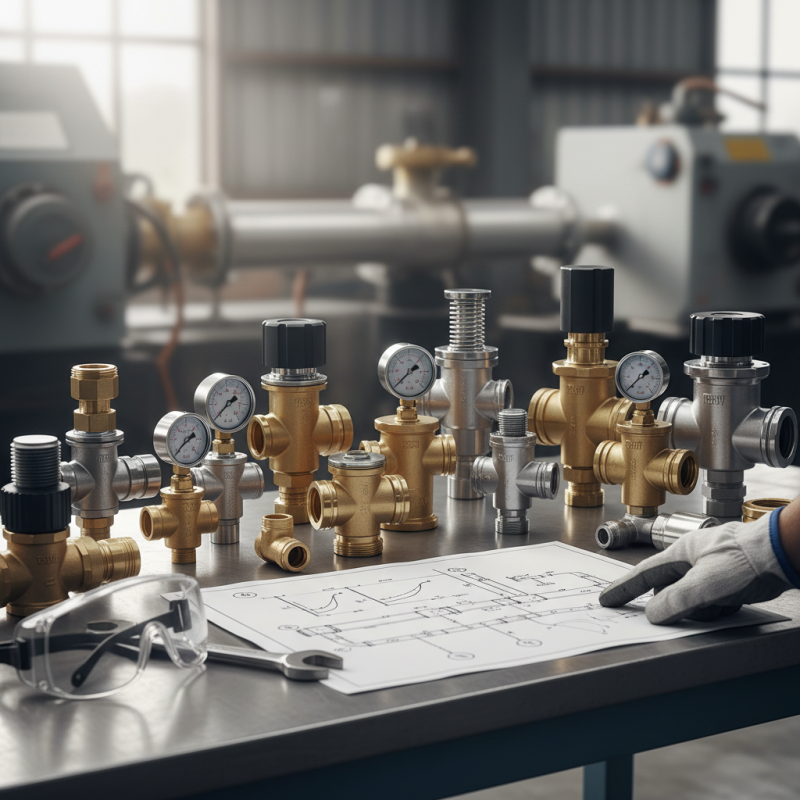
How to Choose the Right Pressure Reducing Regulators?
Choosing the right Pressure Reducing Regulators can be a challenging task. These devices play a crucial role in various applications. They control the pressure in a system, ensuring safety and efficiency.
When selecting Pressure Reducing Regulators, consider your specific needs. Different industries have unique requirements. The right regulator can improve performance, but the wrong choice may lead to issues. It is important to assess factors like flow rate and pressure range. Not all regulators are created equal.
Sometimes, we overlook details. A small mistake can result in significant problems. Always verify specifications before purchasing. Consulting experts in the field can provide valuable insights. Understanding your system thoroughly is essential for making the best decision.
Understanding Pressure Reducing Regulators and Their Functionality
Pressure reducing regulators play a vital role in various systems, ensuring stable pressure levels. These devices adjust incoming pressure from a source to a usable level. For many applications, maintaining a consistent pressure is crucial. This consistency helps protect equipment, prevents leaks, and optimizes performance.
Understanding how these regulators function can take time. They can seem complex but are essential for reliable operations. A typical pressure reducing regulator includes a diaphragm that responds to pressure changes. When the downstream pressure rises, the diaphragm moves, adjusting the flow. This mechanism allows the regulator to balance pressure effectively. However, not every application requires the same regulator type. Choosing the right model demands reflection on specific needs.
Users often overlook maintenance, which can lead to issues over time. Regular checks and calibrations are essential for accuracy. Understanding the specifications and performance capabilities involves research. Potential users should question whether they fully grasp their system's requirements. Relying on guesswork can result in wrong choices. Inadequate pressure control may lead to equipment damage or inefficient operations.
Key Factors to Consider When Selecting Pressure Reducing Regulators
When selecting pressure reducing regulators, consider several key factors. Material compatibility is crucial. Using the wrong materials can lead to leaks or failures. According to a 2022 industry report, over 30% of regulator failures stem from material incompatibility. Ensure the materials chosen will withstand the specific application environment.
Next, evaluate the pressure range. Regulators must handle the input pressure while providing a stable output. A 2021 survey highlighted that 25% of users experienced performance issues due to improper pressure specifications. Understand the operating conditions and select a regulator that meets these requirements.
Another factor to consider is flow capacity. This determines how much gas or liquid can pass through. Insufficient flow can cause operational delays. A study indicated that nearly 20% of systems underperform due to inadequate flow rates in their regulators. Choose a regulator designed to meet or exceed the flow demands of your application.
Types of Pressure Reducing Regulators and Their Applications
When choosing the right pressure reducing regulators, understanding their types is crucial. There are several types available, each designed for specific applications. One common type is the diaphragm regulator. It offers precise control over low-pressure gas systems. This is ideal for laboratories and manufacturing processes.
Another type is the piston regulator. These are often used in high-flow applications. They manage higher pressures with more stability. Gas distribution networks typically benefit from this type. Additionally, there are electronic regulators, which provide automation and accurate pressure control. They are suitable for advanced industrial settings.
Selecting the wrong type can lead to inefficiencies. Not every regulator works well in every situation. Users must evaluate their unique needs. It’s essential to consider factors like flow rate and gas type. However, this is often overlooked. Each application requires a tailored approach. Understanding these nuances can improve operational effectiveness.
Evaluating Material Compatibility in Pressure Reducing Regulators
When choosing a pressure reducing regulator, material compatibility is crucial. Every material interacts differently with various gases and liquids. For instance, stainless steel is often favored for its corrosion resistance. However, it may not be suitable for all applications. Sometimes, alternatives like brass or plastic can offer better compatibility. Understanding these nuances helps prevent failures.
Consider the temperature and pressure range of your application. Some materials show signs of degradation under high temperatures. Others may react negatively with certain chemicals. It’s essential to test compatibility in real-world conditions. Relying on theoretical compatibility lists may lead to unexpected issues. Observing material behavior over time is often overlooked but is vital.
In some cases, you may face limited options. If a material doesn’t match perfectly, you might need to compromise. Even then, document your findings. Creating a thorough record aids future decisions. Engaging with stakeholders ensures everyone understands the chosen material’s limitations. Remember, informed choices lead to better performance and longevity.
How to Choose the Right Pressure Reducing Regulators? - Evaluating Material Compatibility in Pressure Reducing Regulators
| Regulator Type | Material Compatibility | Temperature Range (°C) | Pressure Range (PSI) | Common Applications |
| Diaphragm Regulator | Aluminum, Brass, Stainless Steel | -40 to 120 | 0-150 | Gas Distribution, HVAC Systems |
| Piston Regulator | Brass, Carbon Steel | -20 to 80 | 0-200 | Oil and Gas, Industrial Processes |
| Electronic Regulator | Aluminum, Plastic | 0 to 50 | 0-300 | Laboratory Systems, Precision Instruments |
| Spring Loaded Regulator | Stainless Steel, Copper | -40 to 150 | 0-100 | Chemical Processing, Water Treatment |
Common Mistakes to Avoid When Choosing Pressure Reducing Regulators
Choosing the right pressure reducing regulator can be tricky. Many make common mistakes that could lead to inefficiencies. One major error is not considering the application specifics. Each application has unique pressure and flow requirements. Ignoring these can cause over or under-regulation. Imagine using a regulator designed for low pressure in a high-pressure system. This could lead to failures and unsafe conditions.
Another common mistake is overlooking material compatibility. Regulators must withstand the medium they control. If the materials are not compatible, they can deteriorate quickly. This affects performance. Users might think a regulator suits their needs based on looks alone. This could lead to costly downtime due to unexpected failures. Always check material specifications.
Finally, some overlook the importance of maintenance. Regulators need regular checks for optimal performance. Neglecting this can cause gradual inefficiencies. A small leak might go unnoticed but can lead to bigger issues over time. It’s easy to assume a regulator works fine until it doesn’t. Regular inspections can save time and resources.