
Choosing the right Liquid Ring Vacuum Pump is rarely a simple catalog decision. The correct model depends on gas composition, suction pressure, temperature, liquid compatibility, flow demand, and operating conditions. A pump that performs well in a clean water application may struggle with solvents, abrasive vapors, or unstable process temperatures.
Vacuum technology expert John F. O’Hanlon offers a useful reminder: “The pump is only one part of the vacuum system.” That principle matters in real plants. A stainless-steel pump may resist corrosion, yet poor seal-water quality can still reduce performance. A larger motor may increase capacity, but it can also raise energy costs without improving the process. Small details matter.
Look beyond maximum vacuum claims. Examine the complete performance curve. Check capacity at your actual pressure, not only at the advertised endpoint. Review the liquid temperature, vapor pressure, materials, seal arrangement, noise level, and maintenance access. Ask whether the pump can tolerate start-up conditions, carryover, and occasional process upset.
Experience often reveals what specifications hide. Operators notice unusual vibration, cloudy seal water, slow evacuation, or rising power consumption. These signs may indicate cavitation, fouling, air leakage, or incorrect sizing. They should not be ignored.
This guide explains how to compare Liquid Ring Vacuum Pump options with greater confidence. It also recognizes an uncomfortable truth: no selection method replaces site data and honest engineering review. The best choice is not always the biggest pump. It is the pump that delivers stable vacuum, acceptable operating cost, and dependable service in the real process.
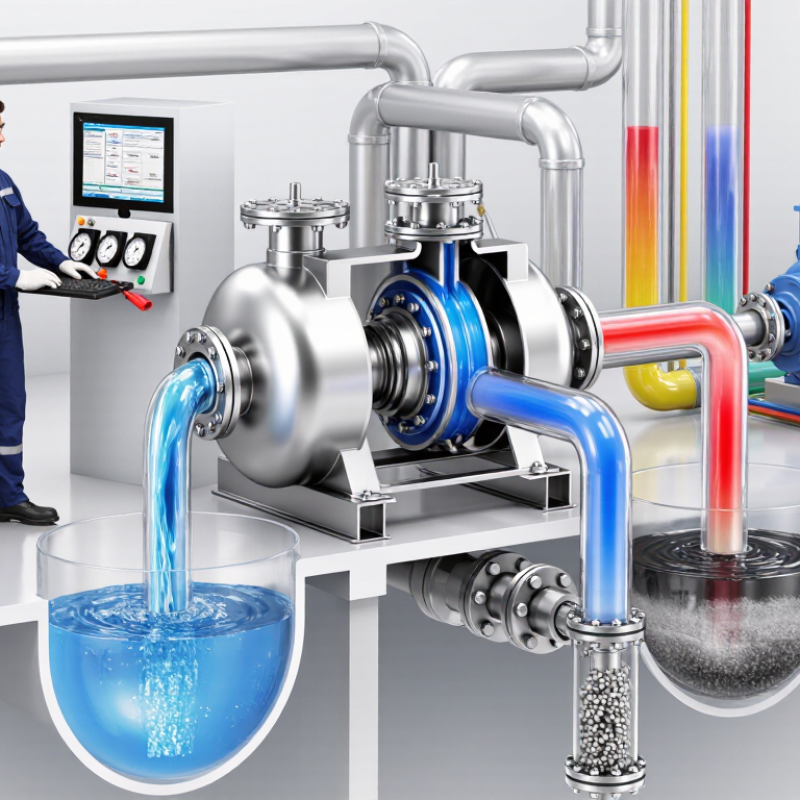
Define the vacuum duty before comparing pump sizes. Record the required absolute pressure, gas flow, operating temperature, and evacuation time. Include both normal and worst-case conditions. A system reaching 100 mbar during steady operation may need a much larger capacity during startup.
Identify the gas entering the pump. Is it dry air, humid air, solvent vapor, or a corrosive mixture? Estimate condensable vapor loads carefully. Liquid ring pumps tolerate wet gas, but the seal liquid can heat, dilute, or react with process materials. Seal liquid temperature also affects achievable vacuum because its vapor pressure sets a practical limit. Measure it under actual operating conditions.
Small details matter. Note pipe length, valve restrictions, leaks, filter resistance, and elevation changes. Check whether the pump must handle frequent starts, continuous service, or sudden gas surges. I have seen oversized pumps waste energy because the real duty was never defined. That assumption can be wrong. Measure, do not guess.
Choose a compatible seal liquid and confirm its cooling method. Review materials against the gas, liquid, and expected temperature range. Ask for performance data at your actual inlet pressure, not only the best published point. A test with a calibrated vacuum gauge can reveal leakage or vapor effects before installation. Leave reasonable margin, but avoid excessive capacity; throttling a poorly matched pump may create unstable operation and unnecessary power demand.
How to Choose the Right Liquid Ring Vacuum Pump?
Understand Liquid Ring Pump Designs and Operating Principles
A liquid ring vacuum pump uses a rotating impeller inside a partially filled casing. Centrifugal force forms a liquid ring against the casing wall. The trapped spaces between blades expand and compress gas during rotation. This design handles humid gas, condensable vapor, and small liquid carryover better than many dry technologies. However, the seal liquid must remain compatible with the process.
Single-stage designs suit moderate vacuum duties and simpler installations. Two-stage designs generally reach deeper vacuum levels. The practical limit depends on liquid temperature and vapor pressure. A warmer seal liquid can reduce achievable vacuum. It is an easy detail to overlook.
The U.S. Department of Energy reports that pumping systems may consume 25–50% of electricity in some industrial facilities. That figure covers many pump types, but it highlights why efficiency deserves attention. Select the pump from actual flow, suction pressure, gas temperature, and seal-liquid conditions. Do not size it only from motor power. ISO 21360-1 provides standardized methods for measuring vacuum pump performance, including pumping speed and ultimate pressure. Compare test conditions carefully. Different inlet temperatures can make similar datasheets look unequal.
In field commissioning, I would record vacuum pressure, liquid temperature, current draw, and discharge behavior. A stable reading is not always a healthy system. Excessive noise may indicate cavitation, restricted liquid flow, or incorrect operating conditions. The U.S. DOE also recommends system-level assessment, because throttling and oversized equipment can waste energy. A smaller pump may perform better when leakage, piping losses, and operating cycles are corrected first.
How to Choose the Right Liquid Ring Vacuum Pump?
Pump selection starts with capacity, not catalog size. Estimate the gas load at operating pressure and temperature. Include air leakage, vapor release, and any sudden process surges. A pump that looks adequate on paper may struggle during wet startup. Leave practical margin, but avoid excessive oversizing. Oversizing can increase power use and reduce control stability.
Materials must match the process chemistry. Stainless steel may suit corrosive vapors, while coated or specialized alloys may handle harsher conditions. Check the gas temperature, liquid contamination, and abrasive particles. Small impurities can damage internal surfaces over time. Ask for corrosion data, not vague compatibility claims. A material decision based only on the gas name is incomplete.
Seal liquid requirements deserve equal attention. Water is common, but its temperature and hardness affect vacuum performance. A warmer seal liquid produces higher vapor pressure and may limit the achievable vacuum. Closed-loop systems need filtration, cooling, and routine quality checks. Oil, solvents, or process liquids may be possible, but compatibility must be verified carefully. Do not assume the available liquid is suitable. That assumption often becomes an expensive lesson. Review actual operating data after commissioning; design calculations can miss unstable loads, seasonal temperature changes, or maintenance habits.
Select capacity in m³/h at the required operating pressure, temperature, and gas load—not only from the nominal pump size.
Use corrosion-resistant wetted materials when the process gas or seal liquid contains acids, chlorides, solvents, or abrasive contaminants.
A lower-vapor-pressure seal liquid can improve attainable vacuum. Confirm viscosity, compatibility, temperature, and disposal requirements.
Representative seal-liquid properties at approximately 20°C. Lower vapor pressure generally supports deeper vacuum, while density and chemical compatibility affect circulation, power demand, and materials selection. Verify final selection against the pump performance curve and process conditions.
How to Choose the Right Liquid Ring Vacuum Pump?
Efficiency begins with the operating point, not the catalog rating. Confirm vacuum level, gas load, seal-water temperature, and required flow under real conditions. The U.S. Department of Energy reports that optimized pumping systems can reduce energy use by 20% or more. That figure is not guaranteed. Poorly matched equipment can erase those savings quickly.
Installation details matter. Keep suction piping short, supported, and free from sharp bends. Install a separator when carryover could damage downstream equipment. Check exhaust routing carefully, especially in enclosed rooms. The International Energy Agency reports that electric motor systems consume nearly half of global electricity. Small motor inefficiencies become expensive over long operating hours. I have seen clean pumps underperform because warm seal water reduced capacity. The calculation looked correct. The site conditions were not.
Tips: Measure before selecting. Record vacuum, flow, water temperature, noise, and motor current during a normal shift. Leave access for seal replacement and inspection. Use guards, isolation valves, pressure protection, and adequate ventilation. Follow ISO 1217 testing principles where applicable, and document acceptance readings. Maintenance should include strainer cleaning, corrosion checks, bearing inspection, and seal-water monitoring. A monthly checklist is useful, but it can become a ritual. Review the actual readings. Safety data sheets and local occupational requirements should guide exhaust handling.
| Evaluation Dimension | Key Indicator | Typical Data or Requirement | How to Assess the Pump |
|---|---|---|---|
| Efficiency | Ultimate vacuum | Approximately 33–160 mbar absolute, depending on design and operating conditions | Select a pump whose guaranteed ultimate pressure is lower than the required operating pressure. Confirm the value at the intended sealing-liquid temperature and speed. |
| Efficiency | Capacity at operating vacuum | Specified in m³/h or CFM at a stated absolute pressure | Compare capacity curves at the actual working pressure rather than comparing only the nominal displacement. Capacity normally decreases as deeper vacuum is approached. |
| Efficiency | Sealing-liquid temperature | Typically controlled near 15–25°C for water-sealed operation | Higher liquid temperature increases vapor pressure and can reduce achievable vacuum. Use cooling, recirculation, or another compatible sealing liquid when process conditions require it. |
| Efficiency | Power consumption | Motor input depends on capacity, pressure, speed, liquid density, and operating point | Review the complete pump-and-motor power curve. Avoid selecting a motor only from the maximum theoretical flow; use the duty-point power plus an appropriate engineering margin. |
| Efficiency | Gas and liquid handling | Suitable for wet gas, condensable vapors, and limited liquid carryover | Liquid ring pumps tolerate moisture better than many dry vacuum technologies, but corrosive, abrasive, or solids-laden streams still require material review and upstream separation. |
| Installation | Foundation and alignment | Rigid, level base; coupling alignment commonly checked within the manufacturer’s tolerance | Use a stable foundation, flexible connectors where appropriate, and verify shaft or coupling alignment after piping is connected. Do not use the pump casing to force pipe alignment. |
| Installation | Suction-line design | Short, direct piping with low pressure drop; pipe size should not unnecessarily restrict inlet flow | Minimize elbows, avoid high points that trap condensate, and install a suitable separator or inlet filter when the process can carry liquid droplets or solids. |
| Installation | Sealing-liquid supply | Stable flow and pressure within the pump’s specified operating limits | Provide clean, compatible liquid with adequate cooling. A separator, heat exchanger, flow control, and temperature monitoring may be required for recirculating systems. |
| Installation | Discharge arrangement | Discharge backpressure must remain within the rated limit | Use a properly sized discharge line and separator. Excessive backpressure increases power demand, reduces performance, and may cause overheating or unstable operation. |
| Maintenance | Routine inspection | Check leakage, vibration, noise, temperature, liquid flow, and vacuum performance regularly | Trend operating data over time. A gradual loss of capacity may indicate worn internal clearances, incorrect liquid temperature, blocked piping, or gas leakage. |
| Maintenance | Sealing-liquid quality | Monitor hardness, contamination, corrosion potential, and suspended solids | Poor liquid quality can cause scaling, corrosion, erosion, and blocked passages. Use filtration, water treatment, controlled blowdown, or a compatible alternative liquid when necessary. |
| Maintenance | Bearing and seal condition | Inspect according to duty cycle and the component manufacturer’s service interval | Look for lubricant degradation, seal leakage, abnormal bearing temperature, and vibration. Replace worn seals and bearings before secondary damage occurs. |
| Maintenance | Cavitation prevention | Avoid operation conditions that produce characteristic crackling noise, vibration, and unstable vacuum | Check sealing-liquid temperature, flow, suction pressure, and operating speed. Cavitation can rapidly damage internal surfaces and should be corrected rather than tolerated. |
| Safety | Pressure and temperature protection | Install monitoring or protective devices for suction pressure, discharge pressure, liquid temperature, and motor load | Set alarms and shutdown limits according to the equipment design and process hazard assessment. Never exceed the rated pressure, temperature, or speed. |
| Safety | Electrical protection | Grounding, correctly rated motor protection, overload protection, and lockout/tagout provisions | Electrical installation should comply with applicable local codes. Isolate and verify zero energy before inspection, maintenance, or removal of guards. |
| Safety | Process compatibility | Materials must withstand the process gas, condensate, sealing liquid, and cleaning chemicals | Review corrosion, toxicity, flammability, and reaction risks. Use suitable metallurgy, seals, ventilation, and hazardous-area protection where required. |
| Safety | Noise and rotating parts | Noise and vibration depend on speed, installation, cavitation, and operating point | Install guards on couplings and rotating components, provide adequate ventilation, and evaluate hearing protection requirements using measured site noise levels. |
| Selection Decision | Best-fit configuration | Chosen from the required flow, vacuum level, liquid conditions, materials, and total operating cost | Request a performance curve and guaranteed duty-point data. Confirm efficiency, utility consumption, spare-parts availability, maintenance access, and compliance requirements before purchase. |
Choosing a liquid ring vacuum pump begins with a complete duty sheet. Record required suction pressure, gas flow, temperature, vapor content, altitude, and operating hours. Separate non-condensable gas from condensable vapor. A neat spreadsheet can still mislead when peak loads are hidden. The U.S. Department of Energy’s Improving Pumping System Performance sourcebook reports potential pumping-system energy savings of 20–50% through better sizing and controls. That figure is not vacuum-specific, but it supports careful evaluation rather than routine oversizing.
Check the sealing-liquid temperature and chemistry. IAPWS saturation data places water vapor pressure near 4.24 kPa absolute at 30°C. A warmer seal liquid can therefore limit achievable vacuum. Compare the manufacturer’s performance curve at actual liquid temperature, not catalogue conditions. API 681 also emphasizes defined performance testing and service conditions for liquid-ring vacuum pumps. I have learned to challenge the first estimate. Real plants often reveal air leaks, blocked separators, or seasonal cooling changes.
Tips: Build a checklist with normal, minimum, and maximum gas loads. Add startup demand separately. Confirm whether the pump must handle liquid slugs. Specify corrosion risks and required materials. Verify separator capacity and discharge backpressure. Ask for capacity data at the intended suction pressure. Allow useful margin, but avoid excessive oversizing. The U.S. DOE recommends system-level assessment, including controls and piping, because the pump alone rarely determines energy use. Recheck the calculation after one week of operating data. That step is easy to miss.
Contact Us