
Blog

You are here:

How to Choose 430 Stainless Steel Strip?

Choosing 430 Stainless Steel Strip is not simply a matter of comparing prices. The right grade must match the product’s forming, finishing, heating, and service conditions. Grade 430 is a ferritic stainless steel with useful corrosion resistance, magnetic behavior, and strong performance in many indoor applications. It often appears in appliance panels, kitchen equipment, automotive trim, and decorative components.

Metallurgist and stainless-steel historian Dr. Harold M. Cobb has emphasized, “Stainless steel is not one material; it is a family of alloys designed for different duties.” That principle matters here. A strip may look bright and uniform, yet its thickness tolerance, surface finish, hardness, and edge condition can determine whether production runs smoothly. Check the required standard, such as ASTM A240 or ASTM A666, before approving a supplier. Ask for the chemical composition, mechanical test results, and material certificate.

Think about the real application.

Will the strip be roll-formed? Stamped? Welded? Exposed to moisture? A 2B finish may suit functional parts, while a polished finish may support visible surfaces. Temper selection also deserves attention. Excessive hardness can complicate forming. Excessive softness may reduce dimensional stability. That shortcut fails.

Real purchasing decisions are messier. 430 Stainless Steel Strip can resist ordinary atmospheric conditions, but it is not the best choice for every chloride-rich or highly acidic environment. Compare service exposure, coil width, thickness, tolerances, packaging, and supplier consistency. A careful selection process prevents an attractive specification from becoming an expensive production problem.
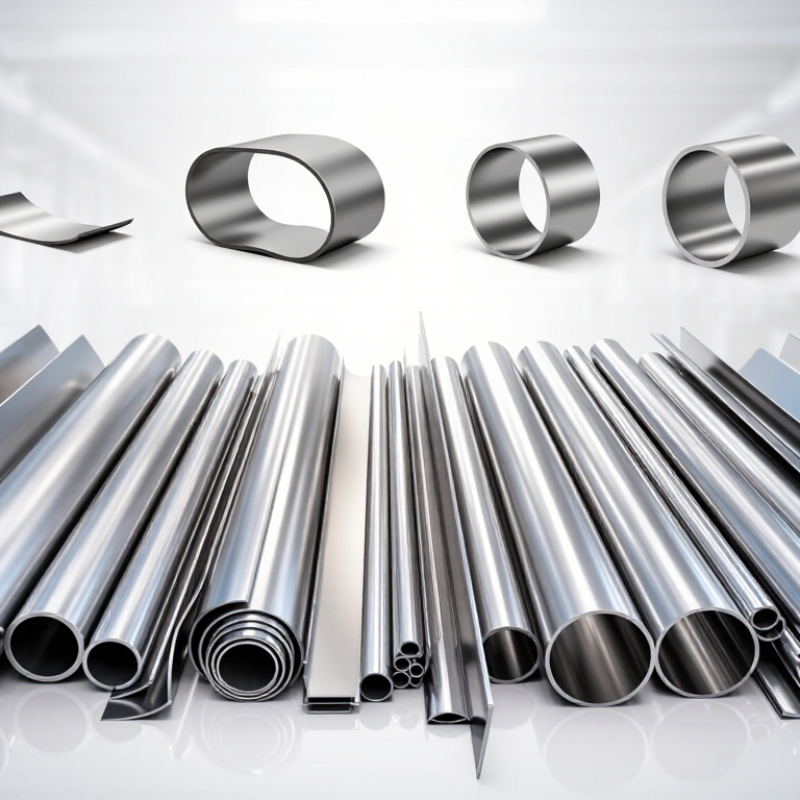
How to Choose 430 Stainless Steel Strip?

430 Stainless Steel Strip: Composition, Properties, and Common Grades

Choosing 430 stainless steel strip starts with its composition, not its surface shine. It usually contains about 16–18% chromium, with iron as the balance. Carbon, manganese, silicon, phosphorus, and sulfur appear in smaller amounts. Chromium creates a passive layer that supports corrosion resistance in indoor and mildly humid environments. It is magnetic and responds well to forming, polishing, and moderate heat exposure.

Common grades deserve closer attention. Standard 430 suits appliance panels, decorative trim, kitchen equipment, and general fabrication. 430F contains more sulfur for improved machining. However, that change can reduce toughness and corrosion performance. Stabilized variants, such as titanium-bearing 430 grades, may limit sensitization during heating. Exact chemistry depends on the applicable standard. Check the mill certificate.

Surface finish matters. A bright strip can hide unsuitable hardness or edge cracks. Ask for thickness tolerance, width tolerance, temper, finish, and mechanical test results. For repeated bending, softer annealed strip is usually safer than hard temper. For automated cutting, consistent hardness reduces setup changes. I would also test a sample against the real forming radius, because laboratory numbers rarely reveal every production problem. Chloride-rich or continuously wet service may require a different stainless grade. It is easy to overestimate 430’s corrosion resistance. Look closely at burrs, coil edges, and scratches before approval.

Identify the Required Strip Dimensions and Surface Finish

How to Choose 430 Stainless Steel Strip?

Start with the finished part, not the supplier’s catalog. Record thickness, width, coil length, slit-edge condition, and dimensional tolerances. For example, a 0.80 mm strip may need a 0.05 mm thickness tolerance for a formed housing. ASTM A480 provides commonly used tolerances and testing guidance, but the actual requirement may differ by application. Confirm the inside diameter, outside diameter, coil weight, and flatness before ordering. A narrow strip with unstable edges can twist during stamping. That detail is easy to miss.

Surface finish affects appearance, forming, cleaning, and later polishing. A 2B finish is practical for general fabrication, while BA offers a brighter, more reflective surface. No. 4 uses abrasive finishing and can show directional lines, especially under strong lighting. Specify roughness in Ra values when appearance matters, but define the measurement method too. Different instruments can produce different readings. I have seen attractive samples fail because the production coil had inconsistent grain direction.

The World Stainless Association reported global stainless steel melt-shop production of about 58.4 million tonnes in 2023. This scale supports broad availability, but it does not guarantee the right strip condition. Ask for a mill test certificate, surface photographs, hardness data, and a trial sample. Ferritic 430 can form well in moderate operations, yet sharp bends may reveal cracking or springback. A wider strip is not always better. Test the real tooling.

How to Choose 430 Stainless Steel Strip? - Identify the Required Strip Dimensions and Surface Finish

Selection Dimension Typical Requirement or Range Recommended Specification Why It Matters
Material grade AISI 430 / UNS S43000 ferritic stainless steel Confirm the applicable standard, such as ASTM A240/A480 or EN 10088-2, before ordering. 430 stainless steel provides useful atmospheric corrosion resistance, magnetic response, and good formability for many indoor applications.
Thickness Approximately 0.20–3.00 mm for common cold-rolled strip orders Specify the nominal thickness, permitted tolerance, and whether the strip is supplied in coil or cut lengths. Thickness affects stiffness, forming behavior, weight, edge quality, and the ability to meet the finished-part dimensions.
Width Approximately 10–1,250 mm, depending on the mill and processing route State the required width, width tolerance, and whether slit edges or mill edges are needed. Correct width reduces trimming waste and helps the strip run consistently through stamping, roll forming, or slitting operations.
Length or coil form Coil, narrow slit coil, or cut-to-length sheets Define inside diameter, outside diameter, maximum coil weight, and weld frequency when continuous processing is required. Handling equipment and downstream machinery often limit coil dimensions and package weight.
Thickness tolerance Usually governed by the selected product standard and nominal thickness Use the tolerance table in the agreed standard rather than relying on a general percentage. Tighter tolerance may be necessary for precision stamping, electronic components, and parts with controlled springback.
Flatness and shape Standard commercial flatness or a tighter project-specific requirement Specify flatness, edge wave, center buckle, and camber limits when the strip will be processed automatically. Good shape control improves feeding, laser cutting, roll forming, and dimensional repeatability.

430 Stainless Steel Strip Surface-Finish Guide

Finish Production Description Typical Appearance Suitable Uses Ordering Notes
No. 1 Hot-rolled, annealed, and descaled Dull, rough, and non-reflective Industrial components, high-temperature service, and applications where appearance is not critical Less common for thin precision strip; surface texture is normally coarser than cold-rolled finishes.
2D Cold-rolled, annealed, and pickled or descaled Smooth, matte, and low-reflective Formed parts, appliance interiors, and components that will receive additional finishing A practical choice when appearance is secondary and a uniform matte surface is acceptable.
2B Cold-rolled, annealed, pickled, and skin-passed Smooth, bright, and moderately reflective General fabrication, kitchen equipment, housings, trim, and parts requiring a clean standard finish The most versatile standard cold-rolled finish; define one-side or two-side appearance requirements if relevant.
BA Cold-rolled and bright-annealed in a controlled atmosphere Bright, smooth, and highly reflective Decorative trim, visible appliance parts, automotive details, and reflector-type components Reflectivity varies by processing route; request a reference sample or agreed visual standard for appearance-critical work.
No. 3 Intermediate mechanical polishing, commonly using an abrasive belt Clearly visible directional polish lines Decorative components requiring a coarser satin effect The abrasive grade should be agreed because No. 3 can represent different visual textures.
No. 4 General-purpose mechanical polishing, usually with a fine abrasive belt Uniform satin finish with directional grain Visible panels, architectural trim, food-service equipment, and decorative fabrication Specify grain direction and an agreed sample when matching an existing panel is important.
No. 8 Progressive mechanical polishing to a mirror-like surface Very bright, mirror-like appearance Decorative features, optical surroundings, signage, and high-visibility trim The surface is appearance-sensitive and may require protective film, careful packaging, and sample approval.
Specification tip: A complete order should state the grade, applicable standard, nominal thickness, thickness tolerance, strip width, width tolerance, coil or cut-length format, edge condition, surface finish, surface protection, inspection requirements, and packaging conditions. Surface roughness values are not universal for every finish designation, so use an agreed Ra range or an approved physical sample when a specific texture or reflectivity is required.

Evaluate Corrosion Resistance, Strength, and Heat Performance

How to Choose 430 Stainless Steel Strip?

Choose 430 stainless steel strip by matching its corrosion resistance to the service environment. Its chromium content is typically 16–18%, according to ASTM A240/A240M. This supports a stable passive film in dry indoor air and mild atmospheric exposure. However, 430 contains little nickel and no molybdenum. Chloride deposits can still cause staining, especially inside narrow crevices. ASM Handbook, Volume 13B, identifies ferritic stainless grades as less resistant to chloride pitting than austenitic grades. Wipe salt residue away.

Strength matters during forming and assembly. ASTM A240/A240M lists a typical minimum tensile strength of 450 MPa and yield strength of 205 MPa for Type 430. These values suit trim, appliance panels, brackets, and light structural parts. Edge cracking may appear after severe bending. The strip temper and bend radius deserve practical testing, not assumptions. Small samples first.

Heat performance is another screening point. ASM Handbook data places 430 thermal conductivity near 26 W/m·K at 100°C. Its thermal expansion is about 10.4 × 10⁻⁶/K between 20°C and 100°C. That helps reduce distortion during moderate heating, while repeated thermal cycling can still loosen joints or reveal surface defects. For bright surfaces, oxidation and discoloration may begin before the metal loses strength. Real furnace exposure should be tested with the actual thickness, finish, and atmosphere. Surface appearance can mislead.

Match Strip Characteristics to Fabrication and Service Conditions

How to Choose 430 Stainless Steel Strip?

Match the strip to the fabrication method and service environment.

430 stainless steel is ferritic, magnetic, and commonly selected for moderate corrosion resistance. It performs well in dry indoor areas, kitchen equipment, appliance panels, and decorative trim.

However, it is not the best choice for continuous salt spray or aggressive chemical exposure.

Check the required thickness, width, temper, and edge condition before ordering.

Annealed strip offers better formability for shallow bends and simple stamped parts. Harder tempers provide improved springback and wear resistance, but they can crack at tight radii.

Keep this in mind.

A strip that looks strong on a data sheet may create problems during forming.

For slitting, inspect the edge closely.

Excessive burrs can damage tooling and create unsafe sharp points during assembly. For laser cutting, confirm the heat-affected area and surface requirements. In service, temperature changes, moisture, and cleaning chemicals can alter performance.

Regular cleaning may help, but it cannot correct an unsuitable material choice. Engineers should also verify magnetic behavior, surface finish, and dimensional tolerances with actual production samples.

Small trials are often more reliable than assumptions. A perfect specification on paper may still fail when the bend radius, tooling pressure, or storage conditions differ.

Verify Quality Standards, Tolerances, and Supplier Reliability

Choosing 430 stainless steel strip requires more than checking its low price or bright surface. The grade should match the required standard, such as ASTM A240, ASTM A480, or EN 10088. Confirm the chemical composition, mechanical properties, surface finish, and heat treatment condition. Ask for a material test certificate with the coil number and laboratory results. Traceability matters.

Tolerances deserve close attention. A strip measuring 0.50 mm should not be accepted without checking its actual thickness across the coil. Request agreed limits for thickness, width, flatness, edge condition, and burr height. Measure samples from the head, middle, and tail. Small variations can affect stamping, bending, and assembly. Do not trust one sample alone.

Supplier reliability appears in the details. A capable supplier explains inspection methods, stores coils properly, and reports nonconforming material honestly. Check whether they can provide stable batch quality, protective packaging, and clear delivery records. Independent inspection may be useful for critical orders. Still, inspection is not a substitute for a precise specification. I have seen purchasing teams focus on surface appearance and overlook flatness. That mistake is easy to repeat. Ask for a trial coil when the application is new, then compare processing results with the agreed data. Keep every certificate, measurement record, and communication linked to the batch.

Go to Top