How to Choose the Best Paddy Land Tractor in 2026?
Choosing the best Paddy Land Tractor in 2026 requires more than comparing horsepower and price. Rice fields are demanding workplaces. Soft mud, standing water, narrow bunds, and repeated turning can expose weak design quickly. A tractor that performs well on dry soil may sink, spin, or damage young rice seedlings in a flooded paddy.
FAOSTAT data show that Asia produces more than 90% of the world’s rice. The OECD-FAO Agricultural Outlook 2024–2033 also identifies rice as a major crop for food security and regional farm income. These reports underline an important point: tractor selection must match local farming conditions. Buyers should examine engine power, transmission control, tire width, lug pattern, ground clearance, hydraulic capacity, PTO speed, and fuel consumption. For example, a 45-horsepower tractor with strong traction may outperform a larger model on a small, wet holding. Bigger is not always better.
The 2026 market will also reward practical technology. Telematics, automatic guidance, efficient diesel engines, and easier implement adjustment can reduce downtime. However, technology cannot repair poor service support. Check spare-part availability, technician response times, warranty terms, and resale value before signing an order. Ask a dealer to demonstrate the tractor in muddy conditions, not only on a clean showroom floor.
No spreadsheet predicts every rut. I may overvalue specifications if field testing is ignored. The best Paddy Land Tractor is therefore the machine that balances traction, operating cost, operator comfort, and dependable local support. This guide uses field experience, manufacturer specifications, and established agricultural reports to support a more careful 2026 decision.
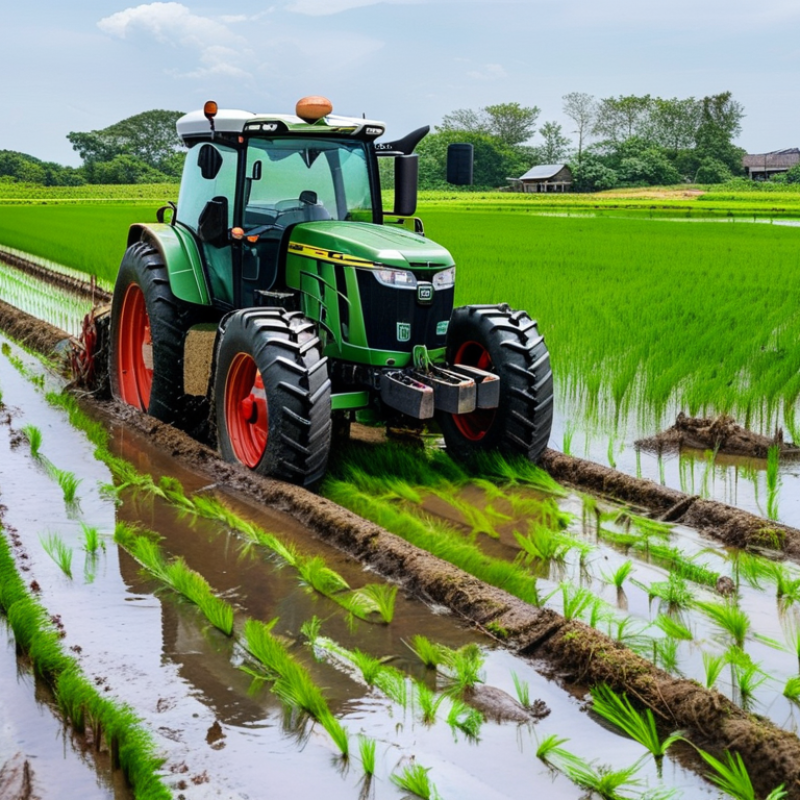
Define Paddy Conditions: 15–30 cm Water Depth and 20–30 cm Tillage
How to Choose the Best Paddy Land Tractor in 2026?
Start with the field, not the tractor brochure. Paddy conditions often include 15–30 cm of standing water and soft soil beneath. Measure water depth at several points, because one corner may be shallow while another hides a dangerous rut. A suitable tractor needs strong low-speed torque, reliable four-wheel drive, and wide, low-pressure tires or tracks. These features reduce sinking and help maintain steady movement during puddling.
Tillage depth matters just as much. For 20–30 cm tillage, check the tractor’s working depth, draft capacity, and hydraulic control. The implement must stay stable without forcing the tractor into deeper mud. A practical test is simple: operate across a wet section, turn slowly, and watch for wheel slip, sudden sinking, or uneven soil mixing. Keep the engine response smooth.
Small details matter.
Look for sealed electrical connections, protected driveline parts, and easy cleaning access. Mud can enter places that appear harmless. I would not rely only on advertised horsepower; real performance changes with soil texture, water level, and implement width. A local operator or qualified technician can confirm whether the tractor matches your field conditions. I have found that extra power cannot fully correct poor flotation or an unsuitable tillage setup. Sometimes, choosing a narrower implement works better than forcing a larger machine through deep mud.
Match Tractor Power: 35–60 HP for Common Rice-Farming Implements
How to Choose the Best Paddy Land Tractor in 2026?
Match Tractor Power: 35–60 HP for Common Rice-Farming Implements
A 35–60 HP tractor covers many rice-farming tasks, but horsepower alone cannot decide the right machine. A 35–40 HP model suits narrow rotary tillers, light puddling, fertilizer spreading, and small trailers. For deeper puddling or wider tillers, 45–60 HP offers stronger PTO performance and better traction. Check PTO horsepower, not only the headline engine rating.
Wet fields punish poor matching. Before buying, measure your implement width, working depth, and soil resistance. A 40 HP tractor may handle a 1.5-meter tiller in firm clay, yet struggle in soft, saturated soil. Steel cage wheels can improve grip, while excessive ballast may increase rutting. That trade-off matters. Ask for a field demonstration with your own implement and typical water level.
Hydraulic lift capacity also deserves attention. Heavy transplanters and rear-mounted tools can overload a small tractor, especially during turning. Select a transmission with controllable low-speed travel, since smooth movement protects seedlings and reduces wheel slip. Review service records, cooling performance, and fuel use under load. Local mechanics can often identify practical weaknesses faster than a showroom inspection. My own preference would not always be the largest engine; oversized tractors can waste fuel and damage fragile paddy soil. This choice needs testing.
Calculate Ownership Cost: Fuel, 1,500–2,000 kg Lift, and Service Support
In 2026, the best paddy-land tractor is not always the largest or most powerful. Start with ownership cost, not showroom horsepower. Record fuel use across several wet-field operations, then divide litres consumed by hectares completed. One unusually dry day can mislead you. Include diesel, lubricants, tyres, scheduled servicing, repairs, insurance, and financing in the calculation. Keep a written log for one full season.
A 1,500–2,000 kg lifting capacity suits many paddy implements, but the rating needs careful checking. Confirm whether it refers to the hitch ends or a lower position. A heavy rotavator may lift safely yet lose stability during transport. Measure the implement’s real weight, width, and centre of gravity. Test the tractor with wet soil nearby, not only on a clean dealership surface. Small details matter.
Service support can decide whether ownership remains affordable. Ask for technician response times, maintenance intervals, parts availability, and written warranty conditions. Check whether local mechanics have training for hydraulic, transmission, and engine systems. A short repair delay during planting can affect an entire field schedule. The calculation remains imperfect because fuel prices, soil depth, and operator habits change. Still, comparing documented service records with realistic fuel logs is more reliable than trusting estimates alone. Keep some budget for unexpected repairs.
How to Choose the Best Paddy Land Tractor in 2026?
Estimated annual ownership cost by tractor class, including fuel, scheduled service, and depreciation. Each class provides a rear lift capacity within the 1,500–2,000 kg range.
Planning assumptions: 500 operating hours per year, diesel at US$1.10 per litre, fuel consumption of 6–10 litres per hour, and typical scheduled-service costs for agricultural tractors. Actual costs vary with soil conditions, workload, fuel prices, maintenance quality, and local depreciation rates.