How to Choose the Best Electric Drive for Your Business Needs?
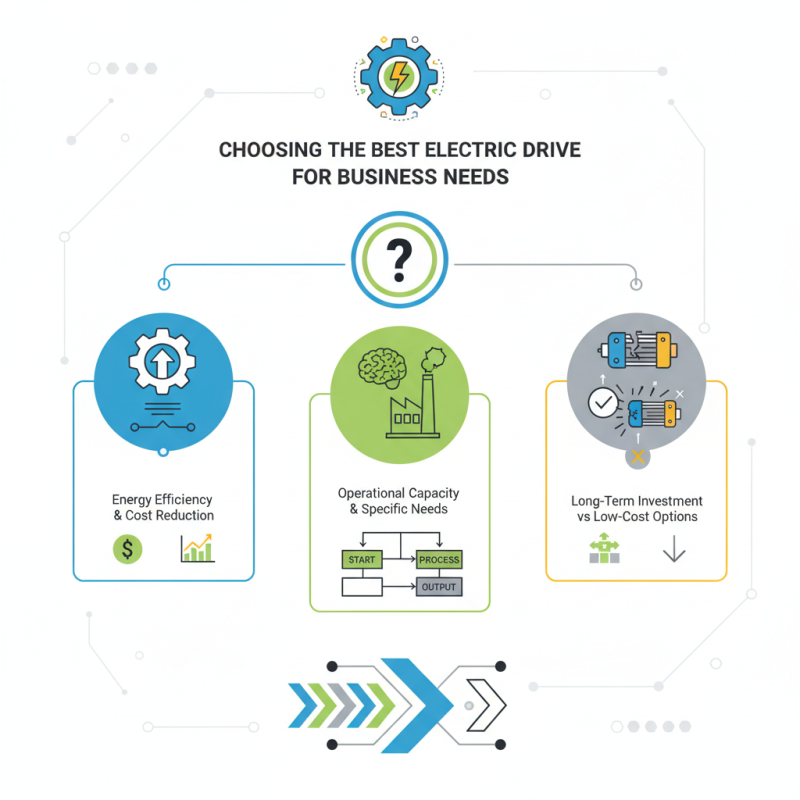
Choosing the right Electric Drive for your business can be daunting. Recent studies indicate that about 75% of companies struggle with energy efficiency in their operations. Electric Drives play a critical role in optimizing this efficiency. They can significantly reduce energy consumption and operational costs.
Dr. Sarah Johnson, a leading expert in electric systems, emphasizes, “The right Electric Drive can transform your operational capacity.” This insight underscores the importance of understanding your specific needs. Selecting the best Electric Drive involves not just technical specifications but also matching it to your operational demands.
Many businesses overlook the long-term benefits of investing in quality Electric Drives. They may choose lower-cost options that do not meet performance needs. This often leads to frequent replacements and higher costs. Reflecting on these choices can foster better decision-making. Ultimately, your Electric Drive choice can either propel your business forward or hold it back.
Understanding the Different Types of Electric Drives Available
When selecting an electric drive, it’s crucial to understand the various types available. One common type is the DC motor. These drives offer simplicity and ease of control, making them suitable for smaller applications. However, they may lack efficiency in larger setups. For businesses looking for efficient power, AC motors are often preferred. They are available in two types: induction and synchronous. Induction motors are widely used due to their robust design, but they can require a variable frequency drive for optimal performance.
Another option to consider is the servo drive. These are typically used for precise control in automation and robotics. Servo drives feature closed-loop systems, providing real-time feedback. This allows for accurate positioning and speed control. On the flip side, they can be complex and may require specialized knowledge to implement effectively.
Each type of electric drive has its own strengths and weaknesses. The choice depends on your specific application and requirements. Evaluating the operational environment is critical, as factors like load, speed, and control precision will influence the best option. Careful analysis is essential to avoid costly mistakes in the long run.
How to Choose the Best Electric Drive for Your Business Needs?
| Drive Type | Voltage Range (V) | Power Rating (kW) | Efficiency (%) | Control Type |
| AC Drive | 200-480 | 0.5 - 500 | 95% | V/f Control |
| DC Drive | 90-600 | 1 - 200 | 90% | Armature Control |
| Servo Drive | 24-600 | 0.1 - 100 | 97% | Position Control |
| Step Drive | 12-48 | 0.01 - 10 | 85% | Open-loop Control |
Assessing Your Business Requirements for Electric Drive Selection
When selecting an electric drive, understanding your business requirements is crucial. Start by analyzing the operational environment. Will the electric drive be used indoors or outdoors? Is there a need for high precision or is a more relaxed approach acceptable? Identifying these factors can significantly affect your choice.
Consider the power requirements of your machinery. Does your current system need a boost, or is it sufficient? If you're unsure, measuring the existing output can provide valuable insights. Remember, over-specifying might lead to unnecessary costs. On the other hand, under-specifying can result in system failures.
Tips for selection: Clarify your load conditions upfront. If your operations vary, look for drives with adjustable settings. Also, consult with industry experts to ensure better alignment with your goals. Regular maintenance checks can help assess performance and longevity. This will require honest reflections on your past experiences, both good and bad, to inform future decisions.
Evaluating Performance Characteristics of Electric Drives
Choosing the right electric drive for your operations is crucial. Performance characteristics play a significant role in this decision. Torque, efficiency, and responsiveness are key factors to consider. Each specification impacts your machinery’s productivity and energy consumption.
Torque defines how much load your electric drive can handle. High torque is essential for demanding tasks. Efficiency ratings help you understand energy usage. A drive that operates efficiently saves costs over time. Responsiveness indicates how quickly the drive can adjust to changes. This is vital for applications requiring precision.
However, it’s essential to note that no two applications are the same. A drive might excel in one scenario but underperform in another. Consider testing various models before making a commitment. Reflections on performance can reveal insights into your specific needs. Sometimes, trade-offs are necessary. Balancing between cost, performance, and durability is a complex task. Each choice has implications that should be carefully evaluated.
Budget Considerations When Choosing Electric Drives
Budget considerations are crucial when selecting electric drives for business applications. The initial cost is just one aspect to evaluate. According to a report from the International Energy Agency, energy efficiency plays a vital role in the long-term expenses associated with electric drives. Companies that invest in energy-efficient drives can save up to 30% on energy bills over five years. This can significantly impact overall financial health.
Operational costs also matter. Regular maintenance is needed to ensure optimal performance. A study by the Department of Energy found that poor maintenance can inflate costs by 20%. Businesses often overlook this when budgeting. It’s wise to account for potential downtime or repairs. Decision-makers should consider both direct costs, like purchase price, and indirect costs, such as maintenance and energy savings.
Remember to evaluate the total cost of ownership. Some electric drives may have a lower upfront cost but higher long-term expenses. A comprehensive approach to budgeting can prevent setbacks. Organizations may need to look at usage patterns, reliability, and required features. This becomes a balancing act between upfront investment and future savings.
Maintenance and Support Options for Electric Drives
When selecting an electric drive for your business, maintenance and support are crucial factors. Regular maintenance can prevent costly breakdowns and downtime. Skilled technicians should service your drives to ensure efficiency and longevity. Create a maintenance schedule tailored to your equipment's needs. Frequent check-ups can catch potential issues early, saving you from unexpected repairs.
Support options are equally important. Reliable customer service can make a significant difference. Ensure that the supplier offers round-the-clock assistance. This way, you can quickly resolve any issues that arise. A knowledgeable support team can guide you on best practices and troubleshooting. Always consider the accessibility of spare parts as well. Quick access can minimize disruptions.
Not every option will meet your business needs perfectly. It's crucial to assess your specific requirements and existing infrastructure. Some electric drives may require more extensive training for staff. Reflect on whether your team is prepared for that transition. Balancing initial costs with long-term benefits is essential. Without careful evaluation, you might end up with a solution that doesn't align with your goals.
Electric Drive Maintenance and Support Options