How to Choose the Right Miniature Circuit Breaker for Your Needs?
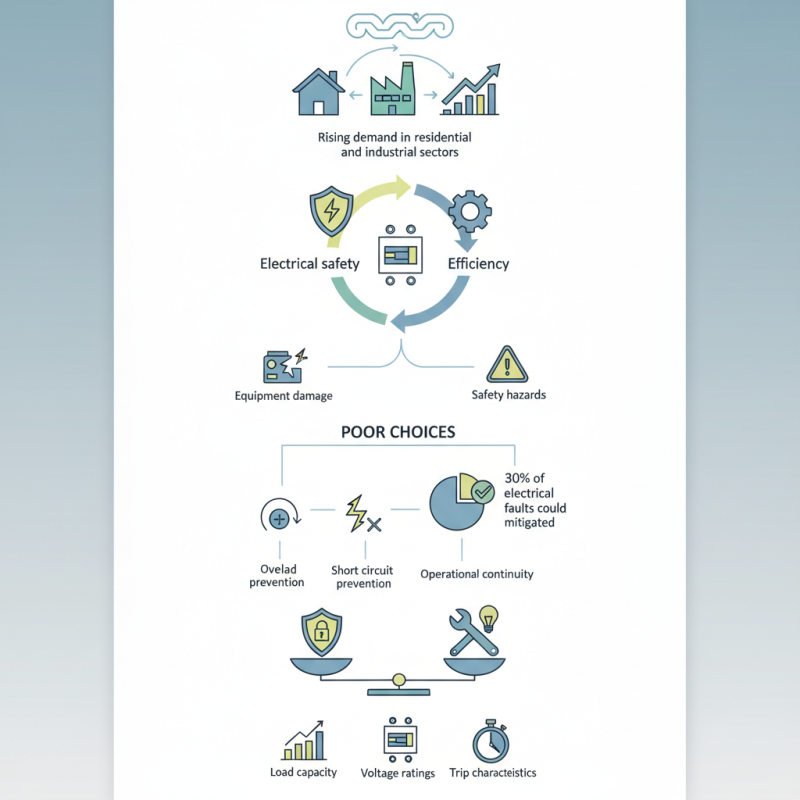
Choosing the right Miniature Circuit Breaker (MCB) can significantly impact electrical safety and efficiency. The global market for MCBs is projected to grow at a CAGR of 7.5% from 2021 to 2026, indicating rising demand in residential and industrial sectors. This increase reflects an ongoing commitment to electrical safety standards.
The complexity of electrical systems requires careful selection of MCBs. Poor choices may lead to equipment damage or safety hazards. In fact, a study by the International Electrotechnical Commission revealed that up to 30% of electrical faults could be mitigated with appropriate circuit protection. A reliable MCB prevents overloads and short circuits, ensuring operational continuity.
As you consider your options, think about the environment your MCB will operate in. Factors like load capacity, voltage ratings, and trip characteristics must align with your specific needs. Remember, the right Miniature Circuit Breaker is not just about performance; it’s about understanding the balance between protection and practicality.
Understanding the Different Types of Miniature Circuit Breakers Available
When selecting a miniature circuit breaker (MCB), understanding the types available is crucial. MCBs come in several types, primarily categorized by their tripping characteristics. Type B MCBs trip between 3 to 5 times the rated current. This type is ideal for circuits with mainly resistive loads, like lighting or heating systems. However, be cautious. A Type B MCB might trip too frequently in circuits with motors or inductive loads.
Type C MCBs, tripping at 5 to 10 times the rated current, are suitable for inductive loads. This makes them perfect for motors and transformers. Yet, they may not protect sensitive electronics effectively. Then, we have Type D MCBs, which trip at over 10 times the rated current. They're suited for heavy machinery. But using them might be overkill in small residential installations. Each type caters to different needs, but limitations exist.
Consider the application before making a choice. Analyze your loads and potential hazards carefully. It’s essential to match the MCB to the specific requirements of each circuit. If you miscalculate, it could lead to nuisance tripping. Alternatively, an MCB that is too tolerant may fail to protect against overloads or short circuits. Balancing these factors can be challenging, but it is vital to ensure safety and reliability.
Determining the Appropriate Current Rating for Your Circuit Needs
Choosing the right miniature circuit breaker (MCB) is crucial for ensuring safety and efficiency in any electrical installation. When determining the appropriate current rating, understanding your circuit's needs is essential. The current rating should reflect the maximum load your circuit will handle without tripping unnecessarily. If the MCB is rated too high, it may not protect the circuit when needed.
Consider various factors impacting your circuit’s current load. For instance, the types of devices connected to the circuit can vary greatly. A lighting circuit needs less current compared to a heavy machinery circuit. Evaluating the total wattage of connected devices can provide clarity on required current ratings. Mistakes can happen here; sometimes, we forget to include all devices. One overlooked item can lead to inadequate protection.
Mistakes often arise from assumptions about regular usage. It's easy to underestimate a circuit’s needs, especially if devices are frequently added. Think about peak usage times when devices run concurrently. If multiple appliances operate at once, the circuit may experience overloads. This risk highlights the importance of careful calculation and consideration. If unsure, consulting a qualified professional can give peace of mind.
Evaluating Tripping Characteristics: B, C, and D Curve Selection
When selecting a miniature circuit breaker (MCB), understanding its tripping characteristics is crucial. The B, C, and D curves are three common types. Curve B is ideal for residential use. It trips at 3-5 times the rated current. This sensitivity protects residential appliances, especially inductive loads like motors. However, it may trip unnecessarily due to momentary surges. This can lead to frustration.
Curve C is a popular choice for commercial environments. It trips at 5-10 times the rated current. This allows for a balance between protection and stability. Suitable for loads with higher inrush currents, such as transformers, it can handle short surges without nuisance tripping. Still, one may overlook the nuances of specific applications.
Curve D, on the other hand, is for heavy industrial use. It trips at 10-15 times the rated current. This means it can manage large motor starts and very high inrush currents. Users often believe it gives ultimate protection. However, its lax tripping may expose sensitive electronics to prolonged overcurrent conditions. Reflecting on your specific needs is essential to avoid potential issues. Choose wisely to ensure both safety and efficiency.
Tripping Characteristics of Miniature Circuit Breakers
This chart illustrates the different tripping currents (In) for B, C, and D curve miniature circuit breakers. The tripping current values are essential for selecting the appropriate type based on your electrical load requirements.
Assessing the Breaking Capacity Required for Your Electrical System
Choosing the right miniature circuit breaker (MCB) requires careful assessment of the breaking capacity. This capacity is critical for protecting your electrical system from overload and short-circuit conditions. According to a report by the International Electrotechnical Commission, MCBs are designed with specific breaking capacities, typically ranging from 3,000 to 10,000 amperes. Selecting the right value ensures operational safety.
One key factor to consider is your system's potential fault current. Ignoring this can lead to inadequate protection. For instance, if your system has a fault current of 8,000 A, an MCB with a low breaking capacity might fail, resulting in equipment damage or fire hazards. Detailed calculations can help, but many users overlook potential faults in their assessments.
Real-world applications reveal that many installations are underprotected. Surveys indicate that 35% of MCBs installed did not meet the necessary breaking capacity for their environment. This oversight can stem from a lack of awareness or understanding of electrical system intricacies. It's crucial to reflect on your unique settings and ensure the selected MCB aligns with actual demand.
Considering Additional Features: Residual Current Protection (RCCB) and More
When selecting a miniature circuit breaker (MCB), it's crucial to consider additional features like Residual Current Circuit Breakers (RCCB). According to recent industry reports, RCCBs can detect earth faults, protecting against electric shocks. In fact, around 30% of electrical accidents may be prevented with proper RCCB installation.
Beyond basic protection, RCCBs offer features like double pole switching. This ensures quick disconnection during faults. The efficacy of these devices varies. Some models have a higher tripping sensitivity, reducing risk in residential settings. However, this could lead to unnecessary tripping.
The integration of MCBs and RCCBs can enhance overall safety. A report from the Electrical Safety Foundation indicates that using these devices together reduces the risk of fire. Yet, many users overlook this combination. Ensuring compatibility among your MCB and RCCB is critical but often ignored. Miscalculating the required ratings can lead to detrimental outcomes. Investing time to evaluate features will yield better results.