
Blog

You are here:

How to Choose GRP Gel Coat Tile Machinery in 2026?

Choosing GRP tile equipment in 2026 means balancing output, finish quality, energy use, and dependable support. Grand View Research’s Fiberglass Market Size, Share & Trends Analysis Report valued the global fiberglass market at USD 51.3 billion in 2023 and projected a 4.5% compound annual growth rate from 2024 to 2030. This broader market figure signals activity, but it does not measure demand for GRP roof tiles alone. That distinction matters.

The International Energy Agency’s 2024 Global Status Report for Buildings and Construction reports that buildings and construction accounted for 34% of global energy demand and 37% of energy- and process-related carbon dioxide emissions in 2022. For buyers, this makes curing energy and production waste worth examining, not just quoted machine speed. Ask suppliers for test data on resin dosing, gel-coat thickness, mold temperature control, and reject rates. Look closely at sample tiles. Uneven gloss, pinholes, or inconsistent color can reveal problems that a polished brochure will not.

Grp Gel Coat Tiles Machinery should be assessed against the actual tile design, planned shift pattern, and available floor space. Confirm whether the line handles your mold dimensions and supports practical cleaning between colors. Request a factory trial using your specified materials, then compare cycle time and finished-tile consistency with written claims. Small details count. Service response times, spare-part availability, operator training, and clear warranty terms also affect long-term costs. No report can choose the right line for every factory; specifications still need independent checking. That step is easy to underestimate.
How to Choose GRP Gel Coat Tile Machinery in 2026?

Understanding GRP Gel Coat Tile Machinery and Its Main Components

GRP gel coat tile machinery forms a reinforced plastic tile with a smooth, weather-resistant surface. The gel coat is applied to a mold or moving surface before reinforcement and resin are added. Equipment differs by production method, so a continuous line may not suit a batch-molding operation. Fit matters.

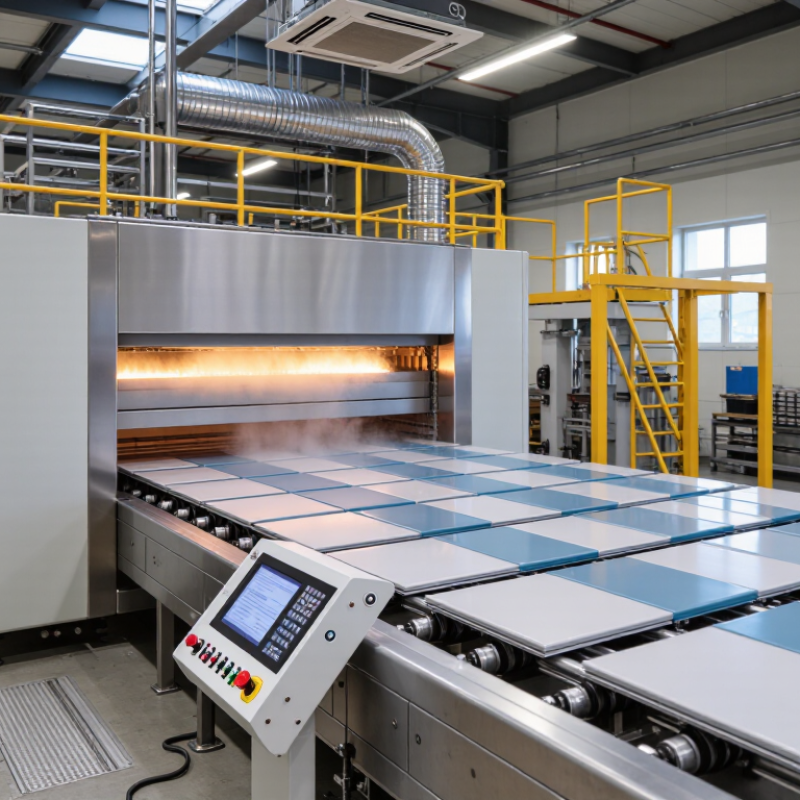
Key components include a gel coat applicator, fiberglass feeding system, resin metering unit, and rollers or other consolidation tools. Together, they help control coating thickness, reinforcement placement, and trapped air. A curing section gives the laminate time to harden; trimming equipment then shapes the tile edges.

Controls should let operators adjust speed and resin flow, while guards and accessible stop controls support safer work. Small alignment errors can leave uneven edges. They are easy to underestimate.

Tips: Ask suppliers for sample tiles made with comparable materials and thicknesses. Check coating consistency, edge quality, and cure uniformity. Confirm cleaning access and routine maintenance needs before choosing.

A faster line may sound attractive, but it can create more waste if operators cannot keep the process stable. Specification sheets help, though they rarely reveal every production issue.

Defining Tile Specifications, Production Volume, and Material Requirements

Choosing GRP gel coat tile machinery starts with the tile itself. Define length, width, thickness, edge profile, surface gloss, and acceptable dimensional variation before comparing equipment. A deep, textured tile may need different mold release, gel coat application, and cure control than a thin, flat panel. Record the glass reinforcement type and resin system, too. These affect wet-out, mold filling, and cycle time. Small details matter.

Production volume should mean saleable tiles per shift, not the machine’s best-case cycle rate. Include mold changeovers, cleaning, curing, trimming, and rejected parts in the estimate. Grand View Research’s Fiberglass Market Size, Share & Trends Analysis Report estimated the global fiberglass market at USD 13.1 billion in 2023, with projected growth of 4.5% annually from 2024 to 2030. That market context suggests continued material demand, but it does not predict your factory’s orders. Be cautious about sizing equipment from market growth alone.

Match the machine’s metering and application systems to gel coat viscosity, pigment loading, and the planned glass format. Ask suppliers for trial data using your actual materials and mold geometry. Check whether temperature and humidity records are available during curing; inconsistent conditions can show up as tacky surfaces or uneven color. A polished specification sheet helps. It can still miss operator skill, material variability, and the awkward first weeks of production.

How to Choose GRP Gel Coat Tile Machinery in 2026? — Defining Tile Specifications, Production Volume, and Material Requirements

Selection factor Information to define Machinery implications Practical checks
Tile geometry Specify finished length, width, thickness, profile, edge details, and allowable dimensional variation. Include the largest and smallest tile designs. Mold dimensions, clamping arrangement, spray-gun reach, cutting or trimming fixtures, and handling equipment must accommodate the product range. Check that the mold reproduces the required surface texture and that the part can be demolded without damaging edges or finish.
Tile weight and laminate Define target finished weight, laminate thickness, reinforcement schedule, and any core or backing layer. Confirm performance requirements for the intended application. Select resin metering and dispensing capacity, reinforcement cutting and placement methods, roller tools, and suitable mold support. Make trial parts and verify thickness, weight, cure, voids, and relevant mechanical or weathering requirements.
Gel coat finish Set the required colour, gloss or texture, exterior exposure needs, and acceptable surface defects. Identify whether colour changes are frequent. Consider a controlled gel coat spray system, compatible spray equipment, clean material lines, and a mold surface suited to the specified finish. Confirm gel coat compatibility with the resin system and establish application and cure parameters with the material supplier.
Production volume Estimate saleable tiles per shift and per year, planned operating shifts, product mix, and expected demand variation. Lower-volume production may suit a manual or semi-automatic lay-up cell. Higher targets may require more molds, material handling, dispensing, and finishing capacity. Base capacity on demonstrated full cycle time, including gel coat, lay-up, cure, demolding, mold cleaning, and changeovers—not an assumed machine speed alone.
Mold count and cycle time Record the expected time for each process stage and whether different tile designs will run on the same line. Additional molds or parallel workstations can support overlapping cure and lay-up operations; quick-release fixtures can reduce changeover time. Run a timed production trial using the intended laminate and process conditions before committing to a production-rate estimate.
Reinforcement materials Identify the glass reinforcement form, such as chopped strand mat or woven reinforcement, its areal weight, roll width, and ply schedule. Check roll stands, cutting tables, dispensing tools, and access for placing and consolidating each reinforcement layer. Confirm reinforcement wet-out and compatibility with the selected resin and tile design through process trials.
Resin and catalyst system Specify resin type, viscosity, working time, cure conditions, catalyst or initiator requirements, and expected consumption per tile. Metering equipment, pumps, hoses, and mixing components must be suitable for the materials and specified production rate. Require written material compatibility guidance and verify metering accuracy, cleaning procedures, and safe handling provisions.
Curing conditions Define the required cure time and temperature range, and note seasonal or facility temperature variation. Determine whether ambient curing is appropriate or whether controlled temperature, monitoring, or additional curing space is needed. Set the cure schedule from material supplier guidance and validate it against demolding quality and final product requirements.
Mold release and maintenance Define release method, cleaning frequency, mold life expectations, and acceptable repair or refurbishment procedures. Provide safe mold access, stable storage, cleaning tools, and lifting or turning equipment where mold size and weight require it. Check mold condition regularly and use release products compatible with the gel coat and resin system.
Factory utilities and safety Confirm available floor area, electrical supply, compressed air, ventilation, material storage, and planned operator numbers. Layout should support material flow, equipment access, housekeeping, and ventilation appropriate to the materials and local regulations. Review safety data sheets, exposure controls, fire precautions, PPE, and waste handling with qualified safety personnel.
Acceptance criteria Agree on sample tile dimensions, weight, appearance, production cycle, and inspection method before final equipment acceptance. Specify which equipment functions, tools, training, documentation, and process support are included in the supply scope. Use representative materials and tile designs during acceptance trials, and document results against agreed criteria.

Planning note: Capacity, cure time, and material consumption depend on tile geometry, laminate design, formulation, mold temperature, and operating conditions. Validate these values with representative production trials and material supplier guidance.

Comparing Forming, Gel Coat, Curing, and Cutting Systems

How to Choose GRP Gel Coat Tile Machinery in 2026?
Comparing Forming, Gel Coat, Curing, and Cutting Systems

Choosing GRP tile machinery means comparing the whole production line, not just its forming press. Forming systems should maintain consistent tile profiles without crushing the reinforcement. Check mould temperature, pressure control, and changeover time. Small details matter. For gel coat application, assess spray uniformity and overspray control. Uneven coating can leave thin edges, visible pinholes, or costly rework. Ask suppliers for trial panels using your intended resin and glass reinforcement.

Curing capacity must match the line speed. A short oven may create under-cured areas, while excessive heat can distort tiles. The European Composites Industry Association’s 2023 market report estimates European composites production at 2.6 million tonnes in 2022. This broad industry figure is not a tile-machinery benchmark, but it shows the scale of composites manufacturing. Compare it with your own output targets, not a generic capacity claim. Watch the edges. Cutting systems should deliver clean ends with limited chipping and dust; inspect finished tiles under consistent lighting.

Request a continuous production trial, not only a single moulded sample. Record cycle time, coating thickness, cure consistency, scrap rate, and cut accuracy. These measurements make equipment comparisons more useful than headline speed alone. A line can look efficient on paper. It may still need frequent cleaning or manual adjustments. Include those practical costs in your decision, and leave room for a second trial if results vary.

How to Choose GRP Gel Coat Tile Machinery in 2026?

Comparing Forming, Gel Coat, Curing, and Cutting Systems

Indicative buyer-priority ratings (1 = lower priority, 5 = critical), not measured market data or machine specifications. Check forming repeatability, gel coat application consistency, cure control, and cut accuracy against your tile design and production requirements. Confirm actual tolerances and throughput with equipment suppliers.

Assessing Automation, Safety, Maintenance, and Supplier Support

How to Choose GRP Gel Coat Tile Machinery in 2026?

Assessing Automation, Safety, Maintenance, and Supplier Support

When comparing GRP gel coat tile machinery, match automation to your actual production mix. A programmable dosing system can improve repeatability, but only if operators can adjust it confidently. Ask to see a full cycle, from gel coat application to tile release. Watch for uneven coating, resin buildup, and awkward manual handling. Small details matter. Safety guards, accessible emergency stops, and suitable extraction should be practical to inspect and maintain. Confirm that operators receive clear training for cleaning and routine checks.

Tips: Request a maintenance schedule and a list of wear parts before choosing. Ask how quickly common parts can be supplied. If possible, run your own materials through a sample cycle. A clean showroom demonstration is useful, but it may not reveal everyday snags.

Check whether routine service allows safe access to pumps, rollers, and spray equipment without dismantling half the line. Get supplier support details in writing, including commissioning, troubleshooting, training, and response times. References from businesses with similar tile sizes and output can help verify claims. I would not chase maximum automation by default; simpler controls may be easier to troubleshoot. Still, manual steps can become bottlenecks. The right balance depends on your staff, floor space, and maintenance skills, and that balance may take some honest trial and error.

Verifying Performance, Compliance, and Total Ownership Costs for 2026

How to Choose GRP Gel Coat Tile Machinery in 2026?

A dependable GRP tile line should prove its performance using your materials, not a polished showroom sample. Run a factory acceptance test with your gel coat and reinforcement. Record cycle time, tile thickness, cure conditions, surface defects, and material waste. Ask for repeat runs, not one perfect tile. Small details matter: resin left in a mixing head can harden into costly downtime. Still, test results can vary with operator skill, so document settings and responsibilities clearly.

Check safety and compliance against the markets where the machinery will operate. ISO 12100 provides a framework for machinery risk assessment; IEC 60204-1 addresses electrical equipment on machines. Ask for risk assessments, wiring diagrams, guarding details, and service instructions. These documents support due diligence, but do not replace local technical review. Ownership costs need the same scrutiny. Include installation, training, spare parts, maintenance, energy, and expected production losses—not only the purchase price. The U.S. Department of Energy’s 2008 motor-system sourcebook estimates that motor-driven systems use about 69% of U.S. manufacturing electricity. That figure is not specific to GRP lines, but it makes drive efficiency worth measuring. Compare kilowatt-hours per acceptable tile during a witnessed trial. A spreadsheet helps. It can still miss an inconvenient truth: promised output means little when the line is difficult to clean or reset.

Go to Top