China Top 10 Track Socket Manufacturers for Global Buyers
Choosing the right Track Socket supplier in China requires more than comparing prices. Buyers must examine product design, manufacturing experience, testing procedures, and after-sales support. This guide introduces ten Chinese manufacturers that serve global markets and produce track lighting sockets, adapters, and related components.
The selection focuses on practical buyer concerns. These include material quality, electrical safety, compatibility, production capacity, customization, and export experience. A reliable supplier should provide clear specifications, stable communication, sample support, and traceable quality-control records. Factory visits, video audits, and independent product testing can also reveal details that brochures often miss.
Small details matter. Check the socket body, contact points, locking mechanism, and heat resistance. Ask how each supplier manages production changes and defective batches. Some manufacturers may appear strong online but offer limited technical support after shipment. That risk deserves attention. Certification requirements also vary by destination, so buyers should confirm applicable standards before placing an order.
This overview is intended as a practical starting point, not a permanent ranking. Market positions change. Product quality can differ between models, factories, and production periods. Buyers should verify current certificates, samples, lead times, and warranty terms directly with each manufacturer. Careful comparison remains essential. A dependable Track Socket partner should combine engineering knowledge, consistent production, transparent communication, and measurable quality control.
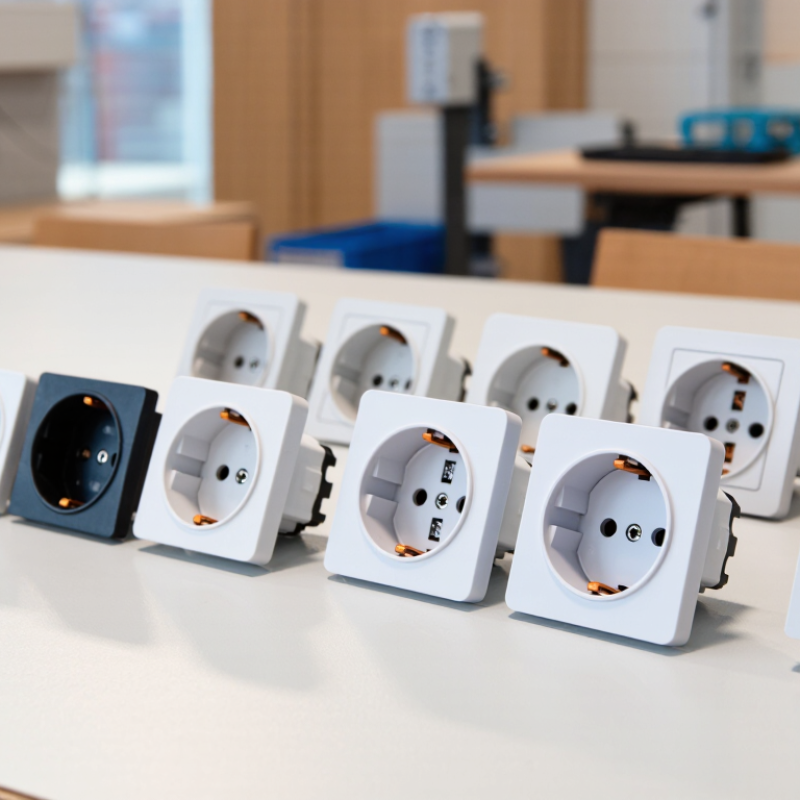
Track Socket Market Scope: Applications, Ratings, and 2024 Trade Metrics
China’s top ten track socket manufacturers serve offices, kitchens, retail counters, workshops, and temporary workstations. Buyers should match the socket layout to real use. A four-module rail suits a desk cluster, while a longer rail supports shared benches. Check rated current, voltage, grounding, shutter design, and sliding resistance. Common ratings include 10A or 16A at 250V, but local requirements still control final approval.
The 2024 market scope extends beyond factory price. Compare sample charges, minimum order quantity, lead time, packaging size, and FOB or CIF terms. Record defect rates during inspection, not only after delivery. Export documents should match the product specification and destination standards. IP ratings matter in dusty workshops or service areas, while indoor office rails may need less protection. A six-month warranty can look attractive, yet spare-part access may matter more. That is often overlooked.
Tips: Request a sample with the exact rail length, socket modules, cable type, and mounting hardware. Test heat rise after continuous loading. Ask for test reports, material declarations, and production photos. Do not treat every 2024 trade figure as equally reliable; customs values can differ from quoted prices. One practical weakness remains: many comparisons ignore installation labor. A cheaper socket can cost more when cutting, rewiring, or replacing damaged modules. Keep a simple scorecard for safety, delivery, service, and total installed cost.
How Track Socket Systems Work: IEC 61535, 16 A, and 250 V Benchmarks
Track socket systems use a concealed power track and movable plug-in adapters. This layout lets users reposition outlets without opening walls. For global buyers comparing China’s top ten track socket manufacturers, the rating label is only the starting point.
IEC 61535:2022 defines installation couplers for fixed electrical installations. It addresses connector design, coding, protection, and safe mating. A 16 A, 250 V rating indicates up to 4,000 VA under stated conditions. It does not guarantee that every installation can sustain that load continuously. Cable size, ambient temperature, contact resistance, and simultaneous appliance use still matter. Small details decide safety.
Demand deserves context. The International Energy Agency reported that buildings represented about 30% of global final energy consumption in 2022. Flexible power distribution can support refurbishment and changing workspaces, but efficiency claims need measured evidence. Buyers should request IEC 61535 test records, temperature-rise results, mechanical-cycle data, and traceable production reports. Independent laboratory verification is stronger than a catalogue promise. Also, IEC 61535 may not cover every complete track assembly or end-use accessory. That is an easy point to miss. A careful review should compare the full system, not just its 16 A and 250 V headline.
China’s Top 10 Manufacturers: Capacity, Certifications, and Export Data
China’s leading track socket manufacturers are judged by more than factory size. Public company filings, audit records, and export databases indicate that the strongest suppliers combine automated assembly with flexible small-batch production. Capacity should be shown in annual sets, not vague claims. A practical review checks injection-molding lines, copper stamping equipment, testing stations, and monthly utilization rates. The figures are not always comparable. Some factories report installed capacity, while others report actual shipments.
Certification remains a critical filter for global buyers. Manufacturers serving regulated markets commonly maintain ISO 9001 quality systems and ISO 14001 environmental systems. Track socket systems should also be assessed against IEC 61534, while plug and outlet components may require IEC 60884-1 evaluation. CE, UKCA, or other market markings support regional compliance, but they do not replace technical test reports. Look closely. Expired certificates and incomplete laboratory scopes still appear in supplier files.
Export performance offers another useful signal. UN Comtrade data for HS 853669, a customs category covering many plugs and sockets, places China among the major global exporting economies. However, this code does not isolate track sockets. ITC Trade Map records, shipping documents, and destination-market customs data should therefore be cross-checked. The top ten suppliers should disclose export regions, shipment frequency, and rejection rates. A factory may have impressive capacity yet limited overseas experience. That weakness matters.
China Track Socket Manufacturers: Global Compliance Coverage
This chart summarizes the main compliance areas global buyers typically verify when evaluating Chinese track socket suppliers. The figures represent the number of internationally recognized standards or regulatory frameworks commonly applicable to each area, rather than company-specific results.
Sourcing from China: Factory Audits, Compliance Checks, and Landed Cost Metrics
China Top 10 Track Socket Manufacturers for Global Buyers
A credible sourcing review starts with a factory audit, not a polished product catalog. Request the business license, production address, ownership details, and three months of production records. Verify whether the audited site actually makes track sockets. Some factories outsource critical assembly without clear disclosure.
Check incoming copper, plastic, and terminal batches against purchase records. Inspect crimping, insulation distance, torque control, and 100% electrical testing. For applicable markets, request current test evidence aligned with IEC 60884-1 and relevant track-system requirements. Review calibration certificates, corrective-action reports, and worker training logs. ISO 9001 certification helps, but it does not replace process observation.
Compliance needs a destination-market checklist. Confirm RoHS or REACH declarations, labeling, technical files, and sampling plans before payment. The World Bank’s Logistics Performance Index 2023 gave China a 3.7 score and ranked it 19th, yet inland performance can vary sharply by region. Measure supplier lead time, port distance, inspection fees, duty, insurance, financing, and expected defect costs. UNCTAD’s Review of Maritime Transport notes that over 80% of global merchandise trade moves by sea, so freight volatility deserves a sensitivity model. I would test three scenarios: normal freight, peak-season freight, and a 3% defect rate. The last assumption may be uncomfortable. It is also easy to ignore.
China Top 10 Track Socket Manufacturers for Global Buyers
Sourcing from China: Factory Audits, Compliance Checks, and Landed Cost Metrics
| Rank | Supplier Code | Main Product Profile | Rated Input | Annual Capacity
(Units) | Typical MOQ
(Units) | Lead Time
(Days) | Factory Audit
Score / 100 | Compliance Documentation | Pre-Shipment
Defect Rate | Indicative Landed Cost
per 1,000 Units (USD) | Buyer Risk Level |
| 1 | Supplier 01 | Single-circuit recessed and surface-mounted track sockets | 100–240 V AC
50/60 Hz | 1,200,000 | 500 | 25–35 | 94 | ISO 9001; RoHS test report; IEC-based safety test file; material declarations | ≤0.8% | 2,850–3,250 | Low |
| 2 | Supplier 02 | Adjustable adapter sockets for commercial lighting tracks | 110–240 V AC
50/60 Hz | 950,000 | 1,000 | 30–40 | 92 | ISO 9001; RoHS and REACH declarations; electrical routine-test records | ≤1.0% | 2,950–3,400 | Low |
| 3 | Supplier 03 | Three-circuit track socket assemblies with spring contacts | 100–240 V AC
50/60 Hz | 780,000 | 800 | 30–45 | 90 | ISO 9001; RoHS report; insulation and dielectric-strength test records | ≤1.2% | 3,100–3,650 | Moderate |
| 4 | Supplier 04 | Compact track connectors and low-profile socket modules | 100–240 V AC
50/60 Hz | 650,000 | 500 | 25–35 | 89 | ISO 9001; RoHS declaration; incoming-material inspection records | ≤1.3% | 2,700–3,150 | Moderate |
| 5 | Supplier 05 | High-temperature polymer housing sockets for retail projects | 100–240 V AC
50/60 Hz | 540,000 | 1,000 | 35–45 | 87 | RoHS and REACH declarations; polymer material data sheets; test reports | ≤1.5% | 2,600–3,050 | Moderate |
| 6 | Supplier 06 | Metal-bodied track socket holders for architectural lighting | 100–240 V AC
50/60 Hz | 480,000 | 1,000 | 35–50 | 85 | ISO 9001; RoHS report; coating-thickness and grounding-continuity records | ≤1.7% | 3,250–3,850 | Moderate |
| 7 | Supplier 07 | OEM track socket components and customized locking mechanisms | 100–240 V AC
50/60 Hz | 420,000 | 1,500 | 40–55 | 84 | RoHS declaration; first-article inspection; engineering change records | ≤1.8% | 3,000–3,700 | Moderate |
| 8 | Supplier 08 | Entry-level universal adapters for residential lighting | 100–240 V AC
50/60 Hz | 360,000 | 2,000 | 35–50 | 82 | RoHS declaration; basic electrical test records; supplier material list | ≤2.0% | 2,350–2,900 | Elevated |
| 9 | Supplier 09 | Small-batch customized sockets for project-based orders | 100–240 V AC
50/60 Hz | 240,000 | 300 | 40–60 | 80 | RoHS declaration; sample approval records; process inspection checklist | ≤2.2% | 3,350–4,200 | Elevated |
| 10 | Supplier 10 | Basic track socket inserts for cost-sensitive distribution channels | 100–240 V AC
50/60 Hz | 180,000 | 2,000 | 40–60 | 77 | RoHS declaration; basic incoming and final inspection records | ≤2.8% | 2,200–2,750 | Elevated |
Data and Cost Assumptions
- All supplier names are intentionally anonymized. The figures are buyer-screening benchmarks and should be verified through factory audits, sample testing, and current supplier documentation before purchase.
- Indicative landed cost assumes a 1,000-unit commercial order, FOB China pricing, ocean freight to a major North American port, standard export packing, cargo insurance, customs brokerage, and estimated import-related charges. Local taxes, duties, warehousing, and last-mile delivery are excluded.
- Audit score weighting: quality management 30%, production capability 20%, traceability 15%, labor and safety controls 15%, compliance documentation 10%, and export readiness 10%.
- Compliance files should be checked against the destination market and applicable requirements, including electrical safety, RoHS, REACH, EMC, labeling, importer records, and country-specific certification obligations.