
The global snack bar market is expanding, creating stronger demand for reliable cereal processing equipment. Grand View Research valued the global snack bars market at approximately USD 25 billion in 2023 and expects continued growth through 2030. Convenience matters. So does consistency.
For global buyers, a Cereal Bar Machine must do more than press ingredients into attractive shapes. It should manage mixing, feeding, slab forming, cooling, cutting, and packaging with stable accuracy. A bar should leave the line with clean edges, even density, and dependable weight. Small differences become expensive at scale. Euromonitor and Mintel reports also highlight consumer interest in high-fiber, low-sugar, plant-based, and functional snack products. These trends require flexible production systems, not rigid machines built for one recipe.
Quality remains the real test. W. Edwards Deming, a respected quality-management expert, said, “Quality comes not from inspection, but from the improvement of the production process.” His principle fits cereal bar manufacturing closely. A capable Chinese manufacturer should support recipe trials, hygienic design, controlled temperature, and responsive after-sales service. Stainless-steel contact parts help simplify cleaning. Servo-driven cutting can reduce size variation. These details matter.
Still, no machine solves every production problem. Ingredient behavior changes with syrup viscosity, inclusions, moisture, and seasonal conditions. Buyers should examine factory tests, output data, spare-parts access, and operator training before purchasing. This guide explores why China has become a competitive source for Cereal Bar Machine solutions, while recognizing one imperfect truth: equipment performance depends on both engineering and disciplined operation.
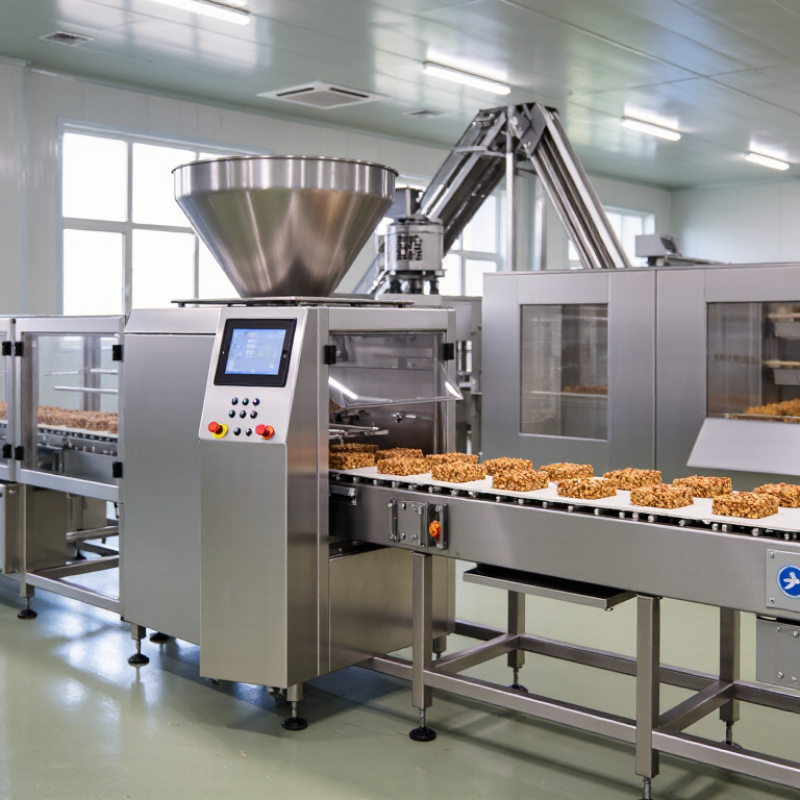
China’s cereal bar machine manufacturing landscape is shaped by dense supply chains, practical engineering, and strong export experience. Manufacturers commonly source conveyors, heaters, cutters, and control components within established industrial clusters. This shortens lead times and supports faster equipment customization.
Many factories build machines for granola bars, nut bars, protein bars, and cereal sheets. A reliable supplier should explain product-contact materials, output range, forming pressure, and cutting accuracy. Ask for test videos using your recipe. Real mixtures behave differently. Experienced engineering teams adjust roller gaps, cooling time, and blade speed after trial runs. These details matter when syrup viscosity changes between seasons. Listed capacity can be misleading because it may reflect ideal conditions. Request measured output with your ingredients, bar dimensions, and packaging rhythm. This evidence supports realistic investment decisions.
Tips: Compare complete production lines, not only the main machine. Check stainless steel grade, cleanability, electrical standards, spare-part availability, and operator training. Confirm whether remote diagnosis and installation guidance are included. A factory audit, video inspection, or sample trial can reveal workmanship more clearly than polished brochures. No supplier is perfect. Clear records and honest limitations are stronger signs of reliability.
China Top Cereal Bar Machine Manufacturer for Global Buyers
How Cereal Bar Machines Work from Mixing to Packaging
A cereal bar line turns measured ingredients into a stable, retail-ready product. Production begins with weighing oats, crisps, seeds, nuts, and syrup. Accurate dosing protects texture and reduces costly waste. A heated mixer then combines the ingredients evenly. Syrup temperature must remain consistent. If it rises too high, the bar may become hard or dark.
The mixture moves onto a forming belt, where rollers create a uniform slab. Cooling follows, often through controlled air or refrigeration. This step improves cutting accuracy and prevents sticking. A guillotine or rotary cutter divides the slab into measured bars. In practical installations, operators still adjust pressure and speed. Real production is less tidy than a brochure suggests. Humidity can change the product within one shift.
Packaging begins after inspection and weight checking. Horizontal flow wrapping seals each bar in printed or plain film. Sensors monitor film position, seal temperature, and missing products. According to Grand View Research’s 2024 snack bars report, the global market was valued at approximately USD 25 billion in 2023. This growth increases demand for reliable, flexible equipment. PMMI packaging industry reports also highlight automation, traceability, and reduced material waste as major investment priorities. A well-designed line supports these goals, but maintenance remains essential. Small sealing defects can damage an entire production batch.
Cereal bar production typically moves through syrup preparation, mixing, forming, cooling, cutting, and packaging. The chart shows representative operating temperatures used across these stages. Actual settings vary according to the recipe, moisture content, binder type, bar size, and packaging requirements.
China Top Cereal Bar Machine Manufacturer for Global Buyers
Key Machine Types for Different Cereal Bar Production Needs
Choosing a cereal bar machine starts with the recipe, not the equipment catalog. A forming machine suits bars made from oats, nuts, seeds, and syrup. It compresses the mixture into a stable slab. Adjustable rollers help control thickness and density. Small producers may prefer a compact hydraulic press. It offers slower output but easier recipe changes.
Extrusion machines fit soft, sticky mixtures with consistent moisture levels. They can produce ropes, blocks, or filled bars with precise portion control. Cutting machines then divide the product into clean pieces. Blade spacing and cutting speed require careful adjustment. Otherwise, bars may crack or lose their edges.
Coating needs create another equipment choice. Enrobing machines apply chocolate or compound coatings evenly across the bar. Cooling tunnels set the coating before wrapping. For high-volume lines, automatic feeding and flow wrapping reduce manual handling. For flexible production, semi-automatic systems may be more practical. They cost less and allow closer quality checks.
Production trials matter. A machine that performs well with one syrup can struggle with another. Moisture, temperature, and particle size change the result. Ask manufacturers for test data using your actual ingredients. Check stainless-steel contact surfaces, cleaning access, safety controls, and spare-part support. Some specifications look impressive, yet daily maintenance tells the real story. A small trial batch can reveal problems early. That step is easy to overlook.
| Machine Type | Main Production Stage | Suitable Cereal Bar Products | Typical Capacity | Key Operating Principle | Best Suited For | Important Selection Factors |
|---|---|---|---|---|---|---|
| Batch Mixing Machine | Ingredient blending and syrup distribution | Granola bars, muesli bars, nut bars, fruit-and-cereal bars | 50–500 kg/h | Dry ingredients and heated binders are combined in batches using paddles or horizontal mixing blades. | Small and medium-scale producers, frequent recipe changes, and products with delicate inclusions. | Mixing volume, temperature control, mixer speed, cleanability, and compatibility with sticky binders. |
| Continuous Mixing System | Continuous ingredient blending | High-volume cereal bars with consistent recipes and uniform binder distribution | 300–2,000 kg/h | Metered dry ingredients and liquid binders are continuously fed and mixed at a controlled ratio. | Large factories requiring stable output, reduced manual handling, and repeatable product quality. | Automatic dosing accuracy, feed consistency, recipe control, line synchronization, and maintenance access. |
| Slab Former and Roller | Compression and thickness forming | Pressed granola bars, layered cereal bars, protein-cereal bars, and soft snack slabs | 100–1,500 kg/h | The mixed mass is spread, compressed, and calibrated between rollers to produce a continuous slab. | Manufacturers needing controlled bar thickness, uniform density, and continuous production. | Roller width, adjustable pressure, slab thickness range, product temperature, and anti-stick design. |
| Cereal Bar Guillotine Cutter | Cross-cutting and portioning | Long slab products cut into individual rectangular or square bars | Up to 300 cuts/min | A guillotine knife makes synchronized cross-cuts after the slab has reached the required length and firmness. | Rectangular bars, high-speed lines, and products that require accurate portion length. | Cutting speed, knife material, product temperature, portion tolerance, and crumb control. |
| Longitudinal Slitter | Lengthwise portioning | Multi-lane granola slabs and bars requiring parallel strips before cross-cutting | Typically matched to the forming line | Rotary or fixed blades divide the continuous slab into parallel lanes before final sizing. | Multi-lane production lines and manufacturers seeking higher output from a wide slab. | Number of lanes, lane-width accuracy, blade adjustment, product sticking, and line speed. |
| Cooling Conveyor or Cooling Tunnel | Product setting and temperature reduction | Bars made with heated syrup, chocolate coatings, or soft binders | Determined by conveyor width and line speed | Ambient or conditioned air removes heat so the bars become firm enough for cutting, wrapping, or coating. | Continuous lines where product firmness and dimensional stability are essential. | Cooling length, airflow uniformity, temperature and humidity control, footprint, and energy use. |
| Chocolate Coating and Cooling Line | Enrobing, bottoming, and coating stabilization | Chocolate-coated granola bars, cereal snack bars, and layered coated bars | 100–1,000 kg/h | Bars pass through a chocolate curtain or coating section, followed by controlled cooling and setting. | Premium coated products and producers adding visual appeal or moisture protection. | Coating width, chocolate tempering control, coating thickness, cooling capacity, and cleaning procedures. |
| Automatic Flow-Wrapping Machine | Primary packaging | Individually wrapped cereal, granola, muesli, and energy bars | 80–400 packs/min | Film is formed around each bar, sealed longitudinally and transversely, then discharged as a finished pack. | Retail-ready products requiring consistent pack quality and high packaging efficiency. | Bar dimensions, film type, sealing temperature, modified-atmosphere compatibility, and date coding. |
| Capacity figures are typical planning ranges for general cereal-bar equipment. Actual output depends on recipe viscosity, inclusion size, bar dimensions, moisture content, cooling time, operating speed, and the complete line configuration. | ||||||
China Top Cereal Bar Machine Manufacturer for Global Buyers
Quality Standards for Selecting a Chinese Machine Manufacturer
Selecting a Chinese cereal bar machine manufacturer requires evidence, not attractive brochures. The ISO Survey 2022 recorded 1,265,216 ISO 9001 certificates worldwide, but certification alone cannot prove machine performance. Ask for the certificate scope, audit date, and production records. Confirm whether it covers food machinery manufacturing, not only office management.
During a factory audit, inspect stainless-steel contact parts, weld quality, guarding, and cleaning access. Food-contact surfaces should match the agreed material specification, such as 304 stainless steel. For salty or acidic recipes, a higher corrosion-resistant grade may be necessary. Request a recorded factory acceptance test using your cereal mixture. Measure bar weight, cutting accuracy, conveyor speed, heating stability, and reject rates. Small deviations become costly during long production runs.
Demand traceable component lists and spare-parts support. A 2023 PMMI packaging industry report emphasized automation, flexibility, and data visibility as major equipment priorities. The machine should provide adjustable recipes, alarm records, and accessible operating data. Verify electrical documentation for the destination market. Also review risk assessments, manuals, wiring diagrams, and installation training.
Do not trust speed claims alone. A line rated at 1,000 kilograms per hour may require a specific recipe, bar size, and operating rhythm. I have found that real output often falls below the brochure figure. That is worth challenging before payment. A strong supplier welcomes independent testing, clear acceptance criteria, and corrective-action records. Reliability is demonstrated in documents, production trials, and the ordinary details technicians sometimes overlook.
China Top Cereal Bar Machine Manufacturer for Global Buyers
Global purchasing involves more than comparing machine prices. Fortune Business Insights estimates the global snack bar market will grow from about USD 14 billion in 2023 to over USD 21 billion by 2030. This growth increases demand for stable forming, cutting, and wrapping equipment. Buyers should verify output using real cereal or nut mixtures, not only factory videos. Ask for hourly capacity, bar-size tolerance, power requirements, and food-contact material certificates. A low quote is not always economical.
Installation planning deserves equal attention. Confirm whether remote commissioning, operator training, spare-parts lists, and electrical adaptation are included. PMMI industry reports continue to identify labor pressure and automation as major packaging concerns. A practical supplier should provide clear manuals, video guidance, and a response schedule for technical problems. Installation can still fail when the factory floor is too narrow or compressed air is unstable. That detail is often missed.
Tips: Request a complete technical file before payment. It should include layout drawings, utility consumption, acceptance-test standards, and recommended replacement parts. Check whether service staff can communicate in your working language and whether support covers weekends. Also, test cleaning access around hoppers and conveyors. It matters. Buyers should record each discussion in writing, because verbal promises may become unclear across time zones. Some specifications may need revision after testing; admitting that early is safer than protecting an unrealistic plan.
Contact Us