
Blog

You are here:

What Is the Best PE Waterproof Tarp to Buy?

Choosing the best PE Waterproof Tarp requires more than comparing thickness and price. A tarp may look tough under warehouse lights, yet fail after months of ultraviolet exposure, folding, and standing water. Grand View Research identifies rising demand for tarpaulins across construction, agriculture, transport, and outdoor storage. Its market analysis also highlights durability, weather resistance, and reusable performance as important purchasing factors. Future Market Insights similarly reports continued growth in polyethylene tarpaulin use, especially where lightweight protection and low maintenance matter.

Dr. Maya Chen, a polyethylene-film materials consultant, explains, “A tarp is only waterproof when its fabric, coating, and seams work together.” That sentence deserves attention. A 180 GSM sheet with heat-sealed edges may protect firewood better than a heavier tarp with weak eyelets. Look for UV stabilization, reinforced corners, rust-resistant grommets, and a thickness suited to the job. For long-term outdoor use, ask whether performance testing follows recognized methods such as ISO 4892-3 for accelerated weathering. Reported GSM values can also vary by supplier, so independent specifications are valuable.

This guide compares practical choices for farms, trucks, construction sites, and home storage. It will consider waterproofing, tear resistance, size accuracy, odor, folding comfort, and warranty support. No tarp is perfect. Wind still finds gaps, sharp corners still cause damage, and “waterproof” claims can be too broad. The best PE Waterproof Tarp is therefore not always the heaviest or cheapest. It is the one that matches exposure, handling, and replacement expectations.
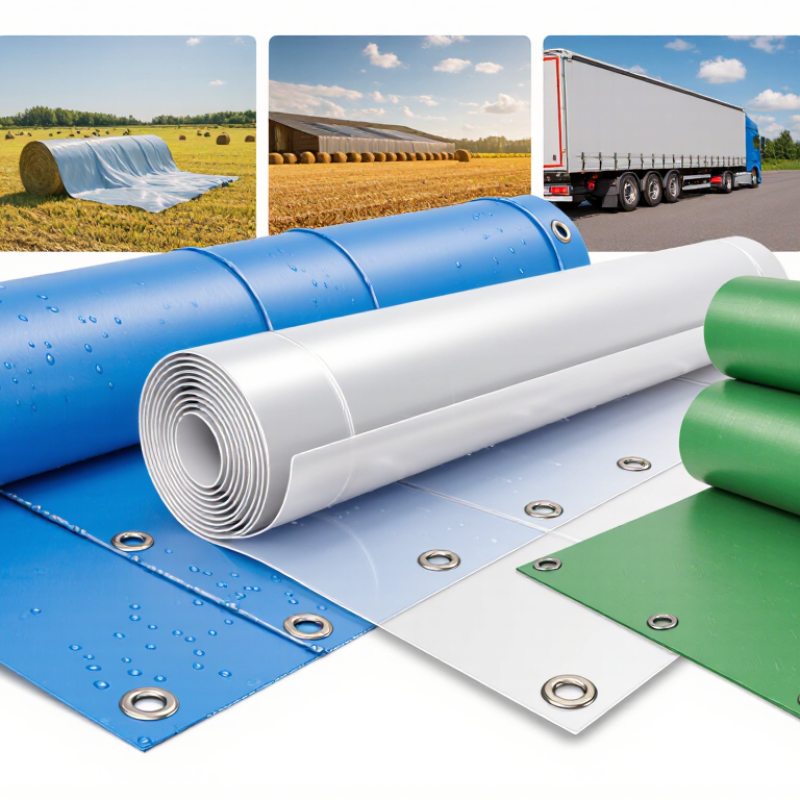
What Is the Best PE Waterproof Tarp to Buy?

What Is a PE Waterproof Tarp and How Does It Work?

A PE waterproof tarp is a protective sheet made from polyethylene, often reinforced with woven threads. It usually has a laminated coating that blocks liquid water from passing through. When rain hits the surface, droplets bead and run toward the edges. Heat-sealed seams can reduce leakage, while reinforced corners support ropes or fasteners. The material is lightweight, flexible, and easier to clean than many fabric alternatives. However, waterproof does not mean indestructible. Sharp branches, constant rubbing, and strong sunlight can weaken it over time.

The best PE waterproof tarp depends on how and where you will use it. For covering equipment, choose a thick sheet with reinforced edges and closely spaced eyelets. For camping or temporary shelter, check its weight, flexibility, and wind resistance. A tarp that feels strong in calm weather may flap badly during a storm. I have found that leaving a small air gap improves drying beneath the cover. Tight contact can trap condensation, especially overnight. This detail is easy to miss. Inspect the corners before buying, because poorly supported eyelets may tear first. A silver or darker surface may also reduce heat buildup, but performance varies by construction. I would not rely on a tarp alone for long-term storage without checking it regularly.

Which PE Tarp Materials and Construction Features Matter Most?

What Is the Best PE Waterproof Tarp to Buy?

Which PE Tarp Materials and Construction Features Matter Most?

A reliable PE tarp starts with the fabric, not the printed label. Woven polyethylene gives the sheet strength and flexibility. A laminated coating helps block rain from entering the weave. Check the fabric weight, often listed as GSM. Higher GSM usually means better tear resistance, but it also adds bulk. For a garden cover, medium-weight material may be easier to handle. Heavy equipment protection needs a denser, reinforced grade.

Construction details often decide how long a tarp survives. Look for heat-sealed seams instead of simple stitching. Stitched seams can leak when rain pools on the surface. Rust-resistant grommets should sit inside reinforced patches. Wide hems and an internal rope edge reduce stress around tie-down points. UV treatment matters in sunny yards, though no coating lasts forever. Wind exposure can damage even a strong tarp.

I once chose a tarp by thickness alone. That was a mistake. The edges failed before the center did. Now I inspect corner patches, spacing between grommets, and the coating’s texture. A slightly flexible tarp is easier to fold in cold weather. Still, very soft material may stretch under standing water. Measure the covered area carefully, and allow extra material for secure anchoring. Fancy claims are less useful than visible reinforcement.

What Is the Best PE Waterproof Tarp to Buy? - Which PE Tarp Materials and Construction Features Matter Most?
PE Tarp Type Typical Material Structure Typical Fabric Weight Waterproofing Performance UV Protection Edge and Hem Construction Grommet Configuration Expected Service Use Best For Main Limitations
Light-Duty PE Tarp Woven polyethylene scrim with polyethylene film laminated on one or both sides Approximately 60–100 g/m² Suitable for short-term rain, dust, and light outdoor covering Basic or limited UV stabilization; prolonged sunlight may cause fading and embrittlement Usually a simple folded hem with basic reinforcement Often spaced widely, commonly around 1.0–1.5 m apart Short-term or occasional use Light rain covers, temporary partitions, furniture protection, and camping in mild conditions Less resistant to tearing, abrasion, strong wind, and repeated handling
Medium-Duty PE Tarp Denser woven PE scrim with laminated polyethylene coatings on both sides Approximately 100–160 g/m² Good water resistance when the fabric, seams, and edges are properly maintained Moderate UV stabilization for regular outdoor use Folded and heat-sealed or stitched hems, often with reinforcement tape Commonly spaced about 0.6–1.0 m apart Regular seasonal or intermittent outdoor use Garden materials, firewood, equipment, temporary shelters, and general weather protection May not withstand continuous high winds, sharp edges, or heavy abrasion without additional support
Heavy-Duty PE Tarp High-density woven polyethylene scrim with multiple laminated PE layers Approximately 160–240 g/m² Strong water resistance and better protection against rain when properly tensioned Enhanced UV stabilization for extended outdoor exposure Reinforced folded hems with sewn or heat-sealed webbing and corner patches Typically spaced about 0.5–1.0 m apart for more secure tie-down Frequent outdoor use and demanding covering applications Construction materials, machinery, vehicles, agricultural storage, and long-term outdoor covers Heavier and less flexible; incorrect installation can still cause wind damage
Extra-Heavy-Duty PE Tarp Very dense woven PE scrim with thick, multi-layer laminated polyethylene coating Approximately 240–400+ g/m² High water resistance, provided there are no punctures and water cannot pool on the surface High UV stabilization, although no PE tarp is permanently immune to sunlight degradation Heavy webbing, reinforced corners, double hems, and robust perimeter reinforcement Closely spaced metal or corrosion-resistant grommets, often around 0.3–0.6 m apart Heavy, repeated, or extended outdoor service Industrial equipment, truck and load covers, agricultural structures, and severe-weather preparation Higher cost and weight; requires strong anchoring and adequate supporting structure
Selection note: Fabric weight is only one indicator of performance. Check the weave density, polyethylene coating, UV treatment, hem reinforcement, corner patches, grommet spacing, and the intended wind and weather conditions before purchasing.

How to Choose the Right Tarp Size, Weight, and Waterproof Rating?

Choosing the best PE waterproof tarp starts with its finished size, not the label. Measure the covered object, then add 30–45 centimetres on every side for tie-downs. For a 3 × 3 metre shelter, a 4 × 4 metre tarp gives useful overlap. Do not trust the package size blindly. Manufacturers may list nominal dimensions, not the finished hem-to-hem measurement. Light camping usually suits 90–120 GSM PE fabric. Heavy ground covers may need 150–240 GSM, but they become harder to handle in strong wind. Weight is not strength alone.

Waterproof rating needs careful reading. ISO 811 measures fabric resistance through hydrostatic pressure, reported in millimetres. Around 1,500–3,000 mm can handle ordinary rain, while prolonged exposure benefits from 5,000 mm or more. However, seams, eyelets, and punctures can defeat a high rating. ASTM D751 also covers coated-fabric testing methods, yet many PE tarp listings omit test conditions. Grand View Research’s 2024 tarpaulin sheets market analysis identifies construction and agriculture as major application sectors, where durability and weather exposure matter more than portability. I once chose a heavy tarp for convenience. It was tough, but unpleasant to fold and transport.

Tips: Check GSM, finished dimensions, seam construction, and hydrostatic-head results together. For windy sites, choose reinforced eyelets and avoid oversized fabric. A thicker tarp can still fail if water pools on a sagging centre. Recheck your measurements; my first estimate was wrong.

Which PE Waterproof Tarp Best Fits Camping, Construction, and Storage?

The best PE waterproof tarp depends on the job, not the label alone. For camping, I prefer a lightweight, tightly woven sheet with sealed seams and reinforced corners. A 10-mil tarp often balances portability and rain protection. Check its packed size before buying. Bulky tarps become awkward on narrow trails. A silver-coated surface can reduce heat under strong sun, but it may crack after repeated folding. That detail is easy to miss.

Construction sites need a heavier tarp with laminated layers, strong eyelets, and tear-resistant edges. A higher GSM fabric usually handles abrasion better, although weight rises quickly. Test the grommets by pulling gently; loose metal rings may fail under wind. Secure the sheet with wide straps, not thin cords. Leave space for air movement around covered materials. Trapped moisture can damage wood, tools, and unfinished surfaces. Waterproof does not mean indestructible.

For seasonal storage, choose a UV-resistant PE tarp with generous overlap and reinforced hems. Cover firewood, garden equipment, or building supplies loosely enough for ventilation. Keep the tarp away from sharp corners. I once used a perfect-looking sheet over rough lumber, and one hidden splinter caused a long tear. That mistake changed my buying habits. Thickness matters, but workmanship matters too. Inspect stitching, coating, eyelets, and flexibility before purchase. The right tarp matches exposure, movement, and storage time.

How to Compare Durability, Price, and Maintenance Before Buying?

When comparing a PE waterproof tarp, durability should be judged beyond thickness. I have handled tarps that felt heavy but split around weak eyelets after one windy season. A woven polyethylene base with a tight laminate usually resists tearing better than a thin, soft sheet. Check the stated GSM, reinforced hems, grommet spacing, and UV treatment. Rub the corner. Does it feel firmly sealed? Look for consistent welding, not loose threads or cloudy patches.

Price can mislead. A low-cost tarp may suit a short indoor cover, while outdoor storage demands stronger fabric and edge reinforcement. Compare usable size, expected service life, repair options, and included tie points. Cost per month is more useful than the shelf price. Still, expensive does not automatically mean better. I once paid more for a thick tarp with poor drainage, and trapped water stretched the center. That mistake changed my checklist: measure the slope and plan airflow before buying.

Maintenance affects waterproof performance. Remove leaves and grit before folding, because sharp debris can abrade the coating. Wash with mild soap and water, then dry both sides completely. Avoid harsh solvents, open flames, and tight folds along the same crease. Store it loosely in a dry, shaded place. Inspect holes early, especially around grommets and corners. A small compatible patch may prevent a larger failure, although patching cannot fix badly degraded material. Weatherproofing is not permanent.

What Is the Best PE Waterproof Tarp to Buy?

Compare common polyethylene tarp constructions by durability, water resistance, maintenance ease, and relative price before buying.

How to read this chart: Heavy-duty woven PE tarps generally offer the best durability for repeated outdoor use, while laminated PE tarps are lighter and usually less expensive. Higher maintenance scores indicate easier cleaning and care. Scores are comparative 1–5 ratings based on typical tarp construction, coating, thickness, and reinforced-edge features rather than any specific brand.

Go to Top