Who Is the Best MIPI TFT Display Manufacturer in China?
Choosing the best Mipi Tft Display manufacturer in China takes more than comparing prices or browsing polished product photos. A screen may look sharp on a sample, yet behave differently after installation. Check the interface specification, operating temperature, brightness, viewing angle, touch options, and available documentation. Ask for a datasheet and a sample that matches the intended production model. Small details matter.
MIPI Alliance technical leader Rick Wietfeldt is associated with the standards work behind MIPI interfaces. To avoid presenting an unverified statement as his exact words, this guide summarizes the relevant principle as a paraphrase: “Reliable display integration starts with a clearly specified, verified interface.” That principle is practical. Confirm the supported MIPI interface and lane configuration with the manufacturer, then test the display with your own board and operating conditions. A supplier’s claim is not the same as a completed compatibility test.
This comparison considers engineering support, product consistency, customization, communication, and evidence of quality control. It also asks how clearly manufacturers handle lead times, sample changes, and production questions. Not every supplier fits. The best choice depends on your device, order volume, and support needs. No ranking can replace testing a real sample. A careful review can, however, help you identify a manufacturer worth evaluating—and spot gaps before they become costly surprises.
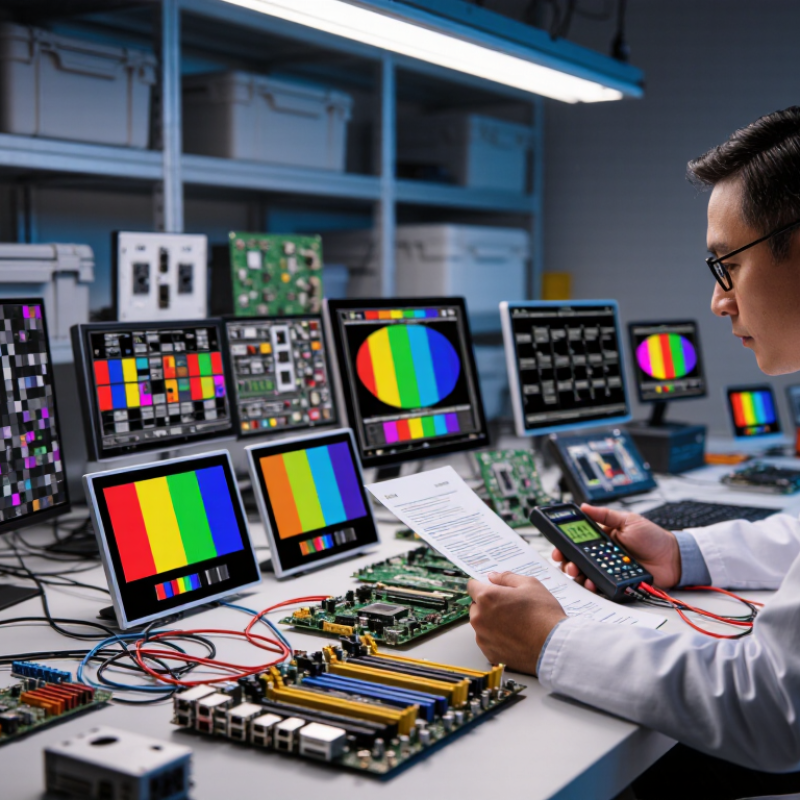
What Is a MIPI TFT Display?
A MIPI TFT display combines two technologies: a thin-film transistor (TFT) panel and a MIPI interface, usually MIPI DSI. TFT describes how individual pixels are controlled. MIPI DSI describes how image data and commands travel between a host processor and the display. They are related, but they are not the same thing.
In a typical device, the processor sends pixel data through one or more high-speed data lanes. The display driver then turns that stream into images on the panel. A small screen might show crisp text, icons, or a live camera preview while using fewer signal wires than many parallel interfaces. That matters in compact products. Touch input may use a separate interface, so “MIPI display” does not automatically mean touch is included.
Design still takes care. The host and panel must agree on timing, resolution, lane count, and operating voltage. A connector that fits is not proof of compatibility. Engineers often check initialization commands and review the panel’s timing details before building a prototype. Datasheets can leave some integration questions open, and I have found that assumption easy to make. A MIPI TFT display can suit a compact design, but it is not automatically the best choice.
How MIPI TFT Displays Are Designed and Manufactured in China
Designing a MIPI TFT display starts with the host device’s limits: available power, screen size, resolution, and operating temperature. Engineers select the TFT panel, backlight, touch sensor, and display interface together. MIPI DSI carries image data between the processor and panel; lane count and timing must match the hardware. Small mismatches can cause flicker or a blank screen. It happens.
In Chinese production, drawings and samples are checked before tooling and pilot assembly. Operators bond the cover glass, touch layer, and display with optical adhesive, then inspect for bubbles, dust, and uneven edges. The panel and flexible cable are tested for image quality, touch response, and connection stability. A bright room can hide backlight unevenness, so inspection also needs controlled viewing conditions. One weak point: rushed sampling may miss faults that appear after repeated flexing or heat exposure.
Demand adds pressure to this process. IDC reported 1.24 billion smartphone shipments worldwide in 2024, up 6.4% year over year in its January 2025 Worldwide Quarterly Mobile Phone Tracker. That figure is not a TFT forecast, but it shows why reliable display supply matters. For buyers, useful evidence includes pilot-run defect records, aging-test conditions, and documented changes between approved samples and mass production. A polished prototype is not enough.
What Qualities Define a Leading MIPI TFT Display Manufacturer?
A leading MIPI TFT display manufacturer is defined less by a large catalog than by dependable engineering. Its team should explain MIPI DSI lane configuration, resolution, refresh rate, and host compatibility in clear terms. Ask how it checks signal integrity, startup timing, and display behavior across temperature changes. Real experience shows in useful answers, not just a polished datasheet. Request drawings, interface notes, and sample test records before committing to a design.
Tips: Share your host-board details and target brightness early. Test samples with your actual cable and enclosure. A long cable can reveal flicker or noise that a bench setup may miss. Record startup time, viewing angle, and backlight current. Ask who handles failures and how quickly replacement samples ship.
For stable production, look for traceable component changes, documented inspection steps, and realistic lead-time updates. Clear communication matters when a custom connector or cover glass needs revision. Price still matters, but the lowest quote may omit integration support or backlight aging tests. Do not assume every factory performs identical checks; confirm test conditions and request evidence. Even capable suppliers can miss a detail, so pilot builds are worth the extra time.
Who Is the Best MIPI TFT Display Manufacturer in China?
A Key Quality: MIPI DSI Lane Capacity
The chart shows calculated raw link capacity at an assumed 1.0 Gbit/s per data lane: 1, 2, or 4 lanes provide 1, 2, or 4 Gbit/s, respectively. Actual panel performance depends on the display and host specifications, timing, and protocol overhead. When comparing manufacturers, verify supported lane configurations alongside resolution, refresh rate, image quality, reliability, and technical support.
How to Compare Chinese MIPI TFT Display Manufacturers
Comparing Chinese MIPI TFT display manufacturers starts with the interface, not the quoted price. Ask which MIPI DSI lane configuration, resolution, timing, and logic voltage the module supports. Check the connector pinout, initialization sequence, and whether the supplied driver works with your processor. A small mismatch can leave a bright panel blank. Request a sample and test it on your own board. Measure brightness inside the intended enclosure, not only under office lights. Also inspect viewing angle, touch response, and startup behavior after repeated power cycles. Small details matter.
Evaluate the evidence behind quality claims. Ask for inspection criteria, aging-test conditions, and batch traceability, then compare those records with sample results. Confirm how engineering changes are approved and how consistently production lots can be maintained. A capable supplier should explain limits clearly, including brightness variation, minimum order quantities, and realistic lead times. Check whether technical answers include drawings, timing diagrams, and revision numbers. Sales replies can sound confident. Still, vague answers deserve a second question. Price matters, but so do replacement availability and support when your firmware exposes an unexpected display issue. If possible, compare two samples side by side using the same image and ambient light. No checklist catches everything; treat the first evaluation as a working draft.
How to Choose a Manufacturer for Your Project’s Requirements
There is no universal “best” MIPI TFT display manufacturer; the right choice depends on your project’s operating conditions and production plan. IDC reported that global smartphone shipments reached 1.24 billion units in 2024, up 6.4% year over year (Worldwide Quarterly Mobile Phone Tracker, January 2025). That scale highlights why suppliers must show stable process control, not just attractive samples. Your project may need only a few thousand panels, but consistency still matters.
Start with the display’s actual use. Define diagonal size, resolution, brightness, viewing angle, touch requirements, and the host processor’s MIPI DSI lane configuration. Ask for evidence. Request interface timing details, sample test results, operating-temperature data, and a clear plan for handling design changes. MIPI Alliance specifications help define interface behavior, but they do not prove that a particular panel and host will work reliably together. Test the combination on your own board.
Then compare suppliers on lead time, minimum order quantity, quality controls, and component lifecycle support. Ask how they inspect pixel defects and verify brightness across batches. A small detail matters: confirm whether the quoted brightness is typical or a guaranteed minimum. Check how quickly engineering responds to a failed sample, too. One weakness in this process is that written claims can look stronger than production reality. Build in a pilot run, inspect panels under your intended lighting, and record results before committing to volume.