Blog

You are here:

10 Best Fence Wire Types for Global Buyers

Choosing the right fence wire is rarely a simple price comparison. Climate, livestock pressure, soil chemistry, security expectations, and installation skills can change the result. A galvanized wire may perform reliably on dry farmland, yet corrode faster near saltwater. PVC-coated wire can improve appearance and handling, but coating quality varies between suppliers.

Industry reports support the need for careful selection. Grand View Research identifies construction, agriculture, and infrastructure as major drivers of global wire and fencing demand. MarketsandMarkets also links fencing growth with urban development, perimeter protection, and expanding agricultural operations. Meanwhile, FAO agricultural data shows how widely farming conditions differ across regions. One specification cannot serve every buyer.

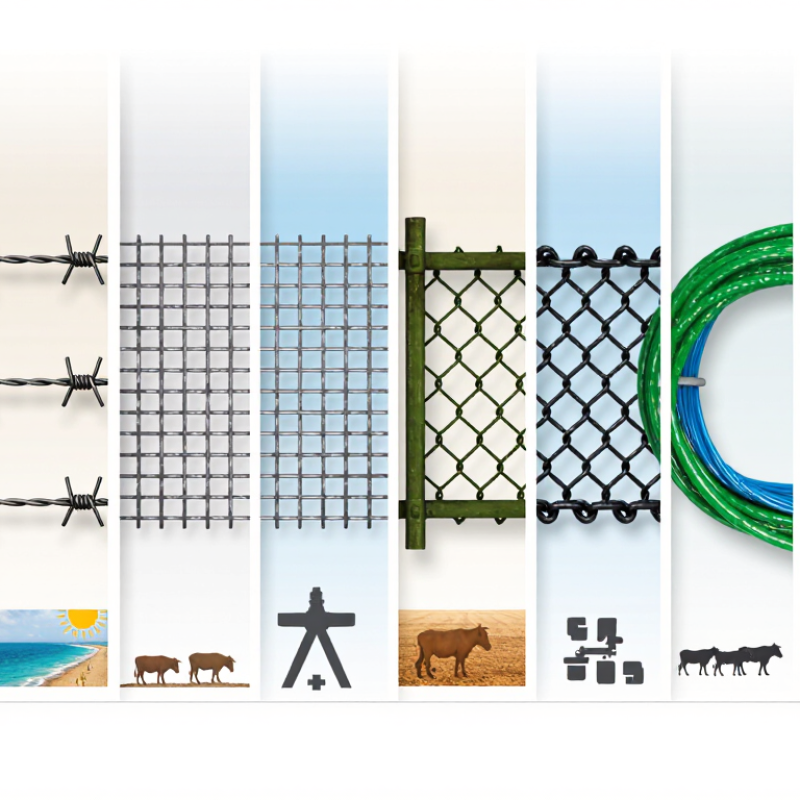
This guide compares ten widely used fence wire types, including galvanized, high-tensile, barbed, welded, chain-link, field, electric, stainless steel, PVC-coated, and low-carbon wire. The evaluation considers tensile strength, coating durability, mesh design, maintenance, installation time, transport weight, and total ownership cost. Small details matter. A sharp edge, uneven zinc coating, or weak weld can become a costly failure after one rainy season.

There is no perfect ranking. That deserves reflection. “Best” depends on the site, not the catalogue. Buyers should verify ISO or ASTM-related test information, coating weight, wire diameter, breaking load, and batch consistency before ordering. Supplier experience also matters, especially when containers cross climates and customs systems. The following overview aims to support informed purchasing, while acknowledging that local testing remains the safest final step.
10 Best Fence Wire Types for Global Buyers

Fence Wire Basics and Key Differences for Global Buyers

Fence wire is not one universal product. Its performance depends on wire diameter, coating, tensile strength, and mesh design. A 2.5 mm wire feels stronger than a 1.8 mm wire, but strength alone does not decide suitability. Smaller wire may reduce shipping weight, while thicker wire usually resists impact better.

Galvanized wire uses a zinc coating to slow rust, making it practical for general outdoor fencing. PVC-coated wire adds a colored protective layer and can feel smoother during installation. Stainless steel wire offers stronger corrosion resistance, especially near salty air, but it normally costs more. High-tensile wire is lighter and tightly stretched, yet it requires suitable posts and careful tension control. Welded wire has fixed intersections, while woven wire can flex around uneven ground.

Global buyers should check coating weight, wire tolerance, roll length, and packaging details before ordering. These specifications can differ between suppliers, even when the listed diameter looks identical. Ask for test reports and production samples. Small gaps in the mesh can matter when containing poultry, pets, or livestock. I have seen buyers focus on price and overlook installation tools, which later increased labor costs. That choice deserves a second look. Weather, soil moisture, handling, and transport distance should guide the final selection. A technically strong fence can still fail when the posts are weak or the wire is poorly tensioned.

10 Best Fence Wire Types for Global Buyers: Fence Wire Basics and Key Differences

Typical tensile strength is a key purchasing factor because it indicates how well a wire can resist pulling forces. Values below are representative industry ranges for commonly used fence-wire categories; actual performance varies with steel grade, diameter, coating, heat treatment, and manufacturing standard.

How to read the chart: High-tensile and spring-steel wires generally provide the greatest strength for long-span fencing. Aluminum wire is lightweight and corrosion-resistant but has lower tensile strength. Galvanized, PVC-coated, barbed, and welded-fence wires are selected mainly according to corrosion protection, safety, installation method, and application requirements.

Ten Leading Fence Wire Types and Their Main Applications

Ten Leading Fence Wire Types and Their Main Applications

Choosing fence wire depends on climate, livestock, security needs, and installation methods. Galvanized wire suits farms, gardens, and general boundary fencing. PVC-coated wire adds color and extra protection in humid areas. Stainless steel wire performs well near coastal zones and industrial sites. Aluminum wire is lightweight and useful for decorative fencing or temporary barriers. High-tensile wire covers large ranches with fewer posts and lower maintenance. Low-carbon wire remains flexible for woven farm fencing and simple repairs.

Annealed wire bends easily around posts, making it practical for tying and reinforcing fence panels. Chain-link wire provides visibility for yards, sports grounds, and commercial boundaries. Welded mesh wire creates firm enclosures for pets, poultry, and gardens. Electric fence wire supports controlled livestock management when installed with suitable equipment and warning signs. Each type behaves differently under tension, impact, and weather. A wire that works well on dry farmland may corrode quickly beside saltwater. That mistake is common, even among experienced buyers.

Tips: Check coating thickness, tensile strength, wire diameter, roll length, and test reports before ordering. Match the wire to local soil and weather records. Leave room for thermal movement during installation. Inspect cut edges after trimming, because exposed steel can rust early. Samples are useful, but one sample cannot represent every production batch. Ask for recent quality records and clear packing details.

How Material, Coating, Strength, and Size Affect Performance

For global buyers, fence wire performance starts with material selection. Low-carbon steel is economical and easy to shape. High-tensile steel carries greater loads with less sag. Stainless steel resists corrosion well, but its purchase cost is higher. According to ASTM A641/A641M, galvanized steel wire should be checked by wire diameter, tensile strength, and zinc-coating class. These details matter more than a simple “rust-resistant” label. A 2.5 mm high-tensile wire may withstand heavy tension, but only when posts and anchors are equally reliable.

Coating thickness controls service life in wet, coastal, or agricultural environments. Electro-galvanized wire usually has a thinner zinc layer than heavily galvanized wire. Hot-dip galvanized options generally offer stronger sacrificial protection. The International Organization for Standardization’s ISO 1461 provides coating-thickness guidance for galvanized steel products, although buyers should confirm whether the standard fits the specific wire form. PVC-coated wire adds color and surface protection. Yet a cut or deep scratch can expose the steel beneath.

Size affects handling, spacing, and animal safety. Thicker wire resists impact, while thinner wire reduces cost and installation effort. USDA NRCS fence-construction guidance emphasizes suitable wire spacing, tension, and post support for reliable agricultural fencing. That relationship is often underestimated. I have seen buyers compare tensile strength alone, then discover coating damage during transport. Mill certificates, salt-spray results, coating mass, and batch inspection records should be requested. Not every “high-strength” wire performs consistently. That assumption deserves review.

Choosing the Right Fence Wire for Climate, Livestock, and Security

Choosing fence wire globally starts with climate, livestock, and security needs. In humid coasts, hot-dip galvanized high-tensile wire, stainless steel, and PVC-coated wire resist moisture better. ISO 9223 corrosion categories help buyers compare atmospheric exposure before specifying coating thickness. Dry regions still create problems. Dust, strong sunlight, and large temperature changes can weaken plastic coatings.

For cattle and horses, woven field wire, smooth high-tensile wire, and electric wire suit different pressure levels. Sheep usually need tighter mesh openings. Poultry requires smaller welded mesh. Barbed wire may protect boundaries, but it can injure animals when spacing is poorly selected. FAO’s Tackling Climate Change Through Livestock report estimates livestock supply chains produce 14.5% of human-caused greenhouse gas emissions. Climate resilience matters. A lighter fence may fail sooner under storms, flooding, or animal impact. Security projects may consider welded mesh, chain-link wire, stainless wire, or approved concertina-style systems, subject to local safety rules.

Tips: Match wire diameter, tensile strength, coating mass, and mesh size to the site. Ask for salt-spray results and batch certificates. ASTM and ISO test references improve supplier comparison. Do not trust coating color alone. It proves little. I would also inspect gates and corner posts, because weak fittings often fail before the wire. A perfect specification does not exist; transport, installation quality, and maintenance can change the result. The World Meteorological Organization reported that 2024 was the warmest year recorded, reinforcing the need to plan for harsher weather.

10 Best Fence Wire Types for Global Buyers - Choosing the Right Fence Wire for Climate, Livestock, and Security

Fence Wire Type Typical Material and Finish Common Diameter or Size Best Applications Suitable Livestock or Security Level Climate Performance Main Advantages Limitations Relative Cost
Galvanized Barbed Wire Low-carbon steel with zinc coating; commonly produced with two line wires and twisted barbs. Line wire commonly 1.6–2.5 mm; barb wire spacing commonly 75–150 mm. Boundary fencing, agricultural perimeters, utility corridors, and basic access deterrence. Cattle, horses, and perimeter control; moderate security when used with suitable posts and spacing. Suitable for temperate, dry, and moderately humid areas. Heavier zinc coatings perform better in wet environments. Low material cost, easy to transport, simple installation, and widely available specifications. Can injure animals if poorly installed; less suitable for sheep, goats, and areas requiring high-impact security. Low
High-Tensile Woven Field Fence High-tensile galvanized steel wire woven into graduated or fixed mesh openings. Common wire diameter 2.0–2.5 mm; mesh openings often range from 75 × 150 mm to 150 × 300 mm. Large farms, ranches, wildlife boundaries, and long-distance agricultural fencing. Cattle, sheep, goats, pigs, and mixed livestock; moderate to high containment when correctly tensioned. Good performance in variable climates. Galvanized coating helps resist atmospheric corrosion; avoid direct contact with corrosive chemicals. High strength-to-weight ratio, long spans, low maintenance, and better animal containment than widely spaced barbed wire. Requires proper tensioning and strong end assemblies; installation quality strongly affects performance. Medium
Low-Carbon Woven Livestock Wire Soft or medium-strength galvanized steel wire woven into rectangular or square mesh. Common wire diameter 1.8–2.5 mm; mesh openings commonly 50–150 mm. Smallholding fences, garden boundaries, poultry areas, and general livestock separation. Poultry, rabbits, sheep, goats, and small livestock; low to moderate security. Suitable for normal outdoor conditions. Additional coating or regular inspection may be needed in coastal or industrial atmospheres. Flexible, easy to cut and shape, relatively economical, and available in many mesh sizes. More vulnerable to stretching, impact, and deformation than high-tensile wire; not ideal for large animals pushing against the fence. Low to Medium
Welded Wire Mesh Steel wires welded at intersections; available in galvanized-before-welding, galvanized-after-welding, or polymer-coated finishes. Common wire diameter 2.0–6.0 mm; mesh openings often 25–100 mm. Garden fencing, animal enclosures, building sites, partitions, and light industrial barriers. Poultry, pets, rabbits, and small livestock; low to moderate security depending on wire diameter and mesh size. Polymer-coated or heavily galvanized versions are better for humid, rainy, or coastal conditions. Rigid panels or rolls, clean appearance, consistent openings, and easy visual inspection. Weld points can weaken after severe impact or corrosion; large animals may bend light-gauge mesh. Low to Medium
Chain-Link Fence Wire Steel wire woven into diamond mesh; commonly galvanized or polymer-coated over galvanized steel. Common wire diameter 2.5–4.5 mm; mesh openings commonly 40–75 mm. Residential, commercial, sports, industrial, and infrastructure perimeter fencing. General perimeter security; suitable for pets and many domestic animals, with added features for higher security. Galvanized and polymer-coated finishes provide good outdoor resistance; coating quality is important in coastal climates. Flexible, repairable, transparent, scalable, and compatible with tension wire, privacy screens, and security toppings. Standard mesh can be climbed or cut; it usually needs framework, line posts, and correctly tensioned fittings. Medium
High-Tensile Smooth Wire High-strength galvanized steel wire with a smooth surface and relatively low elongation. Common diameter 2.5–4.0 mm; tensile strength often approximately 1,000–1,700 MPa, depending on specification. Fence bracing, top and bottom strands, agricultural boundaries, and electric-fence conductors. Cattle, horses, and large livestock when combined with appropriate spacing or electrification; moderate containment. Good resistance to weathering when galvanized; inspect regularly in salt-laden or highly acidic environments. Long spans, high strength, low stretch, and efficient use of material on large properties. Visually less noticeable, can cause injury if used without suitable spacing or warning, and requires careful tension control. Low to Medium
Electric-Fence Conductive Wire Steel wire, stainless-steel wire, aluminum wire, or conductive strands integrated into polywire or polytape. Metal wire commonly 0.15–2.5 mm; conductor count and resistance vary by product construction. Temporary livestock fencing, rotational grazing, wildlife deterrence, and supplementary security strands. Cattle, horses, sheep, goats, and wildlife control; effectiveness depends on energizer output, grounding, and fence design. Polymer carriers may degrade under ultraviolet exposure; use UV-stabilized materials and maintain vegetation clearance. Lightweight, quick to install, adaptable, and effective as a psychological barrier when properly energized. Requires an energizer, grounding system, insulation, and regular vegetation maintenance; it is not a physical barrier by itself. Low to Medium
Stainless-Steel Fence Wire Corrosion-resistant stainless steel, commonly selected in austenitic grades for demanding outdoor environments. Common diameter 0.8–3.0 mm for tension, mesh, or specialty fencing applications. Coastal facilities, food-processing sites, architectural fencing, animal enclosures, and long-service applications. Domestic animals, small livestock, and general perimeter applications; security depends on the fence design. Very good resistance to moisture, salt spray, and many atmospheric pollutants compared with ordinary galvanized steel. Long service potential, clean appearance, and strong corrosion resistance with limited coating maintenance. Higher purchase cost; contact with dissimilar metals and chloride-rich environments still requires proper material selection. High
PVC-Coated Steel Fence Wire Galvanized steel core covered with a continuous polymer coating, typically PVC or another weather-resistant plastic. Overall diameter commonly 2.5–5.0 mm; steel core diameter varies by product. Residential fencing, gardens, animal enclosures, decorative boundaries, and areas needing reduced sharpness. Pets, poultry, small livestock, and general boundary control; low to moderate security. Good resistance to moisture and visual corrosion when the coating remains intact; ultraviolet stability varies by formulation. Lower visible corrosion, smoother surface, color options, and reduced metal exposure. Cut edges, abrasion, severe impact, or prolonged sunlight can damage the coating and expose the steel core. Medium
Razor Security Wire High-tensile steel strip formed into sharp barbs around a galvanized steel core; supplied in straight or concertina configurations. Common core wire diameter approximately 2.5 mm; blade thickness and spacing vary by security specification. High-security perimeters, restricted facilities, infrastructure, and anti-climb fence toppings. Not intended for livestock containment; high-security deterrence when installed above a suitable structural fence. Galvanized or stainless-steel versions are available for outdoor use; coastal and industrial sites require corrosion-focused selection. Strong visual and physical deterrence, compact transport, and compatibility with walls, mesh, and other barriers. Hazardous to handle, subject to safety and legal requirements, and unsuitable where animals or unprotected public access are present. Medium to High

International Buying Factors: Standards, Packaging, Cost, and Supply

Global buyers should match fence wire type with the destination standard. Galvanized, PVC-coated, stainless steel, high-tensile, welded, and barbed wires need different checks. EN 10244-2 measures zinc coating performance for steel wire. ASTM A641/A641M classifies zinc-coated wire by coating and mechanical requirements. ISO 1461 is more suitable for fabricated steel, not every wire product. This distinction is often missed.

Packaging affects both damage and landed cost. Ask for coil weight, inner diameter, pallet loading, moisture protection, and rust-prevention paper. Export wooden pallets should meet ISPM 15 requirements. A practical shipment may use compact coils, sealed plastic film, and corner protection. UNCTAD reports that more than 80% of global merchandise trade moves by sea. Salt air and long port storage therefore deserve serious attention. Small packaging defects can create large claims.

Cost comparisons should include steel content, coating weight, wire diameter tolerance, freight, duties, and inspection fees. The World Steel Association reported about 1.89 billion tonnes of crude steel production in 2023, showing the scale of supply, but not its consistency. Regional availability still changes quickly. Request mill certificates, coating test results, tensile data, and batch photographs. My own checklist once overvalued the lowest quotation. That was a mistake. A cheaper coil may hide thinner wire, lighter coating, or weaker packaging. Supply reliability needs at least two qualified sources, although maintaining them adds administrative cost.

Go to Top