
Choosing among China Abrasive Flap Disc Manufacturers requires more than comparing prices or catalog photographs. A reliable review should examine abrasive grain quality, flap density, backing strength, and production consistency. These details affect grinding speed, surface finish, vibration, and service life. The right Abrasive Flap Disc should match the material, tool speed, grit requirement, and working pressure.
Real workshop experience often reveals what product pages omit. A disc may remove weld spatter quickly but leave uneven scratches. Another may feel smooth at first, then shed flaps prematurely. We will consider zirconia, ceramic, and aluminum oxide options, along with flap bonding, disc balance, packaging, and batch traceability. Supplier communication also matters. Clear technical data, sample testing, and responsive support can prevent expensive misunderstandings.
Evidence matters more than confident claims. This guide will compare manufacturers through available certifications, test documentation, export experience, factory capabilities, and customer feedback. However, no single ranking fits every application. Product performance can change between grit sizes, backing types, and production batches. That limitation deserves attention. A factory with impressive equipment may still miss a specific tolerance or delivery expectation. Readers should verify samples under real working conditions before placing large orders. The strongest suppliers combine dependable manufacturing, transparent communication, and measurable quality control. They do not merely promise performance. They demonstrate it.
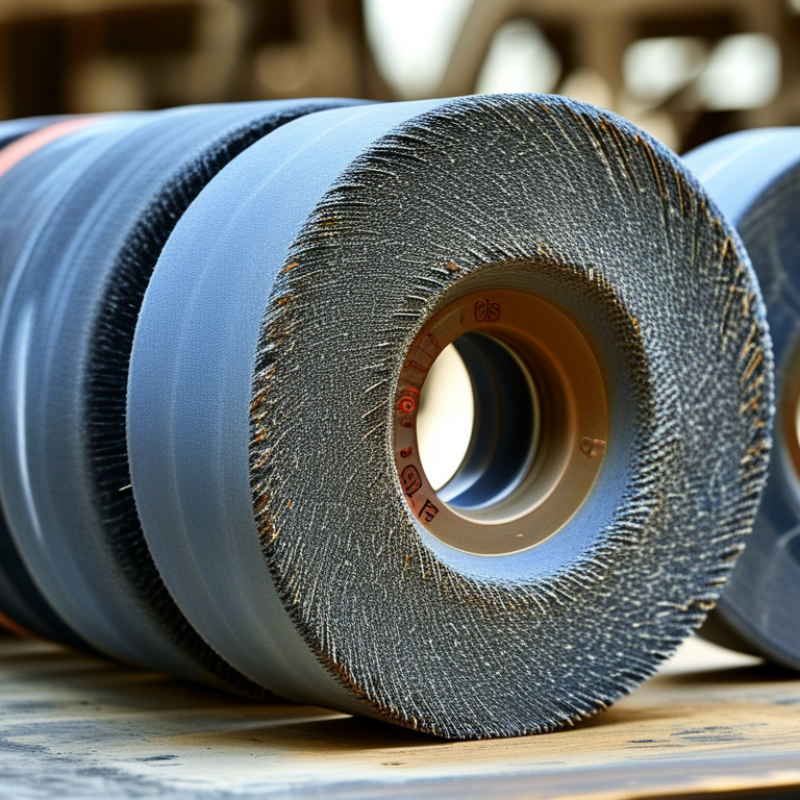
When evaluating China abrasive flap disc manufacturers, start with the flap disc itself, not the catalog photograph. Zirconia alumina suits carbon steel and stainless work where moderate pressure and controlled cutting matter. It fractures gradually, exposing fresh edges during grinding. Ceramic grain can cut more aggressively, especially under firm pressure and cooler operating conditions. However, sharper grain does not automatically mean longer disc life. Backing stiffness, flap density, resin bonding, and operator technique can change results.
FEPA P-grades describe abrasive particle size, so P40 removes material faster than P80 but leaves deeper scratches. P120 helps refine welds and prepare a smoother surface. In practical trials, compare equal grit, diameter, backing, and machine speed. Record stock removal, vibration, heat marks, and usable minutes. A stopwatch and a small digital scale reveal more than confident sales language.
Ask manufacturers for batch traceability, abrasive specifications, safety documentation, and application-based test data. I once judged a disc by its rapid first cut and overlooked its uneven final third. That was a poor test. Repeated trials on identical weld beads provide a fairer view. Inspect flap attachment, edge stability, and packaging after transport. Small defects matter. Yet even careful testing has limits; shop pressure and operator habits can distort results.
When comparing China abrasive flap disc manufacturers, safety evidence should come before price or packaging. EN 13743 sets requirements for coated abrasive products on backing, including flap discs. Its widely cited benchmark limits maximum peripheral speed to 80 m/s. This figure is not decorative. At 80 m/s, a 125 mm disc reaches about 12,200 revolutions per minute. Small marking errors can create serious risks.
Reliable manufacturers should provide clear product labels, batch traceability, dimensional records, and speed-test documentation. The FEPA Safety Code for Coated Abrasives also emphasizes correct mounting, compatible guards, and operator protection. Buyers should request declarations of conformity and independent laboratory reports, rather than accepting a certificate image alone. A certificate without traceability is weak evidence. I have found that practical audits often reveal more than sales documents, especially around backing adhesion and flap consistency.
Tips: Check the disc’s diameter, bore, abrasive type, and maximum RPM before testing. Never match speed by guesswork. Inspect loose flaps, cracks, distorted backing, or damaged packaging. Ask whether the 80 m/s rating applies to the complete disc, not only its abrasive cloth. Also review reports against ISO 17025 laboratory practices when available. This does not guarantee perfect production. Human inspection can still miss defects. However, documented testing, controlled batches, and honest limitations show stronger professional judgment than impressive claims alone.
What Are the Best China Abrasive Flap Disc Manufacturers?
When evaluating China abrasive flap disc manufacturers, factory qualification should come before price comparisons. ISO 9001 certification is useful, but it is not proof of perfect products. Check the certificate scope, issuing body, and expiration date. Then compare documented procedures with actual workshop practices. Are inspection records complete? Are abrasive grains, backing plates, and adhesives clearly identified? During factory visits, small details matter. Clean storage areas and controlled humidity often reveal stronger process discipline.
OEM capacity needs practical evidence. Request a sample based on your exact grit, diameter, backing material, and label requirements. Review the pilot batch before approving larger production. A capable factory should explain tooling limits, production capacity, lead times, and quality checkpoints without vague promises. Ask how it handles design changes. It should control revisions across drawings, packaging, and work instructions. Some suppliers present impressive samples but struggle with repeat orders. That gap deserves attention.
Batch traceability protects both quality and accountability. Each carton should link to a production lot, date, machine, and inspection record. The factory should trace key materials back to incoming documents. Retained samples can support later investigation. Ask for a mock recall exercise. It may expose weak records. Also review corrective-action reports, not only clean inspection sheets. Paperwork can look perfect while production quietly drifts. A reliable manufacturer welcomes difficult questions and provides verifiable records before shipment.
| Qualification Dimension | Practical Benchmark | Evidence to Request | Recommended Weight | Evaluation Result |
|---|---|---|---|---|
| Quality management system | A current ISO 9001:2015 certificate covering the manufacturing site and relevant abrasive-product activities. | Certificate number, scope, issuing certification body, validity dates, and an online certificate verification record. | 20% | Pass / Review / Fail |
| Product safety compliance | Product specifications and test controls aligned with the applicable requirements for coated abrasive products, including EN 13743 where required by the destination market. | Declaration of conformity, product test reports, safety instructions, maximum operating speed, and product-label samples. | 15% | Pass / Review / Fail |
| OEM and private-label capability | Ability to customize diameter, abrasive grain, backing, flap count, grit range, bore size, packaging, labels, and carton markings. | Approved sample, technical drawing, bill of materials, artwork approval process, tooling list, and change-control procedure. | 15% | Pass / Review / Fail |
| Batch traceability | Each production batch can be linked to raw-material lots, production date, machine or line, operators, inspection results, and shipment records. | Redacted batch record, lot-code format, inspection report, raw-material certificate, and sample recall or retrieval procedure. | 15% | Pass / Review / Fail |
| Incoming-material control | Defined acceptance criteria for abrasive grain, backing cloth, fiberglass rings, adhesive, labels, and packaging materials. | Supplier approval list, incoming inspection plan, material certificates, and nonconforming-material records. | 10% | Pass / Review / Fail |
| In-process and final inspection | Controls for dimensions, bore size, flap adhesion, balance, visual defects, labeling, and operating-speed requirements. | Inspection plan, calibrated-equipment list, sample inspection report, test frequency, and corrective-action records. | 10% | Pass / Review / Fail |
| Production capacity | Capacity is demonstrated with equipment, staffing, shift patterns, and historical output rather than an unsupported monthly claim. | Machine list, production-flow chart, capacity calculation, recent order-loading data, and contingency plan. | 5% | Pass / Review / Fail |
| Lead-time and delivery control | Separate lead times are stated for samples, first production, repeat orders, packaging approval, and custom tooling. | Written production schedule, order-confirmation template, on-time-delivery records, and escalation process. | 5% | Pass / Review / Fail |
| Corrective action and complaint handling | A documented process identifies root cause, containment, corrective action, verification, and customer communication. | Redacted 8D or CAPA report, complaint log, response-time target, and effectiveness-check record. | 5% | Pass / Review / Fail |
| Total Qualification Score | 100% | Approved after verification | ||
Selection rule: Prioritize factories that can provide verifiable certification, destination-market safety documentation, controlled OEM processes, and complete batch records. Do not rank a manufacturer on price or stated capacity alone.
A reliable China abrasive flap disc manufacturer should publish testable figures, not only polished claims. For 115 mm discs, measure stock removal in grams per minute, disc life in total grams removed, and surface finish after each interval. Use identical steel coupons, grinder power, operator pressure, and test duration. Otherwise, the comparison becomes subjective.
A practical benchmark is material removed during a 60-second pass. Record the average from at least five discs. A disc removing 180 grams quickly may wear faster than one removing 150 grams consistently. That difference matters in fabrication.
FEPA’s Safety Code and EN 13743 emphasize correct speed markings and product identification. A 115 mm disc running at 11,000 RPM reaches about 66 m/s at its outer edge. At 12,000 RPM, it reaches approximately 72 m/s.
The disc rating must equal or exceed the tool speed. Never estimate this from appearance. Many online listings remain unclear, which is a genuine sourcing weakness.
Tips: Ask for batch test sheets, not one sample result. Check removal rate, disc life, RPM rating, grit type, and backing condition. Repeat testing after storage exposure. Humidity can change performance, and I have seen apparently minor packaging damage distort results. A lower-cost disc may look efficient initially, yet its uneven flap wear can increase operator fatigue and finishing time.
Choosing the best China abrasive flap disc manufacturer requires more than comparing catalog prices. A practical five-point scorecard can reveal stronger suppliers: product consistency, abrasive expertise, factory capability, delivery performance, and technical service. Give each category a score from one to five. Examine disc balance, flap adhesion, grinding speed, and wear after repeated trials. A reliable manufacturer should explain grain types, backing materials, bonding methods, and suitable applications clearly.
Request samples from several production batches, not only one carefully selected box. Check flap spacing, mounting-hole accuracy, edge stability, and surface finish. Ask for quality records, inspection procedures, production capacity, and traceable test data.
Factory visits or live video inspections can confirm whether equipment and workers match the supplier’s claims. Delivery history also matters. Late shipments can disrupt an otherwise excellent purchasing plan. Custom dimensions and private packaging should be discussed before approval, with written tolerances and replacement terms.
Tips: Build a simple scorecard. Record every test result. Use the same steel grade and grinder settings during comparisons. Do not judge performance from one disc. I have seen inexpensive samples perform well initially, then lose consistency in larger orders. That weakness is easy to miss. Leave room for a sixth note: communication quality. A supplier that answers technical questions precisely may reduce future mistakes, even if its first quotation is not the lowest.
Contact Us