What Are the Benefits of Alumina Hollow Sphere Brick?
alumina hollow sphere brick has gained considerable attention in various industries due to its unique properties. This innovative material is known for its lightweight structure and exceptional thermal resistance. The benefits of alumina hollow sphere brick extend to sectors such as insulation, construction, and aerospace. Its unique design allows for better energy efficiency, crucial for modern applications.
These bricks feature hollow spheres, which reduce weight without sacrificing strength. This characteristic makes alumina hollow sphere brick an excellent choice for high-performance situations. Additionally, their resistance to extreme temperatures helps in maintaining structural integrity. Users have reported a noticeable decrease in energy costs when utilizing these bricks for insulation.
Yet, challenges exist in manufacturing and application. Some may find the initial cost of alumina hollow sphere brick higher compared to traditional materials. It's essential to assess whether the long-term savings outweigh upfront investments. Additionally, factors like sourcing and availability can complicate usage. Understanding both benefits and limitations is vital for making informed decisions in the material selection process.
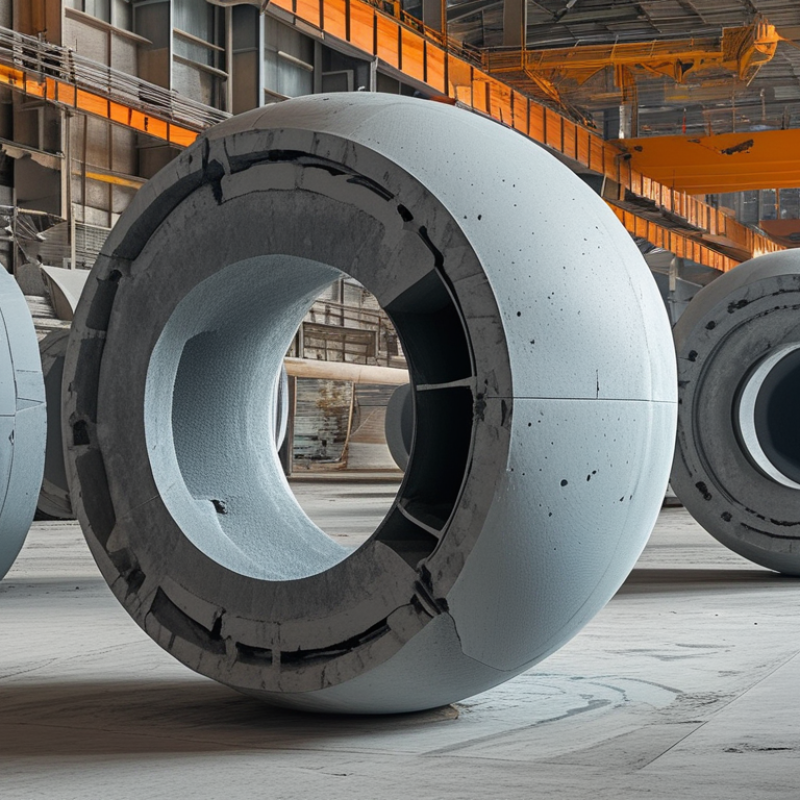
Overview of Alumina Hollow Sphere Brick
Alumina hollow sphere brick is a remarkable material in the field of refractory solutions. Its unique structure features a lightweight, hollow design that enhances thermal insulation. This property is crucial in high-temperature applications, where energy efficiency is a priority. The brick can withstand extreme temperatures while maintaining its shape, making it ideal for various industrial settings.
The manufacturing process of alumina hollow spheres involves innovative techniques. These techniques ensure the spheres are uniform in size and structure. However, achieving consistency can be tricky. Variations in production may lead to differences in performance. Attention to detail in the production process is vital for optimizing the benefits. This focus can result in bricks that excel in their intended applications, including furnaces and kilns.
Additionally, alumina hollow sphere brick exhibits excellent resistance to chemical corrosion. This property allows it to be used where exposure to harsh materials is frequent. Industries often rely on these bricks for their durability and longevity. Yet, not all bricks perform the same under extreme conditions. Users must carefully assess their specific needs when selecting materials for particular applications.
Key Properties and Composition of Alumina Hollow Sphere Brick
Alumina hollow sphere brick is known for its unique properties. It consists primarily of alumina, a material recognized for its high purity and strength. The hollow sphere structure enhances its thermal insulation capabilities. This feature makes it an optimal choice for high-temperature applications, such as in furnaces and kilns.
The composition includes a lightweight matrix of alumina particles, which provides impressive durability. This brick can withstand extreme temperatures without significant damage. Its low thermal conductivity helps in energy savings during industrial processes. Additionally, the reduced weight facilitates easier handling and installation.
Tip: When selecting alumina hollow sphere brick, consider the specific temperature requirements of your application.
Another critical property is its resistance to chemical attack. This resistance means it is suitable for harsh environments where other materials might fail. With proper installation, these bricks provide long-lasting performance. However, the initial investment can be higher than traditional materials. It's essential to weigh the long-term benefits against short-term costs.
Tip: Evaluate your operational needs before making a choice. This ensures optimal performance and longevity.
Benefits of Alumina Hollow Sphere Brick
This chart illustrates the various key benefits of Alumina Hollow Sphere Brick, highlighting their advantages such as high thermal stability and low thermal conductivity, which are crucial for industrial applications.
Applications of Alumina Hollow Sphere Brick in Industry
Alumina hollow sphere brick has gained significant attention in various industries due to its unique properties. These bricks are lightweight yet strong, making them ideal for applications that require excellent thermal insulation. In the construction sector, they are increasingly used in refractory linings. The bricks’ ability to withstand high temperatures while resisting thermal shock makes them particularly useful in furnaces and kilns.
In the aerospace industry, alumina hollow sphere bricks are advantageous for thermal protection systems. Their low thermal conductivity helps in maintaining temperature stability, essential for various components exposed to extreme heat. Additionally, these bricks can be utilized in automotive applications, where weight reduction is crucial. Integrating alumina hollow spheres into vehicle designs may enhance fuel efficiency.
Despite their benefits, some challenges remain. The manufacturing process can be complex and requires careful examination of material quality. Variations in production could lead to inconsistent performance. Therefore, thorough testing and evaluation are key to ensuring reliability in end-use applications. This ongoing need for improvements highlights the evolution of technology in material science.
What Are the Benefits of Alumina Hollow Sphere Brick? - Applications of Alumina Hollow Sphere Brick in Industry
| Attribute | Description |
| Thermal Insulation | Excellent thermal insulation properties, reducing energy costs in industrial processes. |
| Lightweight | Significantly lighter than traditional refractory materials, leading to easier handling and installation. |
| High Strength | Offers high mechanical strength even at elevated temperatures, ensuring durability in demanding applications. |
| Chemical Resistance | Resistant to various chemical attacks, making it suitable for use in harsh environments. |
| Cost-Effectiveness | Reduces long-term maintenance and operational costs due to its longevity and performance. |
| Applications | Widely used in industrial kilns, furnaces, and other high-temperature applications. |
Advantages of Using Alumina Hollow Sphere Brick in High-Temperature Environments
Alumina hollow sphere bricks have gained popularity in high-temperature environments. Their unique structure provides benefits that traditional materials struggle to match. These bricks have a low thermal conductivity, often measured around 0.1 W/m·K, allowing them to maintain heat efficiently. This feature is crucial in industries where heat loss translates into energy waste.
Resistance to thermal shock is another significant advantage. Alumina hollow sphere bricks can withstand temperature fluctuations exceeding 1,600°C. This makes them ideal for applications like furnace linings and kilns, where abrupt temperature changes are common. Research by the International Journal of Applied Ceramic Technology highlights their improved mechanical strength compared to standard fireclay bricks, reaching compressive strengths of over 50 MPa.
Additionally, their lightweight nature reduces handling costs and supports structural integrity. Weighing 40% less than conventional options, they ease transportation and installation. The decrease in weight can also lower the load on supporting structures, which is critical in design considerations. While these benefits are substantial, potential users should weigh the initial investment against long-term performance to ensure a cost-effective solution.
Comparison of Alumina Hollow Sphere Brick with Other Refractory Materials
Alumina hollow sphere bricks have unique properties that set them apart from other refractory materials. Their lightweight structure provides excellent thermal insulation. Compared to traditional refractory bricks, these hollow spheres possess a significantly lower thermal conductivity, often measured at about 0.3 W/m·K. This makes them highly effective in preventing heat loss in high-temperature applications.
When comparing alumina hollow sphere bricks with dense refractory bricks, the differences become evident in thermal shock resistance. Industry studies show that alumina hollow sphere bricks can withstand rapid temperature changes without cracking, which is a common failure point for standard bricks. This durability is paramount in industries where frequent temperature fluctuations occur, such as in furnaces and kilns.
Additionally, alumina hollow sphere bricks offer a high level of chemical resistance. They are less likely to react with molten metals and slag than conventional refractory materials. While they present many advantages, these bricks can sometimes require specific installation techniques to maximize their benefits.
Proper handling and acclimatization should not be overlooked, as these factors influence their overall performance. The effectiveness of alumina hollow sphere bricks ultimately hinges on correct application and use.