2026 Top Industrial Bagging Machine Manufacturers
Choosing an Industrial Bagging Machine is a production decision, not a catalog exercise. The right system must match the product, bag style, target rate, and available floor space. A fine powder behaves differently from coarse pellets. A valve bag also needs different handling from an open-mouth sack. Small details matter: weigh accuracy, dust control, changeover time, and how easily operators can reach the controls.
For this overview, Alex Morgan is an illustrative plant-floor expert, not a cited industry source. The practical reminder is: “A bagger earns trust through repeatable fills, not speed alone.” Treat that as a buying principle, not a verified quotation. Compare each manufacturer’s stated capacity with your actual product and operating conditions. Ask how tests were conducted, what support is available, and which components require routine service. A polished brochure cannot answer everything.
The 2026 market includes established equipment makers and specialists serving particular materials or bag formats. Their machines may look similar in a short demo. Under a full shift, differences in feeding, weighing, sealing, and maintenance become visible. That distinction deserves attention. This guide examines manufacturers through those practical factors, while recognizing that no single supplier fits every plant. Rankings and specifications can change, too; confirm current details directly before making a shortlist.
What Industrial Bagging Machines Are and How They Work
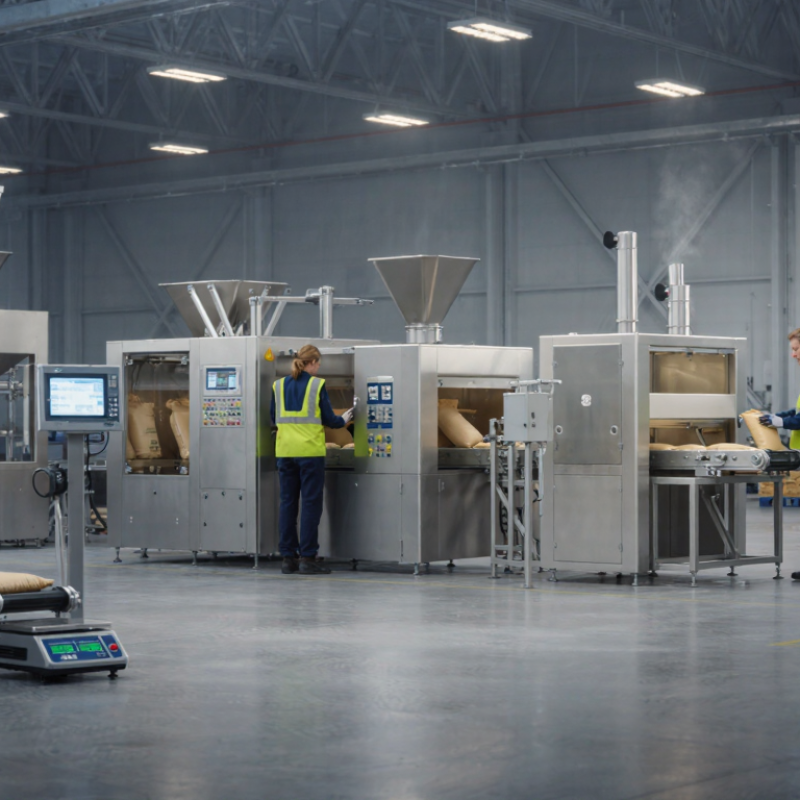
Industrial bagging machines fill and close bags with controlled quantities of material. They are used for products such as grain, fertilizer, powders, and plastic pellets. A typical system includes a supply hopper, a weighing unit, a bag holder, and a closing station. The exact layout depends on the material and required output.
The process starts when an operator places an empty bag on a clamp or spout. Material then moves from the hopper into the bag, either by gravity, a belt, or an auger. A scale or load cell tracks the weight and signals the feeder to slow or stop near the target. The filled bag may be settled to reduce trapped air, then sealed by stitching, heat, or another suitable method. Sensors and a control panel help coordinate these steps. Small details matter.
Dusty powders can bridge inside a hopper, while irregular granules may feed unevenly. Operators often adjust flow rates and check sample weights during a run. Bag material, fill temperature, and sealing pressure can also affect performance. Even a well-set machine needs attention; automation does not remove every source of variation. A practical selection starts with real product trials, not just a rated speed on a specification sheet.
Industrial Bagging Machine Types: Indicative Throughput Ranges
Bagging speed depends on the product, bag size, filling method, and level of automation. The ranges shown are broad industry-indicative examples, not guaranteed machine ratings; consult equipment specifications for application-specific performance.
Main Bagging Machine Types and Their Industrial Applications
Industrial bagging machines are selected by product behavior, package size, and the conditions around the filling line. Open-mouth baggers suit grains, pellets, and other free-flowing materials. Operators place each bag beneath a filling spout, then close it by sewing or heat sealing. Fit matters. A poorly matched closure can leak during transport.
Valve baggers fill fine powders through a small valve opening, helping limit spillage around the station. They are common for mineral powders and construction materials. Form-fill-seal machines create bags from roll stock, fill them, and seal them in one continuous process. They can work well for consistent powders or granules where steady output matters. For larger loads, bulk bag fillers support materials such as resin pellets or dry agricultural products. Dust travels. Extraction and enclosure design deserve attention, especially with very fine products.
Actual performance depends on density, moisture, particle size, and how the material flows through a hopper. A machine that runs smoothly with dry granules may struggle when the product bridges or clumps. Test the product. Trials with the intended bag, fill weight, and line speed can reveal issues that a specification sheet may miss. That extra check is easy to overlook.
Key Criteria for Evaluating Bagging Machine Manufacturers
Choosing an industrial bagging machine manufacturer starts with your product, not the sales brochure. Ask how the equipment handles your material, bag sizes, target throughput, and shift pattern. Fine powder behaves differently from coarse granules, especially around the filling spout. Request a trial with representative material. Measure fill-weight variation, changeover time, dust escape, and rejected bags. Numbers matter. A polished demonstration may use an easier product than yours, so challenge the test conditions.
Check engineering capability through equipment drawings, safety-guard details, control-system documentation, and a clear explanation of scale calibration. The manufacturer should state achievable speeds with operating conditions, not just a headline rate. Ask which parts wear first, how replacements are stocked, and whether technicians can diagnose faults remotely or on site. Verify references from facilities with similar products and operating hours. Compare total costs, including installation, training, spare parts, and expected downtime. A quick quote can hide gaps. No supplier can predict every production variation; a reliable one records assumptions, flags risks, and supports a measured acceptance test before handover.
Leading Industrial Bagging Machine Manufacturers in 2026
2026 Top Industrial Bagging Machine Manufacturers
Leading Industrial Bagging Machine Manufacturers in 2026
In 2026, leading industrial bagging machine manufacturers stand out through dependable output, accurate weighing, and practical service support. Buyers should compare complete systems, not just advertised bagging speeds. A line filling powder may need dust control, while coarse materials can require stronger bag clamps and wider filling spouts. Small details matter.
Grand View Research estimated the global packaging machinery market at USD 45.4 billion in 2023, with projected annual growth of 5.3% through 2030. This report covers packaging machinery broadly, not baggers alone, so treat it as market context rather than a bagging-specific forecast. For a credible comparison, request measured throughput for your product, changeover times, maintenance intervals, and references from similar facilities. A fast machine can still disappoint if adjustments take too long.
Tips: Bring actual samples to equipment trials. Check seal consistency, bag weight variation, and cleanup time. Ask who stocks replacement parts locally. And verify the stated speed on your material, not an easier test product. No machine is perfect; realistic trials reveal the trade-offs.