2026 Top Cold Sublimation Transfer Printing Machines
Cold Sublimation Transfer Printing is moving from specialist workflows into broader textile production. Grand View Research valued the global digital textile printing market at about USD 2.7 billion in 2023 and projected continued growth through 2030. That figure covers digital textile printing overall, not cold sublimation machines alone. It is useful context, not a direct forecast for this equipment category.
For buyers, growth matters less than what happens at the press. A stable machine should hold color across repeated runs, feed transfer paper without skew, and maintain even pressure across the platen. Small defects show quickly: a pale edge, a shifted logo, or blurred lettering on a polyester panel. Quality expert W. Edwards Deming’s words, “Quality is everyone’s responsibility,” offer a useful reminder. In this process, operator training and routine checks matter as much as the machine’s headline speed.
This 2026 guide compares leading cold sublimation transfer printing machines by working width, temperature control, pressure consistency, throughput, and service support. It also considers practical details, including warm-up time and access to replacement parts. Product specifications can look precise; real output may still vary with paper, ink, fabric, and operator settings. That deserves scrutiny. The best choice is not automatically the fastest model, but the one that delivers repeatable results for the intended workload.
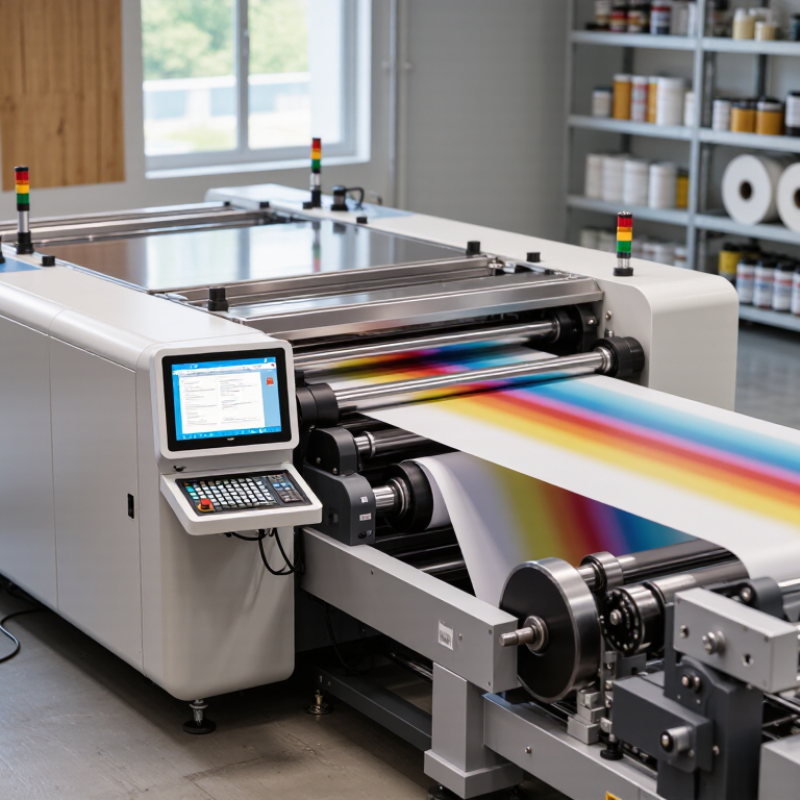
Cold Sublimation Transfer Printing: Process, Components, and Key Terms
2026 Top Cold Sublimation Transfer Printing Machines
Cold Sublimation Transfer Printing: Process, Components, and Key Terms
Cold sublimation transfer printing uses heat to move disperse dye from printed paper into polyester fabric. “Cold” usually describes the peel stage: the transfer paper cools before removal. That delay can help reduce ghosting, where a shifted sheet leaves a faint double image. It is not a cold-printing process. The main components are a digital printer, disperse-dye inks, coated transfer paper, a heat press, and a polyester-compatible substrate. Print the design in reverse, dry the sheet, then press it with even pressure and controlled heat. Temperature and dwell time vary by ink, fabric, and equipment; a small test swatch is essential.
Key terms matter on the shop floor. Dwell time is the duration of heat and pressure; transfer efficiency describes how much dye reaches the material; ghosting is unwanted image movement.
A 2023 Grand View Research report valued the broader global digital textile printing market at USD 2.7 billion in 2022 and projected 12.1% annual growth through 2030. That figure covers more than sublimation, so it is market context, not a machine-performance benchmark. Small details still decide quality. Keep the paper flat, check platen pressure across its surface, and record settings for each fabric lot. I still treat peel timing as a shop-specific variable, not a universal rule. Test, then adjust.
Cold-Peel and Heat-Activated Transfers: Workflow and Material Compatibility
2026 Top Cold Sublimation Transfer Printing Machines
Cold-peel and heat-activated transfers follow different steps. A printer lays down the image, but heat and pressure activate the transfer during pressing. For a cold-peel workflow, let the sheet cool completely before lifting its carrier. Peeling too soon can pull at fine edges or distort small lettering.
A cool peel matters.
Check the transfer instructions and substrate before setting a production run. Sublimation dye bonds best with polyester or a suitable polymer coating; untreated cotton usually will not hold a direct sublimation image. A coated mug and a polyester shirt may need different press settings, so confirm temperature, dwell time, and pressure for each item.
Test a spare piece. Look for washed-out color, uneven edges, or coating damage, then adjust one setting at a time. It is tempting to blame the machine when a print looks dull, but moisture, fabric composition, and pressure can also affect the result.
Compatibility is not always obvious from appearance. A small test can save a stack of blanks.
Machine Specifications: 4–8 Ink Channels, 600–1,440 dpi, and Print Width
2026 Top Cold Sublimation Transfer Printing Machines
When comparing cold sublimation transfer machines, check the ink channels, resolution, and usable print width together. Four channels commonly support a CMYK setup. Six or eight may add colors for smoother gradients or a broader color range, depending on the ink configuration and workflow. More channels do not automatically mean faster production. They can also increase ink and maintenance demands. A small detail, but an easy one to miss.
Resolution typically ranges from 600 to 1,440 dpi. Higher figures can help render fine edges and small text, yet they do not guarantee a sharper transfer. Printhead condition, media, ink, and print settings all affect the result. Ask for a sample using your own artwork, especially if it includes thin lines or gradual fades. Then check the actual printable width, not just the machine’s advertised maximum. A few centimeters lost to margins can matter when fitting several designs across a roll. I would compare that usable width with common job sizes before choosing; this calculation is easy to rush.
Comparing 2026 Models by Throughput, Automation, and Cost per Square Meter
2026 Top Cold Sublimation Transfer Printing Machines
A “cold” sublimation workflow usually means cooling the transfer before peeling; heat still drives the dye into polyester. Compare machines using saleable square meters per shift, not headline speed. A practical test uses the same artwork, fabric, and coverage, then records jams, color checks, and rejected sheets. Entry-level systems may suit short runs, while automated feeding and take-up reduce operator handling on longer jobs. Automation helps only when loading and finishing keep pace.
Cost per square meter should include transfer paper, ink, energy, labor, maintenance, and waste. For a transparent planning example, a shop might budget $0.18 for paper, $0.35 for ink, $0.06 for energy, $0.22 for labor, and $0.12 for maintenance: $0.93 per saleable square meter before overhead. These are illustrative inputs, not an industry average; local ink prices and reject rates can change the result sharply. Grand View Research estimated the global digital textile printing market at $2.6 billion in 2023, with projected annual growth of 12.2% through 2030. That market forecast signals expansion, but it does not establish machine-level productivity. Ask suppliers for sustained production data and verify it with a timed, full-shift trial. Real shop conditions are messier.
Quality Control: ICC Profiles, ΔE00 Color Accuracy, and Routine Maintenance
2026 Top Cold Sublimation Transfer Printing Machines
ICC profiles make a printer, ink set, paper, and fabric behave like a managed color system. Build or verify the profile for the exact production combination; changing transfer paper can shift neutrals and skin tones. Check a printed test chart after warm-up, then measure it under consistent conditions. Small details matter: a dusty sensor window can distort readings.
Use ΔE00 to compare measured output with approved target values. The CIE technical report CIE 142:2001 defines the CIEDE2000 formula, including lightness, chroma, and hue weighting terms; its default parametric factors are kL = kC = kH = 1.0. Set an internal alert at ΔE00 above 2, then confirm the threshold with customer expectations and fabric tests. This is a working target, not a universal sublimation standard. ICC specifications also define profile data and color transformations, but a profile cannot correct unstable heat or pressure.
Routine maintenance protects repeatability. Record nozzle checks, platen temperature, pressure settings, and ΔE00 readings in a dated log. Clean lint from the transfer path, inspect cables, and recheck color after replacing consumables. Keep a retained fabric swatch beside the latest approved sample; compare them in the same lighting. A missed maintenance entry is still a warning sign. Real production is messy, and a perfect chart can hide drift on textured fabric.
2026 Top Cold Sublimation Transfer Printing Machines — Quality Control
Illustrative ΔE00 readings for five color groups before and after applying an ICC profile and completing routine printer checks. Lower values indicate closer color matches.
How to use: Compare repeatable test prints under consistent conditions. An average ΔE00 near or below 2 can be a practical target, but acceptable tolerances depend on the application. Recheck the ICC profile after media or ink changes, and routinely inspect nozzles, clean the print path, and verify transfer temperature and pressure. Example values are illustrative, not a machine benchmark.