
Blog

You are here:

2026 Top Carbon Fiber Card Manufacturers for Global Buyers

Global buyers looking for a Carbon Fiber Card need more than a striking surface. They need a product that suits its intended use, performs consistently, and can be supplied at the required volume. This guide to 2026’s leading manufacturers offers a starting point for comparing suppliers, not a substitute for direct verification.

Manufacturing details can shape the result. Ask about the card’s core and outer layers, thickness tolerance, edge finish, printing method, and options for personalization. Request samples when possible. Check whether the sample matches the proposed production specification, and confirm packaging, lead times, quality checks, and order minimums in writing. For cards with embedded technology, verify compatibility and test performance in the actual use environment. Small differences matter.

A polished website is not proof of dependable production. Look for clear technical documents, responsive communication, relevant export experience, and examples that match your requirements. Certifications may be useful, but confirm their scope and validity with the issuing organization. Pricing deserves scrutiny, too: a low quote may exclude tooling, freight, or inspection. That is easy to miss. Manufacturer rankings can change as capabilities, materials, and service levels shift; even a careful comparison has limits. Use the profiles ahead to shortlist candidates, then ask precise questions and compare like for like before placing an order.
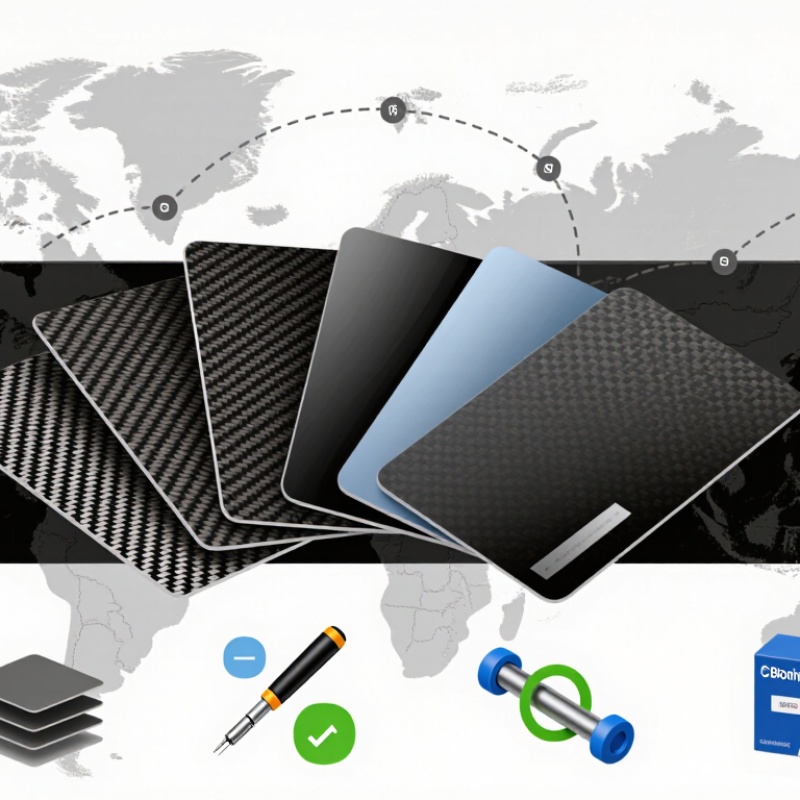
2026 Top Carbon Fiber Card Manufacturers for Global Buyers

What Carbon Fiber Cards Are and How They Are Made

Carbon fiber cards use thin carbon-fiber composite layers, where strong filaments are held in a cured resin. The visible weave may be real fabric, a printed pattern, or a surface layer over another material. The term can be imprecise. A card that looks like solid carbon fiber may contain a polymer or metal core. Its construction affects weight, stiffness, edge quality, and how the card feels in hand.

Manufacturing commonly starts by cutting and stacking composite sheets with a core, then bonding them under controlled heat and pressure. After curing, the panel is trimmed to size, and its edges are finished. Makers may add printing, protective coatings, or embedded components. Each step needs inspection. Uneven bonding can cause layers to separate, while rough edges may feel sharp. For cards with contactless electronics, carbon layers can affect radio signals, so antenna placement and performance testing matter. Exact methods vary by design; I may be simplifying a process that differs between factories.

Tips: Ask for the layer stack, thickness tolerance, and edge-finish details. Compare a physical sample with the production specification. Request test results for bending and, where relevant, contactless function. Look closely at corners. Small flaws matter.

Key Features and Applications of Carbon Fiber Cards

2026 Top Carbon Fiber Card Manufacturers for Global Buyers

Carbon fiber cards pair a woven or patterned surface with a layered card body. They feel rigid yet remain lightweight, and their dark, textured finish stands out in hand. The fibers also resist corrosion, but the surface can scratch or fray if edges are poorly sealed. Looks matter. These cards suit premium business cards, membership cards, and specialty identification where appearance and durability both count. Grand View Research estimated the global carbon fiber market at USD 5.48 billion in 2023, with projected growth of 11.0% annually from 2024 to 2030. This figure covers carbon fiber broadly, not card demand specifically.

For contactless cards, design details matter. Carbon fiber conducts electricity, so a continuous layer may weaken radio-frequency performance. Manufacturers can use an antenna window or a carefully tested layered structure. Buyers should request sample checks for read range, surface adhesion, edge finish, and repeated flexing. A beautiful card that fails at a reader is still a poor card. Also confirm whether the printed design remains legible under indoor lighting; dark weave can swallow fine text.

Tips: Ask for material and thickness specifications, then test samples with the actual reader and printer. Compare the card’s finish after handling, not just in a product photo. Carbon fiber is not automatically stronger in every direction, and that detail is easy to overlook.

2026 Top Carbon Fiber Card Manufacturers for Global Buyers

Key Features and Applications of Carbon Fiber Cards

For buyers comparing carbon-fiber cards made in the ID-1 format, ISO/IEC 7810 specifies nominal dimensions of 85.60 mm × 53.98 mm and a nominal thickness of 0.76 mm. Carbon-fiber designs may vary in construction and thickness; common applications include premium business cards, access cards, and membership cards.

How to Evaluate Carbon Fiber Card Manufacturers

When evaluating a carbon fiber card manufacturer, look beyond the dark, glossy finish. Ask how the carbon layers are sourced, bonded, and inspected. A close look at sample edges can reveal uneven lamination, rough cuts, or trapped air. Small defects matter. They may affect both appearance and durability.

Request technical specifications for thickness, weight, surface treatment, and any embedded chip or antenna. If cards need contactless functions, ask for test results under realistic conditions, not only a statement that they work. Compare samples from the same production run, and check whether color, edge quality, and printing stay consistent. A polished brochure is not proof. Independent test records and clear quality-control steps are stronger evidence.

Also review minimum order quantities, sample costs, production timelines, and packaging. Ask how the supplier handles rejected units and design changes. Direct, specific answers are useful; vague promises deserve follow-up. A pilot order can reveal more than a long email exchange. Still, one sample cannot predict every batch, and testing takes time. That can be inconvenient, but rushing a decision often costs more later. Choose a manufacturer that explains limits as clearly as capabilities.

Leading Carbon Fiber Card Manufacturers for Global Buyers in 2026

For global buyers in 2026, leading carbon fiber card manufacturers should pair material control with repeatable finishing. Carbon-fiber sheets can vary in weave, color, and surface texture, so request samples from the intended production process. Check card thickness, edge smoothness, print alignment, and how well coatings resist everyday handling. Small flaws show.

A reliable supplier should explain its inspection steps and provide clear specifications for dimensions, tolerances, and packaging. Ask how it manages custom artwork and confirms proofs before production. If cards require embedded components, clarify how these affect thickness and durability. Compare lead times against sample approval, production, and shipping schedules, not just the quoted factory time. Details matter.

Experience is useful, but buyers should verify claims with physical samples and written quality criteria. A sample may not perfectly predict a large production run; that gap deserves discussion. Request consistent packaging that protects corners during transit, and agree on how defects will be documented and addressed. Some surface variation may be part of the chosen material, so define acceptable appearance before ordering.

2026 Top Carbon Fiber Card Manufacturers for Global Buyers

A standards-based comparison framework for assessing carbon fiber card suppliers. Product construction and capabilities vary by manufacturer; confirm specifications and test evidence for each quotation.

Evaluation dimension Established benchmark or fact What global buyers should verify
Standard card format ISO/IEC 7810 ID-1 nominal dimensions are 85.60 × 53.98 mm. Confirm finished-card dimensions, corner geometry, and dimensional tolerances on the drawing and inspection report.
Card thickness The ISO/IEC 7810 ID-1 nominal thickness is 0.76 mm. Check the specified thickness and tolerance, especially where a metal or carbon-fiber layer affects the card stack-up.
Contact chip interface ISO/IEC 7816 covers integrated-circuit cards with contacts and related interface characteristics. Ask the supplier to confirm chip-module placement, contact layout, personalization options, and compatibility with the intended reader system.
Contactless interface ISO/IEC 14443 specifies requirements for proximity cards and objects; the standard includes operation at 13.56 MHz. Request evidence for the complete card construction, since carbon-fiber and other conductive layers can affect RF performance.
Carbon-fiber construction There is no single ISO/IEC card-format specification that defines one universal carbon-fiber card laminate or layer stack. Obtain the material description, layer stack-up, surface finish, edge treatment, and confirmation of whether the carbon fiber is a structural layer or a decorative layer.
Card test methods ISO/IEC 10373-1 provides general test methods for identification cards; additional parts address specific card technologies. Request test reports that identify the method, sample configuration, acceptance criteria, and tested finished-card version.
Customization and artwork Printing, engraving, and surface treatments are supplier-specific processes rather than universal card-format requirements. Approve a production sample for color, logo placement, finish, legibility, and consistency before authorizing a full order.
Supplier qualification Compliance claims and certifications should be assessed against the specific product, site, and applicable requirement. Verify current certificates, product-specific compliance documents, sample approval procedures, lead time, and change-control terms.

Global Sourcing, Customization, and Quality Considerations

Global sourcing starts with a clear specification, not a striking sample. Tell potential manufacturers the card’s dimensions, thickness, finish, and intended use. Carbon-fiber sheet, resin, and surface coating can vary, affecting color, rigidity, and edge quality. Ask for a material description and a production sample before approving a large order. Inspect it under neutral light. Check whether the weave looks even, corners feel smooth, and printed details remain legible. Small flaws matter.

Customization needs practical limits. A manufacturer may offer laser engraving, printed graphics, or different surface finishes, but each process can change appearance and cost. Share artwork files, color references, and acceptable tolerances early. Request a written quotation that separates tooling, samples, packaging, and shipping. For overseas orders, confirm production timing, carton dimensions, and how defects will be handled. Keep a retained sample. It helps.

Quality checks should be specific and repeatable. Agree on inspection criteria for thickness, dimensions, surface marks, and color variation. If the cards need to withstand frequent handling, test a sample through realistic use rather than relying on photographs. Ask how batches are identified and what inspection records are available. A supplier’s claims are useful, but evidence is better. Even a careful process can miss something; leave time for review before shipment.

Go to Top