2026 Top Cotton Double Sleeping Bags for Camping
Choosing a double sleeping bag can make shared camping nights more comfortable, especially when temperatures fall and a narrow tent leaves little room to spread out. A Cotton Double Sleeping Bag often appeals to campers who like a soft, familiar feel against the skin. Many models use cotton or flannel for the lining, while their insulation and shell may use different materials. Check the product details rather than assuming every layer is cotton. Small details matter.
For this 2026 guide, we’ll compare options by warmth information, usable space, packed size, materials, and ease of care. Look for clear temperature guidance, a secure zipper, and enough shoulder and foot room for two people. Check the bag’s weight and packed dimensions, too; a roomy design can be bulky on a long walk to camp. If the lining feels plush in a store, that alone does not tell you how it performs on a chilly, damp night. Comfort is not a temperature rating.
Cotton can feel pleasant, but it may take longer to dry than many synthetic fabrics. That matters in humid weather or when condensation gathers inside a tent. Consider the forecast, campsite, and how you plan to transport the bag before choosing one. A double bag suits some couples and families, but others sleep better with separate bags. There is no perfect pick for everyone. Use the comparisons ahead to weigh comfort against warmth, weight, and practical care, and treat listed ratings as guidance—not a promise of identical comfort for every sleeper.
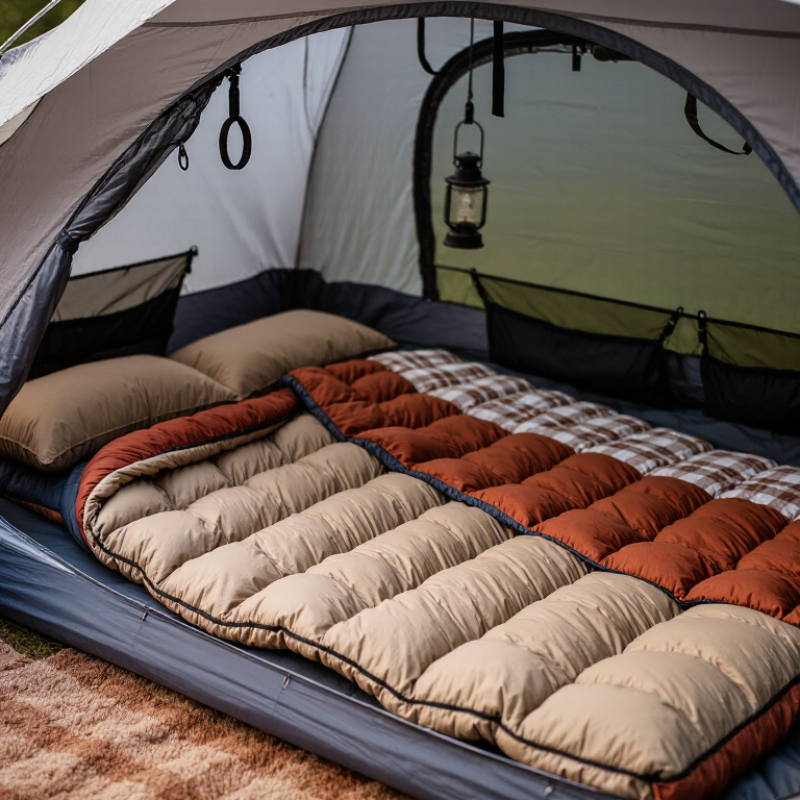
2026 Top Cotton Double Sleeping Bags: Key Types and Camping Uses
Cotton double sleeping bags come in two practical forms: cotton-lined bags and bags with cotton filling. A cotton-lined bag usually pairs a soft inner layer with synthetic insulation, making it more manageable to carry. A cotton-filled version feels familiar and breathable, but can become heavy and slow to dry when damp. Small differences matter.
For car camping, a roomy rectangular double bag suits mild nights at established campsites. It gives two sleepers space to turn, and the broad opening makes it easy to share a blanket. On chilly trips, a hooded double bag with a draft tube can reduce cold air near the shoulders and zipper. Check its temperature rating against expected overnight lows, not daytime forecasts. A warm lining is not a substitute for suitable insulation.
Cotton styles work best when the forecast is dry and a vehicle keeps the load manageable. They can also be useful in a cabin or family tent, where quick packing matters less than comfort. For backpacking or wet-weather camps, a lighter synthetic bag often dries faster. I would still test the fit at home; two people can find a “double” surprisingly cramped. Inspect the zipper, seams, and care label before the first trip.
Cotton Shells and Fill Materials: How Construction Affects Performance
2026 Top Cotton Double Sleeping Bags for Camping
Cotton Shells and Fill Materials: How Construction Affects Performance
A cotton shell feels familiar against skin and resists small snags, but it adds weight and can dry slowly after dew or spills. The fill matters more for warmth. Lofty synthetic fill traps air and keeps insulating when damp; cotton batting feels substantial but compresses more readily. Down is light and packs small, yet needs careful moisture management. In a double bag, two sleepers warm a larger air space, so edge gaps and flattened fill can create chilly patches.
Textile Exchange’s Materials Market Report 2024 estimates global fiber production reached 124 million tonnes in 2023. That scale is useful context, not proof that one fiber performs best in a sleeping bag. Compare construction details, not just fabric names. Look for fill weight, baffle design, zipper draft tubes, and temperature ratings tested under ISO 23537. Ratings are controlled comparisons, not a promise of comfort; sleep clothing, wind, and the ground beneath you still matter. Cotton can feel reassuring, though it may be the wrong choice for a wet, heavy-pack trip.
Tips: Air the bag each morning. Keep it off damp ground. Check whether the stated temperature rating applies to a double bag, and inspect the seams before buying.
ISO 23537-1:2022: Understanding Sleeping-Bag Temperature Ratings
ISO 23537-1:2022 provides a common method for testing and labeling adult sleeping bags. In a controlled laboratory, a heated manikin helps measure thermal performance. Labels may show comfort, lower-limit, and extreme temperatures. Comfort estimates a range for a standard woman; lower limit estimates one for a standard man. These are test results, not promises of comfort for every camper.
Treat the extreme rating as a danger boundary, not a target for trip planning. A cold campsite can feel colder when wind, damp ground, or thin clothing drain warmth. Use an insulated sleeping pad, dry sleepwear, and a shelter suited to the forecast. For a cotton double bag, check whether the exact model and shared configuration were tested to the standard; a rating from a single bag may not predict two-person performance. Cotton can feel soft, but fabric alone does not determine warmth. Fit, insulation, moisture, and gaps around the shoulders matter too. Small details matter. I would still leave a safety margin, because bodies and nights vary.
ASTM F1720: How Thermal-Manikin Testing Measures Insulation
2026 Top Cotton Double Sleeping Bags for Camping
ASTM F1720: How Thermal-Manikin Testing Measures Insulation
A thermal manikin is a heated, sensor-covered figure placed inside a sleeping bag in controlled laboratory conditions. ASTM International’s F1720-17(2022) describes a method for measuring sleeping-bag thermal insulation this way. Sensors track the heat needed to maintain the manikin’s temperature. More heat loss generally means less insulation under the test conditions.
The reported insulation value helps compare bags, but it is not a comfort-temperature guarantee. Fit, zips, hood design, ground insulation, and test conditions all affect real nights outdoors. A double bag can also leave more air around two sleepers, changing heat retention. Lab numbers are useful, but imperfect.
For a familiar unit, ISO 9920:2007 defines 1 clo as 0.155 m²·K/W of thermal resistance. That figure describes clothing insulation, not a promised sleeping-bag temperature. Cotton feels soft against skin, but it can hold moisture and often dries more slowly than synthetic fabrics. Damp lining, cold ground, and a loose fit can undermine warmth. Check that test results match the bag’s construction and size. A number alone cannot tell the whole story.