2026 Best Stainless Steel Plates for Global Buyers?
Buying Stainless Steel Plates in 2026 requires more than comparing price lists and polished product photos. Global buyers must examine grade, thickness, surface finish, dimensions, and production consistency. A plate marked 304 may suit food-processing equipment, while 316L often performs better near saltwater or chemical exposure. These choices affect service life, fabrication costs, and maintenance schedules.
This guide reviews practical options for international purchasing. It considers corrosion resistance, tensile performance, heat treatment, cutting tolerance, and common delivery requirements. It also explains why 2B, BA, hot-rolled, and brushed finishes should not be treated as interchangeable. Small differences matter. A 6-millimeter plate can arrive with unexpected flatness issues if packaging and loading practices are weak.
Reliable suppliers should provide traceable mill test certificates, chemical composition data, inspection records, and clear packing photographs. Buyers should confirm applicable standards, including ASTM, EN, or JIS requirements, before signing a purchase order. Certificates deserve careful checking. They are not a substitute for independent inspection when the project carries high technical risk.
Real purchasing experience also reveals an uncomfortable point: the cheapest quotation is rarely the lowest total cost. Freight changes, import procedures, cutting losses, and rejected material can quickly alter the calculation. Some recommendations in this market remain debatable because operating environments differ widely. Therefore, this overview offers a practical starting point, not a universal answer. Verify every specification against the equipment, climate, fabrication method, and final application.
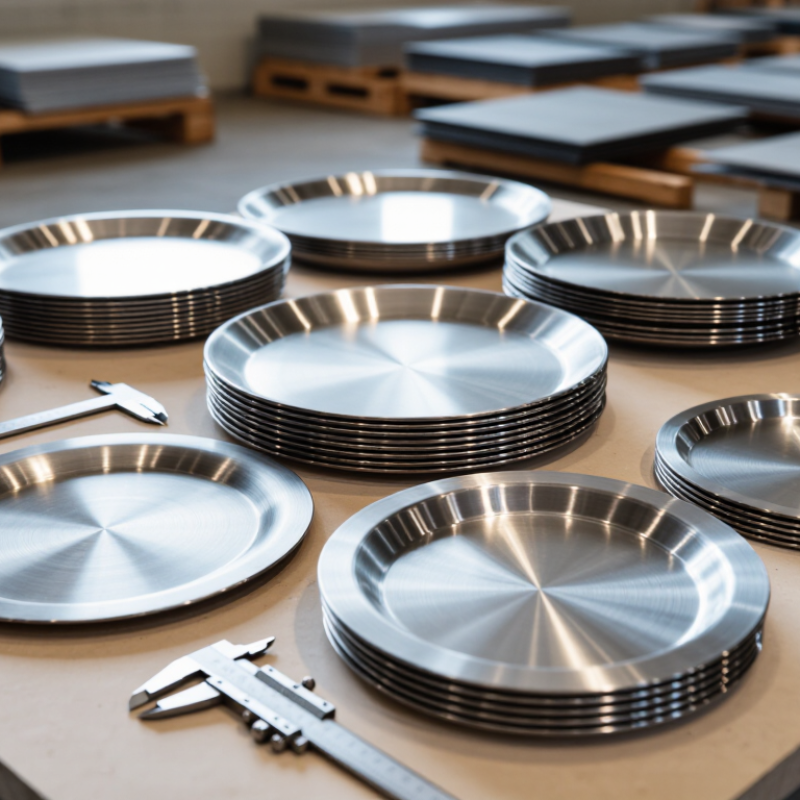
What Are Stainless Steel Plates and Why Do Global Buyers Choose Them?
What Are Stainless Steel Plates and Why Do Global Buyers Choose Them?
Stainless steel plates are flat, thick products made from steel containing at least 10.5% chromium. Chromium creates a passive oxide layer that helps resist rust and surface staining. Nickel, molybdenum, and nitrogen can improve toughness, formability, or resistance to chemicals. Buyers choose plates for tanks, bridges, pressure equipment, food facilities, and marine structures.
Demand reflects their practical value. The International Stainless Steel Forum reported global stainless crude steel production of about 58.4 million tonnes in 2023. The World Steel Association reported approximately 1.84 billion tonnes of crude steel production in 2024. These figures show a large, active supply chain, but they do not prove that every plate is suitable. Grade, thickness, surface finish, heat treatment, and welding performance still matter. A plate may look excellent and fail in a chloride-rich environment. That is an uncomfortable detail.
Tips: Match the grade to the service environment, not only the purchase price. Request mill test certificates, dimensional reports, and corrosion-related documentation. Check compliance with applicable ASTM, EN, or ISO requirements. For outdoor coastal projects, consider molybdenum-bearing grades. For food equipment, inspect surface roughness and cleanability. Confirm tolerances before cutting. Small errors become expensive after fabrication.
Experienced buyers also verify traceability from heat number to shipment. They review packaging, moisture protection, and loading photos. Independent inspection can reduce disputes, especially across unfamiliar supply routes. “Best” depends on the project, and that answer is less convenient than a simple ranking.
Which Stainless Steel Grades Best Suit Different Industrial Applications?
2026 Best Stainless Steel Plates for Global Buyers?
Grade selection should follow the service environment, not the lowest quoted price. The ISSF 2023 statistics recorded about 58.4 million tonnes of crude stainless steel production worldwide. That scale reflects broad demand, but it does not make every grade interchangeable.
Grade 304 suits food equipment, indoor processing lines, tanks, and general fabrication. Grade 316 performs better around chlorides, seawater spray, and chemical cleaning. However, 316 is not corrosion-proof in stagnant saltwater. Duplex 2205 offers higher strength and stronger chloride resistance, making it useful for pressure equipment and offshore structures. Grade 321 handles repeated heat exposure because titanium reduces sensitization risks. Ferritic 430 can fit dry, decorative, or moderately heated applications, but it needs careful moisture assessment. ASTM A240 should confirm chemistry, thickness, and mechanical requirements. World Stainless life-cycle data also highlights service life and recycled input as important environmental variables.
Tips: Ask for the mill test certificate, heat number, surface finish, and corrosion test method. Check chloride concentration and operating temperature together. A polished surface may still fail in a crevice. That detail is often missed. Plate buyers should also compare welding procedures, forming limits, and local inspection capacity. My practical caution is simple: grade charts simplify reality. A technically correct grade can still underperform when drainage, fabrication, or maintenance is poorly designed.
How to Compare Plate Quality, Dimensions, Finishes, and Performance
Comparing stainless steel plate quality starts with traceable evidence, not a bright showroom sample. Request the heat number, material grade, production route, and inspection certificate. Then match them against the purchase specification and applicable standards, such as ASTM A240 or EN 10088. Do not rely on chemistry alone. During receiving checks, measure thickness at several points with a calibrated micrometer. A 10 mm plate may show local variation that a single edge reading misses. Flatness matters too, especially for laser cutting, pressure equipment, or welded frames.
Dimensions should include length, width, thickness tolerance, corner condition, and allowable camber. Ask whether measurements use millimeters or inches. Small conversion errors become expensive after cutting. For surface finish, compare the actual plate with a defined reference, not vague words like clean or premium. Finish 2B, brushed surfaces, and mirror-like finishes behave differently under light and handling. Check for pits, roll marks, scratches, discoloration, and weld contamination. A protective film can hide defects.
Performance depends on the working environment. Confirm corrosion exposure, temperature range, load, forming method, and cleaning chemicals. Marine splash, chloride-rich process water, and repeated heating can change the practical grade choice. Review tensile data, yield strength, elongation, and hardness when fabrication requires them. For welded parts, ask about heat-affected zones and post-weld cleaning. I have seen attractive plates fail because the finish was judged before fabrication. That was a useful warning. No inspection method is perfect, and supplier data still deserves independent checking. Photographs help, but they cannot replace sampling. Keep retained samples, dimensional records, and signed release documents for each heat.
What Standards and Certifications Should International Buyers Verify?
For global buyers, stainless steel plate selection begins with verifiable standards, not attractive mill certificates. The International Stainless Steel Forum reported approximately 60.5 million tonnes of crude stainless steel production in 2023. This scale increases supplier choice, but also raises documentation risks. Confirm the governing grade standard, such as ASTM A240, EN 10088, or JIS G4304. The purchase order should state thickness tolerance, surface finish, dimensions, and heat-treatment requirements. Small omissions become expensive later.
Request an EN 10204 Type 3.1 inspection certificate for each heat. It should match the plate’s heat number, chemical analysis, mechanical results, and delivery quantity. For independent testing, verify that the laboratory uses ISO/IEC 17025 accreditation. ISO 9001 certification supports process control, but it does not prove that every plate meets your specification. That distinction is often missed. For marine, pressure, or energy projects, check the applicable classification or sector approval separately. ISO 14001 may support environmental management, but it is not a material-quality certificate.
Use positive material identification when alloy mix-ups could cause failure. Test chromium, nickel, molybdenum, and sometimes nitrogen. Experienced buyers also compare certificates against production dates and packing marks. Documents can look complete yet remain poorly traceable. The ISSF production data shows a huge global supply chain; buyers should therefore audit records, sample packages, and confirm testing before shipment. One weakness remains: no certificate replaces a clear technical specification.
2026 Best Stainless Steel Plates for Global Buyers
Key material verification point: maximum carbon content specified for common stainless steel plate grades under ASTM A240/A240M.
How international buyers should use this chart: Confirm the quoted grade and applicable standard, then require a heat-specific material test certificate. Verify chemical composition, mechanical properties, plate dimensions, heat number traceability, and the current standard edition.
Documents and certifications to verify: ASTM A240/A240M or EN 10088-2 compliance, an EN 10204 inspection certificate such as 3.1, and the supplier’s valid ISO 9001 quality-management certification. Where contractually required, request independent inspection or an EN 10204 type 3.2 certificate.
Chart data: maximum carbon content by grade, expressed as weight percent, based on commonly specified ASTM A240/A240M composition limits. Always confirm the exact grade, product form, and edition stated in the purchase specification.