

Blog
2026 Best Plumber Tools for Professional and DIY Use
Choosing the right Plumber Tools is no longer a matter of filling a toolbox with heavy metal and familiar brand names. Professional work demands accuracy, durability, safety, and fast adaptation to changing job conditions. The U.S. Bureau of Labor Statistics’ Occupational Outlook Handbook projects 6% employment growth for plumbers, pipefitters, and steamfitters from 2023 to 2033, with about 44,100 openings annually. That demand reflects ongoing construction, maintenance, and replacement work. It also raises expectations for dependable equipment.
A leaking valve under a dark sink, a cramped crawl space, or a corroded fitting can quickly expose weak tool choices. EPA WaterSense reports that household leaks can waste nearly 1 trillion gallons of water nationwide each year, making reliable inspection and repair equipment increasingly important. OSHA’s hand and power tool requirements also emphasize proper maintenance, guarding, and safe operation. Safety comes first.
This 2026 guide compares Plumber Tools for experienced professionals and practical DIY users. It examines pipe wrenches, basin wrenches, press tools, inspection cameras, deburring equipment, torque tools, and compact diagnostic devices. Real-world handling matters here: grip comfort after hours, jaw alignment, battery endurance, storage, and access in narrow spaces. Not every expensive tool performs better. Some affordable tools remain surprisingly capable, while a few premium products disappoint in daily use. That is worth admitting. Product specifications can look impressive, yet field conditions often reveal the truth. The recommendations therefore balance published standards, manufacturer information, professional use cases, and practical testing considerations, helping readers build a safer and more efficient toolkit.
Understanding the Essential Categories of Plumber Tools
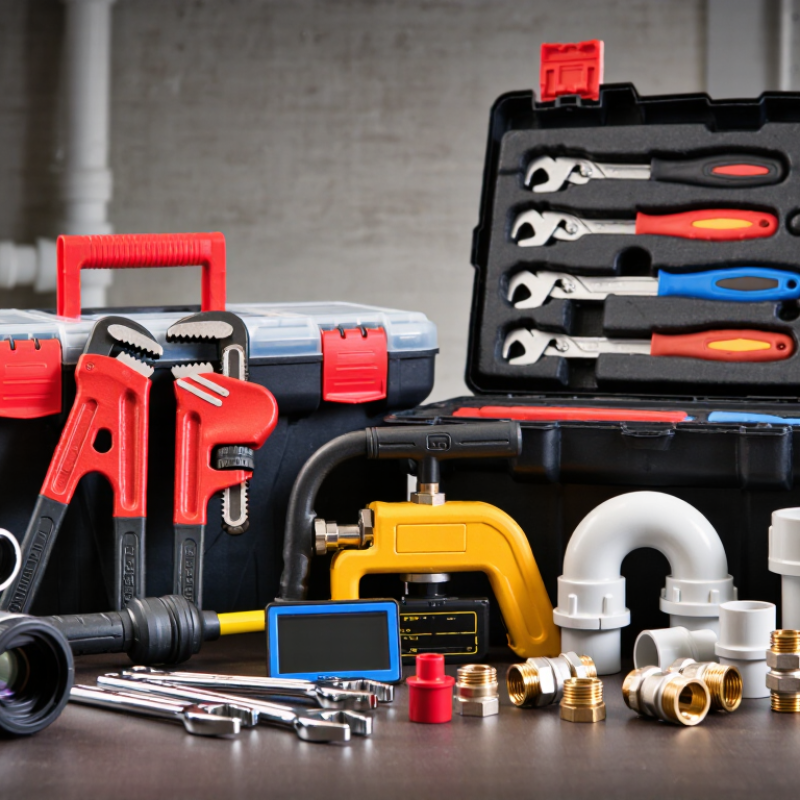
Choosing the best plumber tools in 2026 starts with categories, not a crowded toolbox. Hand tools form the daily foundation. Adjustable wrenches, basin wrenches, tongue-and-groove pliers, and screwdrivers handle many repairs. Their jaws should grip firmly without damaging chrome surfaces. A small level also helps confirm proper pipe alignment beneath sinks and cabinets.
Pipe preparation tools make cleaner work possible. Tubing cutters create square cuts on copper, plastic, and other approved pipe materials. A deburring tool removes sharp internal edges that can restrict flow. Threading and joining tools depend on the pipe system, so compatibility matters more than appearance. Keep a clean rag nearby. Small grit can ruin a carefully prepared joint. My early mistake was rushing this step, and the leak appeared several hours later.
Drain tools deserve their own category. A hand auger can clear many household blockages, while a longer cable tool suits deeper lines. Inspection mirrors, moisture meters, and compact cameras reveal problems hidden behind walls or cabinets. Pressure gauges and test plugs support reliable leak checks before surfaces are closed. Protective gloves, eye protection, knee pads, and a stable work light are essential equipment, not optional extras. Even experienced plumbers can misread a fitting or overtighten a connection. Pause, inspect the seal, and test the system slowly.
2026 Best Plumber Tools for Professional and DIY Use - Understanding the Essential Categories of Plumber Tools
| Tool Category | Essential Tool | Primary Function | Common Applications | Recommended Material or Feature | Typical User | Skill Level | Important Safety or Usage Note |
|---|---|---|---|---|---|---|---|
| Pipe Gripping | Adjustable Pipe Wrench | Grips and turns threaded metal pipes, fittings, and nuts. | Installing or removing galvanized steel, iron, and large threaded fittings. | Forged steel body with hardened serrated jaws and a correctly sized handle. | Professional plumbers and experienced DIY users | Intermediate | Use two wrenches when tightening threaded joints to avoid twisting the connected pipe. |
| Adjustable Fastening | Tongue-and-Groove Pliers | Provides adjustable gripping for nuts, couplings, traps, and irregular fittings. | Sink repairs, toilet supply connections, drain-trap removal, and general maintenance. | Non-slip handles, wide jaw opening, and corrosion-resistant steel. | DIY users and professional plumbers | Beginner | Do not overtighten plastic fittings; excessive force can crack the fitting or damage the nut. |
| Drain Cleaning | Cup Plunger | Uses pressure and suction to clear simple blockages in sinks and tubs. | Flat drain openings with standing water and soft, localized clogs. | Flexible rubber cup with a firm handle and a cup sized for the drain opening. | Homeowners and maintenance workers | Beginner | Cover the overflow opening before plunging to improve pressure and reduce splashing. |
| Toilet Drain Cleaning | Flange Plunger | Creates a stronger seal inside a toilet drain than a flat cup plunger. | Clearing toilet blockages caused by paper or other soft obstructions. | Flexible rubber flange that folds into the cup for storage. | DIY users and professional plumbers | Beginner | Never use a plunger after pouring a caustic chemical drain cleaner into the bowl. |
| Manual Drain Snaking | Hand Auger | Feeds a flexible cable through a drain to break up or retrieve obstructions. | Short, localized clogs in sinks, basins, and some tub drains. | Flexible, corrosion-resistant cable with a hand crank and controlled cable feed. | DIY users and maintenance professionals | Intermediate | Rotate the cable gently; forcing it can damage older or fragile drain lines. |
| Toilet Service | Closet Auger | Clears toilet obstructions while protecting the porcelain bowl from direct cable contact. | Toilet clogs that do not respond to plunging. | Protective guide tube, rotating cable, and a bowl-friendly curved shoe. | DIY users and professional plumbers | Intermediate | Use a closet auger instead of a bare metal cable to reduce the risk of scratching porcelain. |
| Pipe Cutting | Tubing Cutter | Makes clean, square cuts on copper, brass, aluminum, or plastic tubing, depending on design. | Preparing tubing for compression, soldered, or push-fit connections. | Sharp cutting wheel, smooth rollers, adjustable feed, and a built-in deburring tool. | DIY users and professional plumbers | Beginner | Deburr the cut end and remove metal particles before installing a fitting. |
| Plastic Pipe Cutting | Ratchet PVC and PEX Cutter | Produces a fast, perpendicular cut on compatible plastic tubing and pipe. | Cutting PEX, CPVC, and smaller-diameter PVC pipe where the tool capacity allows. | Hardened replaceable blade, ratcheting mechanism, and a secure safety lock. | DIY users and professional installers | Beginner | Confirm the cutter is rated for the pipe material and diameter before cutting. |
| Pipe Preparation | Deburring and Reaming Tool | Removes sharp edges and internal burrs left after cutting pipe. | Preparing copper, steel, plastic, or multilayer pipe for improved fitting and flow. | High-strength reaming blade with an exterior deburring surface. | All plumbing users | Beginner | Remove all loose shavings before assembly so debris does not enter valves or aerators. |
| Thread Preparation | Thread-Sealing Tool | Applies approved thread sealant or sealing tape to threaded connections. | Sealing compatible tapered pipe threads on water, air, or certain non-potable systems. | Clean dispensing tip or easy-cut tape housing; sealant must match the system fluid. | DIY users and professional plumbers | Beginner | Do not apply thread tape to compression, flare, or straight-thread sealing surfaces unless specified. |
| Soldering | Plumbing Torch | Heats copper pipe and fittings so solder can form a capillary joint. | Joining compatible copper water-supply tubing after cleaning and fluxing. | Stable fuel connection, adjustable flame, ignition control, and heat-resistant accessories. | Trained DIY users and professional plumbers | Advanced | Use a heat shield, remove flammable materials, and check for hidden combustibles before heating. |
| Press Connections | Press-Fitting Tool | Uses a controlled pressing force to join compatible fittings and tubing without soldering. | Professional installation of approved copper or multilayer press systems. | Correct jaw profile, calibrated pressing mechanism, and compatibility with the fitting system. | Professional plumbers | Advanced | Verify the fitting and jaw profile match; an incorrect profile may create a hidden leak. |
| PEX Installation | PEX Crimp or Clamp Tool | Secures compatible PEX connections using a crimp ring or clamp ring. | Water-supply repairs and new PEX installations using the corresponding connection method. | Accurate sizing guide, hardened jaws, and a tool designed for the selected ring type. | DIY users with training and professional plumbers | Intermediate | Place the ring at the specified position and inspect the completed connection before pressurizing. |
| Measurement | Tape Measure and Pipe Marking Pencil | Measures pipe runs, fitting locations, and cut lengths accurately. | Planning repairs, marking cut points, and estimating material requirements. | Locking tape with clear graduations and a durable, moisture-resistant marking pencil. | All plumbing users | Beginner | Measure twice and account for fitting insertion depth before making a permanent cut. |
| Leak Detection | Inspection Mirror and Flashlight | Improves visibility around concealed, dark, or difficult-to-reach plumbing connections. | Checking valves, supply lines, traps, toilets, and cabinet spaces for moisture or corrosion. | Bright water-resistant light and an adjustable inspection mirror. | Homeowners, maintenance workers, and professionals | Beginner | Turn off the water supply or electrical power when inspection conditions create a safety risk. |
| System Testing | Water Pressure Gauge | Measures static water pressure at a hose connection or other suitable test point. | Investigating low or high pressure, regulator problems, and pressure fluctuations. | Clear pressure scale, threaded connection, and a range suitable for residential water systems. | DIY users and professional plumbers | Intermediate | Close the valve slowly and follow local requirements when testing pressurized systems. |
| Safety Equipment | Safety Glasses and Cut-Resistant Gloves | Protects eyes and hands from splashes, sharp pipe edges, debris, and tool contact. | Cutting, snaking, soldering preparation, demolition, and general plumbing repairs. | Impact-rated eye protection and gloves appropriate for the specific task. | All plumbing users | Beginner | Use task-specific protection; ordinary gloves are not a substitute for heat- or chemical-resistant PPE. |