2026 Best EV Charging Point Types for Global Buyers?
Choosing the right EV charger in 2026 requires more than comparing charging speed. Global buyers face different grids, connector standards, climates, tariffs, and installation rules. This guide introduces the main Ev Charging Points categories, from compact home AC units to high-power public DC systems. Each type serves a different daily pattern. A city driver may need overnight charging beside a house. A delivery operator may require rapid charging between routes. Small details matter, including cable length, enclosure rating, payment access, and standby power.
Practical selection begins with verified specifications and real installation conditions. AC chargers commonly suit homes, offices, and long parking periods. DC chargers can reduce waiting time, but they often demand higher electrical capacity and careful site planning. Buyers should check connector compatibility, vehicle charging limits, residual-current protection, communication features, and local certification. Independent electricians and qualified installers can confirm whether a property supports the proposed load. Manufacturer data is useful, but it should be compared with regional standards and warranty terms.
This article evaluates charger types through performance, safety, operating cost, maintainability, and future flexibility. It also considers solar integration, load balancing, software reliability, and weather exposure. A faster charger is not automatically the better investment. Sometimes, it is excessive. A lower-power unit may deliver cheaper, steadier service for years. Conditions change, and forecasts can be wrong. Therefore, these recommendations remain practical rather than absolute, helping buyers question marketing claims and choose equipment suited to their vehicles, buildings, budgets, and local energy systems.
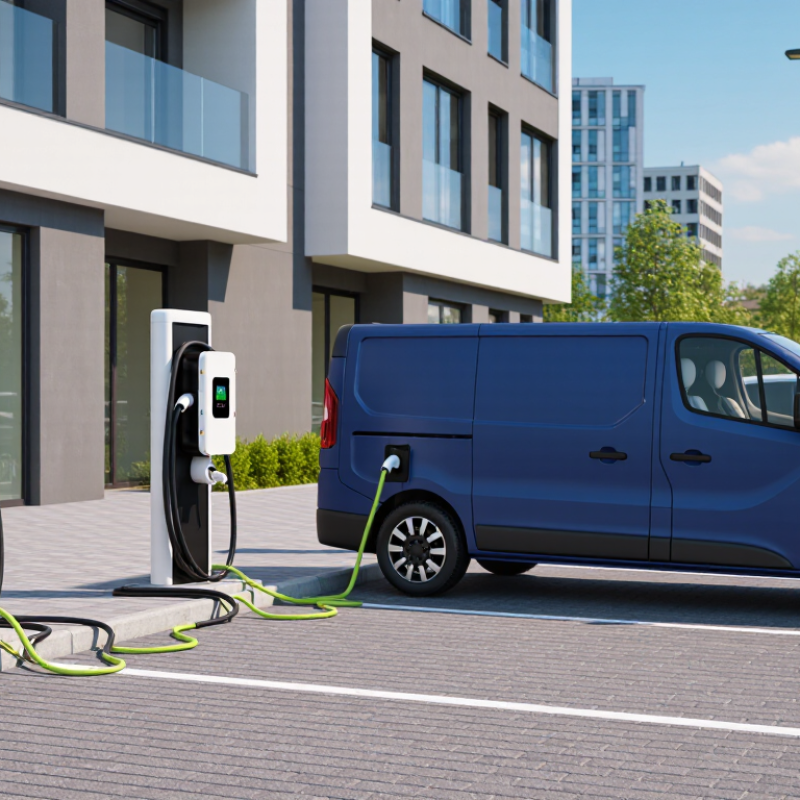
EV Charging Point Types: A Basic Classification for Global Buyers
EV Charging Point Types: A Basic Classification for Global Buyers
For global buyers, charging points are best classified by current, power, location, and charging purpose. AC chargers convert electricity inside the vehicle, making them common for homes, offices, and hotels. Typical AC units deliver 3.7–22 kW, depending on the site and vehicle. They suit overnight parking, where charging time matters less.
DC chargers convert power before it reaches the vehicle. They commonly provide 30–150 kW, while high-power systems can exceed 250 kW. These stations support highway travel, taxi fleets, and busy urban sites. The International Energy Agency reported more than four million public charging points worldwide at the end of 2023, with public charging growth accelerating sharply in major markets. That scale shows demand, but not every location needs the highest output.
Power is only one classification. Buyers should also check connector compatibility, voltage range, cable cooling, payment functions, weather protection, and network communication. A compact AC point may work better at a small hotel than an expensive DC unit. A rural corridor may need fewer chargers, but stronger grid planning. The classification is useful, yet imperfect. Local parking habits and electricity capacity can change the right choice completely. The IEA Global EV Outlook 2024 also notes that charging deployment must expand alongside electric vehicle adoption, not after it. That timing is easy to underestimate.
2026 Best EV Charging Point Types for Global Buyers
EV Charging Point Types: A Basic Classification for Global Buyers
How to read the chart: Representative rated power is shown for five widely used charging categories. AC charging is generally suitable for homes, workplaces, hotels, and long parking periods, while DC charging is designed for highways, commercial locations, and rapid top-ups. Actual charging speed depends on vehicle capability, battery state of charge, temperature, electrical capacity, and local regulations.
Key Connector Standards Across Major International Markets
2026 Best EV Charging Point Types for Global Buyers?
Connector standards matter more than headline charging speed. The International Energy Agency reported over 4 million public charging points worldwide at the end of 2023, with more than 1.3 million added that year. This expansion makes regional compatibility a practical purchasing issue. In Europe, Type 2 supports common AC charging, while CCS2 handles higher-power DC charging. North American projects often use Type 1 for AC and CCS1 for DC, although SAE J3400 is becoming increasingly relevant for new installations. China mainly follows GB/T 20234 for AC and DC connections.
The plug is only one part of the system. Buyers should verify voltage, communication protocols, payment systems, cable length, and local maintenance capacity. IEC 61851 and IEC 62196 provide important foundations for charging control and connector safety. SAE standards serve a similar role in North America. Japan continues to support CHAdeMO for many DC applications, while several markets use mixed fleets and transitional adapters. India also requires careful checking because connector requirements can vary by vehicle segment and site type.
A 22-kilowatt AC unit may suit an office car park, but it cannot replace a high-power DC station beside a highway. Field experience shows that adapters create extra failure points, especially in wet, dusty, or poorly supervised locations. I would not treat one universal connector as a certain global answer. Standards are converging, but unevenly. IEC and IEA publications should be checked before procurement, because national rules and vehicle compatibility can change faster than expected.
Safety, Compatibility, and Future-Proofing Your EV Charger Purchase
For global EV buyers, safety should guide the charger choice before charging speed. A certified unit should include overcurrent protection, residual-current monitoring, and temperature control. Installation must match the local voltage, phase system, and electrical capacity. Water changes everything. Outdoor models need suitable ingress protection, sealed cable entries, and durable housings. A qualified electrician should verify grounding and test the circuit after installation.
Compatibility is more than connector shape. Check the vehicle inlet, charging protocol, maximum onboard charging rate, and cable arrangement. An adapter may solve one connection problem but create heat, clearance, or communication risks. Check the inlet. Buyers should also confirm whether the charger supports scheduled charging, load balancing, and stable operation during voltage changes. These features matter in homes with heat pumps, solar systems, or limited grid capacity.
Future-proofing requires practical judgment rather than attractive specifications. A charger with updateable software, replaceable cables, open communication standards, and accessible service parts may remain useful longer. Local support and clear warranty terms are equally important. In real installation reviews, small details often cause trouble: a short cable, weak Wi-Fi, or an oversized circuit. More power is not always better. Some buyers may pay for advanced features they never use, while others overlook basic protection. Compare verified test results, installation guidance, and service records before purchasing. Safety should still be reassessed when the vehicle, wiring, or household load changes.