2026 Top 7.5KW Belt Driven Screw Air Compressor Price?
In 2026, the price of a 7.5KW Belt-Driven Screw Air Compressor depends on more than its motor rating. Buyers should compare the complete package, not just the number on a quote. Air delivery, working pressure, control system, cooling method, and included accessories can all change the final cost. A unit supplied with a receiver tank, dryer, and filters may cost more upfront, yet reduce installation work.
Prices also vary by manufacturer, country of origin, warranty, and local service support. Ask suppliers for a written specification sheet and confirm the quoted air output at the pressure your tools require. This detail matters. A machine that looks affordable on paper may not suit a workshop running spray equipment, pneumatic tools, or production lines throughout the day. Check energy use, too; electricity can outweigh small differences in purchase price over years of operation.
This guide explores the main factors behind 2026 pricing and explains how to assess quotes fairly. It also considers common options, operating costs, and questions to ask before ordering. Exact figures can be difficult to compare without matching specifications, so any price range should be treated as an estimate, not a promise. Some comparisons still miss the point. Service access and replacement parts deserve attention before a compressor is installed, not after a breakdown.
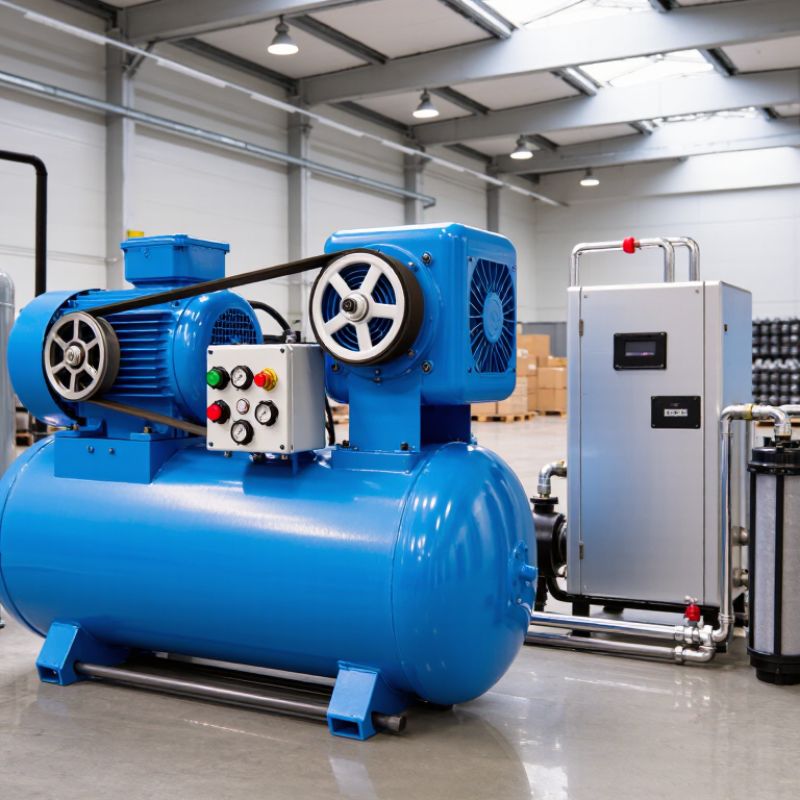
What Is the 2026 Price Range for a 7.5 kW Belt-Driven Screw Compressor?
For 2026, a practical US planning range for a 7.5 kW (about 10 hp) belt-driven screw compressor is roughly $4,000–$8,000 for the compressor itself. A package with an air receiver, dryer, filters, and basic controls may cost $6,000–$12,000. These are budget estimates, not fixed market quotations; shipping, installation, and local taxes can raise the final invoice.
The price depends on more than motor size. Oil-injected models, duty cycle, operating pressure, cooling design, and included controls all matter. A compact unit may fit beside a workshop wall, while a dryer and receiver need extra floor space. The US Department of Energy’s Improving Compressed Air System Performance sourcebook reports that leaks can waste 20–30% of compressor output. That makes air treatment and leak checks relevant to total cost, not just optional extras.
Compare the quoted airflow at your required pressure, rather than relying on kilowatts alone. Check the warranty, service intervals, and whether the quote includes commissioning. CAGI performance data sheets offer a useful basis for comparing verified compressor performance. Still, one detail is easy to miss: a lower purchase price can look attractive, but it may not reflect the cost of electricity or maintenance over years of use.
What FAD Can 7.5 kW Models Deliver at Typical Operating Pressures?
For a 7.5 kW belt-driven screw compressor, free air delivery (FAD) commonly falls around 0.9–1.2 m³/min at 7 bar(g). At 8 bar(g), many models deliver roughly 0.8–1.1 m³/min. These are practical estimates, not guaranteed figures. Real installations vary.
Pressure affects output. Raising the set point to 10 bar(g) may reduce FAD to approximately 0.65–0.9 m³/min, depending on the air end, motor efficiency, and control system. A workshop using impact tools may notice the difference during repeated bursts. At the same time, long, narrow hoses or clogged filters can lower pressure at the tool, even when the compressor’s rated pressure looks adequate.
Check the supplier’s FAD figure at the exact working pressure, rather than relying on theoretical displacement or motor power alone. Ask whether testing follows ISO 1217, and confirm the stated inlet temperature and pressure. Small print matters. I would also compare measured demand with the compressor’s delivered air, leaving some reserve for leaks and future tools. That margin is easy to overlook, and estimating it from a quiet-day reading can be misleading.
How Do Air Tanks, Dryers, and Filters Change the Total Purchase Cost?
For a 7.5 kW belt-driven screw compressor, the base quote is only part of the installed cost. A receiver tank adds the vessel, valves, drain, and floor-space requirements. It can buffer short demand peaks and reduce rapid compressor cycling. Size it using measured peak airflow and pressure variation, not motor power alone. Small details matter.
A dryer and filters can shift both purchase and operating costs. The U.S. Department of Energy’s Improving Compressed Air System Performance sourcebook estimates compressed air uses about 10% of electricity in U.S. manufacturing. It describes refrigerated dryers near a 35°F pressure dew point and desiccant dryers reaching about -40°F. The drier air requirement determines which option is appropriate; lower dew points may bring higher equipment and energy costs. Filters also need regular replacement, and pressure drop can increase compressor energy use. CAGI guidance recommends comparing published performance data, not just package prices. Ask suppliers to itemize the tank, dryer, filters, drains, and installation. A low quote can miss these costs. That comparison is not always tidy, because site demand and air quality needs vary.
2026 Top 7.5KW Belt Driven Screw Air Compressor Price? - How Do Air Tanks, Dryers, and Filters Change the Total Purchase Cost? | Package | Compressor | Air Tank | Refrigerated Dryer | Filter Set | Estimated Equipment Total (USD) | Typical Use |
| Basic workshop package | 7.5 kW (10 hp), belt-driven screw compressor; approximately 0.8–1.0 m³/min at 7–8 bar | 200 L vertical receiver — $300 | Airflow-rated refrigerated dryer, approximately +3°C pressure dew point — $850 | Particulate and general-purpose oil-removal filters — $180 | $5,530 | General workshop tools and intermittent air demand |
| Standard production package | 7.5 kW (10 hp), belt-driven screw compressor; approximately 0.9–1.1 m³/min at 8 bar | 300 L vertical receiver — $520 | Refrigerated dryer sized for the compressor’s delivered airflow — $1,250 | Particulate, coalescing, and oil-removal filter set — $360 | $6,730 | Small production lines with regular air use and general moisture control |
| Higher-capacity treatment package | 7.5 kW (10 hp), belt-driven screw compressor; approximately 1.0–1.2 m³/min at 8–10 bar, subject to model and pressure | 500 L vertical receiver — $780 | Higher-capacity refrigerated dryer with allowance for operating conditions — $1,650 | Multi-stage particulate and coalescing filters — $540 | $8,070 | More continuous demand or applications needing improved compressed-air cleanliness |
| Estimated equipment price range shown | $5,530–$8,070 | Configuration and supplier specifications affect the final price |
Price basis: Indicative 2026 equipment estimates in USD, provided for comparison rather than as a supplier quotation. Prices exclude sales tax, freight, installation, piping, electrical work, and commissioning. Verify compressor flow at the required working pressure and ensure the dryer and filters are sized for the actual airflow, inlet temperature, and ambient conditions.
How Do IEC Motor Efficiency and Annual Running Hours Shape Lifetime Cost?
A 7.5 kW belt-driven screw air compressor’s purchase price is only part of its lifetime cost. The motor’s IEC efficiency class affects how much electricity it uses at a given load. Check the motor nameplate and request test data; the class alone cannot predict your actual bill. Air demand, pressure settings, and leakage also matter.
Annual running hours can change the calculation sharply. A workshop running one shift may value a lower upfront price. A compressor operating most of the day gives energy use more weight over time. Compare estimated yearly consumption using your tariff and realistic load profile. Add routine service, belt replacement, and downtime. Small assumptions can distort the result, so revisit them with measured operating data.
Tips: Record loaded and idle hours for a typical week. Check belt tension and alignment during maintenance; poor adjustment can waste energy and accelerate wear. Compare total cost over your expected ownership period, not just quoted prices. Estimates are imperfect, but even a basic spreadsheet can reveal which costs deserve a closer look.